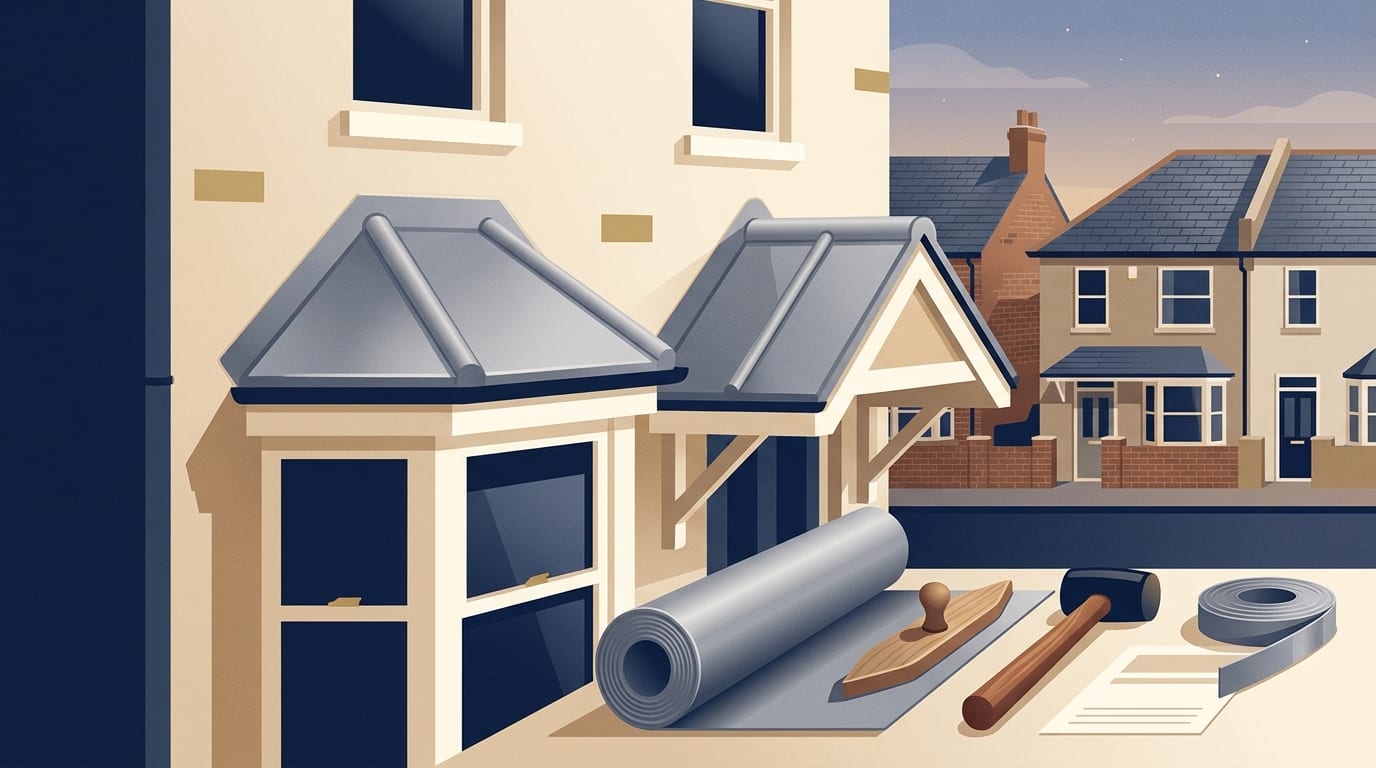
Most bay roof replacements cost from a few hundred pounds for felt to a few thousand for lead. The covering, the access and the leadwork where the bay meets the wall drive the price far more than the size of the roof itself. A bay window pushes out from the main walls of your house, leaving its roof exposed to the weather on three sides.
Why bay roofs give trouble
Because these roofs are small and easy to overlook, problems often go unnoticed until water starts dripping into the room below.
The junction where the bay roof meets the flat vertical brickwork of your house is a common weak point. The join must be sealed with a weatherproofing material to stop rain running down the brickwork and behind the roof covering. When this seal fails, water finds its way inside even if the main roof covering is perfectly sound.
Movement in the building also causes trouble for bay roofs. A house naturally expands and contracts with changes in temperature, and a bay window can move slightly differently to the main structure. Over time this movement can stretch or tear older roofing materials, leading to splits and leaks that eventually require a full replacement.
Flat and pitched bay roofs
Bay window roofs are usually built in one of two ways. Flat bay roofs are common on period properties. Despite the name, a flat roof is never completely flat. It is built with a very slight slope to encourage rainwater to flow off the edge and into your guttering.
The structure of a flat roof relies on a timber deck, which is usually made from wooden boards or structural sheet timber. This deck sits on top of wooden joists and provides a solid base for the waterproof covering. Modern flat roof systems include built-up felt, EPDM rubber, GRP fibreglass, single-ply and liquid coatings.
A pitched bay roof has a steeper slope and looks like a miniature version of a traditional house roof. The structure uses wooden battens, which are long strips of timber fixed across the roof. The covering materials are then nailed or hooked onto these battens. Pitched bays are usually covered in natural slate, fibre cement slate, concrete tiles or clay tiles.
Beneath the tiles or slates on a pitched roof you will find a layer of underlay, which is often called felt or a membrane. This acts as a secondary barrier to catch any windblown rain that gets past the outer covering. If you are unsure which flat covering to choose, our guide comparing rubber, felt and fibreglass roofs explains the differences.
Your covering options
Built-up felt is a traditional flat roofing method that uses layers of bitumen sheet. Modern felt is usually a torch-on system, meaning the roofer uses a gas torch to melt the underside of the felt so it bonds to the layer beneath. It is the cheapest option upfront but has the shortest lifespan.
EPDM rubber is a synthetic rubber membrane that is glued to the timber deck. Because bay roofs are small, an EPDM covering can normally be cut from a single piece of rubber. This means there are no seams or joins on the flat surface, which removes a common point of failure.
GRP fibreglass is applied as a wet liquid resin over a layer of glass fibre matting. Once it cures, it forms a hard, seamless plastic shell across the roof. Fibreglass is very tough and resists foot traffic well, but it is rigid and relies on expansion joints to handle natural building movement.
Natural slate and fibre cement slate are used on pitched bay roofs. Natural slate is split from stone and can last for generations, while fibre cement slate is a manufactured alternative that is lighter and cheaper. Both require a pitched timber structure with battens and underlay to perform correctly.
Lead is the most traditional covering for a flat bay roof and lasts the longest of the flat coverings. It is heavy, durable and can be shaped to fit complex architectural details. However, lead responds to heat by expanding and needs a highly skilled installer to prevent it from splitting. You can check whether a leadworker has trained with the Lead Sheet Training Academy by looking them up in its Traditional Metal Roofer Directory. The academy says it cannot take responsibility for the work of those listed and recommends taking up current references. Be aware that lead can be a target for thieves, which may make it difficult to insure.
What a new bay roof costs
This table shows typical lifespan and replacement prices for different bay roof materials.
|
Covering |
Typical 2026 price for a bay roof |
Typical lifespan |
|---|---|---|
|
Felt |
£350 to £1,300 |
10 to 20 years |
|
EPDM rubber |
£410 to £1,900 |
25 to 40 years |
|
GRP fibreglass |
£490 to £2,500 |
20 to 50 years |
|
Slate |
£890 to £2,200 |
80 to 150 years |
|
Lead |
£980 to £3,500+ |
50 to 100 years or more |
These figures are typical published prices for 2026 for bays of roughly two to six square metres, and local quotes will differ.
Most homeowners spend between £1,200 and £2,200 on a like-for-like bay roof replacement. The installed cost per square metre varies by material, ranging from £50 to £80 for felt, £80 to £100 for EPDM, £120 to £180 for fibreglass, £95 to £275 for slate, and £140 to £250 for lead.
Roofers typically charge a day rate of £200 to £275, while a specialist leadworker charges £250 to £400 a day. Prices are generally higher in London and the South East, where you can expect to pay 15 to 25 per cent more for the same work. Bay roofs also tend to sit above standard leadwork price ranges because the work is bespoke, so the area is only one part of the final bill.
Why a small roof is not a cheap job
Because a bay roof is a small job at height, the minimum call-out charge, the access requirements and the complex detailing dominate the final cost. A roofer still has to travel to your home, set up their equipment, source the materials and clear the site, regardless of whether they are covering three square metres or thirty.
Access is a major factor in the price. If your bay window is on the first floor, or if it sits directly over a porch, the roofer cannot work safely from a ladder. They will need a proper working platform. Adding scaffolding to the job will increase the cost by £150 to £600 depending on the height and complexity of the structure.
The wall flashing is another significant expense. Flashing is the material, usually lead, that seals the gap between the roof covering and the brick wall. Replacing lead flashing costs £200 to £425 and involves cutting a groove into the brickwork, inserting the lead and pointing it in with mortar. Getting this detail right is crucial, and our guide to roof flashing and when it needs repairing explains more.
Hidden damage often pushes the price up. Nobody can see rotten timber until the old covering is off. If the deck has acted like a sponge and rotted, replacing the timber deck costs £25 to £35 per square metre, while localised deck repairs cost £20 to £30 per square metre. Generally, replacing rotten boarding or fascias adds £100 to £400 to the job. Finally, waste removal usually costs £200 to £400, as roofing materials are heavy and must be disposed of correctly.
Repair or replace?
If there is only minor damage and the roof is less than 10 years old, a repair should usually solve the problem. A localised split in the covering or a failed piece of flashing can sometimes be patched for £150 to £450. A good roofer will clean the area, apply a compatible patching material and reseal the edges to keep the weather out.
However, repairs are not always the most cost-effective choice in the long run. If the roof has widespread leaks, the material has degraded from age, or the timber decking underneath is rotten, these signs usually mean a replacement is required. Patching a roof in that state is unlikely to last, because water soon finds another way in.
When the timber deck is rotten, the structural integrity of the roof is compromised. New flat roof coverings like EPDM and fibreglass must be laid onto a clean, solid and completely dry deck to adhere properly and qualify for their manufacturer guarantee. In these cases, removing the old materials and starting fresh is the honest answer.
Conservation areas, listed homes and building regulations
A like-for-like replacement that does not change the roof's appearance or structure does not usually require planning permission or building regulations approval. The Planning Portal states that work to the roof of a house that does not materially affect its external appearance will usually not require planning permission. However, if your home is a listed building, you may need listed building consent.
If you live in a conservation area, the local council may expect you to use lead to match the original period features of the house. Additional local rules may also affect what permissions are needed, so check with the local planning authority before changing the covering on a period home.
Building regulations are a separate set of rules that deal with structural safety and energy efficiency. In England, the Planning Portal confirms that repairing or re-covering an existing pitched or flat roof does not normally need a building control application if less than 25 per cent of the total building envelope and less than 50 per cent of the roof is affected.
Approval is needed above those limits, or for structural alterations. Removing or altering roof elements could cause movement, cracks in the walls and possibly collapse of the roof. You also need approval where the new covering performs significantly differently in a fire, or where a new covering increases the weight of the roof covering by 15 per cent or more. Rules differ in Scotland and Northern Ireland, so check with your local council.
How long the work takes
Most bay roof replacements take half a day to two days to complete. A straightforward installation usually takes a single day. The roofer will arrive in the morning, strip the old covering, inspect the timber deck, lay the new materials and seal the wall flashings before they leave.
The work takes longer for lead or slate, particularly on awkward shapes. A skilled leadworker takes their time to measure, cut, dress and weld the metal to ensure it can expand and contract safely. Fitting natural slate also requires individual nailing and careful cutting around the edges of a pitched bay.
These timeframes do not include the time it takes to put up and take down scaffolding. Scaffolding is often put up by a separate company before the roofing work begins and taken down after the roofer has finished, so allow for this in your plans.
Questions to ask before you book
According to Citizens Advice, you should get written quotes from at least three different traders. A quote should show a fixed total price, not a daily rate, and include a breakdown of all the work and materials. Ask the roofer how long the price is valid for, whether it includes VAT and when the price can go up.
Citizens Advice also warns not to agree to a deposit of more than 25 per cent. Avoid traders who only accept cash or want everything upfront. Paying by credit card for work costing between £100.01 and £30,000 can give you a Section 75 claim if things go wrong. Check the trader has public liability insurance and contact your buildings insurer before work starts.
When comparing your written quotes, ask the roofers these specific questions to ensure you are comparing like-for-like:
- Which covering material do you recommend for this specific bay and why?
- How will you check the timber deck, and exactly how will extra boards be priced if they are rotten?
- Who will be carrying out the leadwork for the wall flashing?
- Does this total price include the cost of scaffolding and safe access?
- Is the removal and disposal of all waste materials included in the quote?
- What guarantee do you provide, and is it insurance-backed so it remains valid if you stop trading?
Common questions
How much does a bay window roof replacement cost?
Most homeowners spend between £1,200 and £2,200 on a like-for-like replacement. The price varies based on the covering you choose, with felt being the cheapest and lead the most expensive. Access requirements, such as needing scaffolding for a first-floor bay, and the cost of replacing rotten timber will increase the final bill.
Can you replace a flat roof bay window with a pitched one?
Yes, but changing from a flat to a pitched roof is a structural alteration. It adds significant weight and changes the external appearance of the house. You will usually need building regulations approval and you may need planning permission, so you must check with your local authority before starting.
Why does my bay window roof leak?
Leaks are often caused by a failure in the wall flashing, which allows rainwater to run down the brickwork and behind the roof covering. Other common causes include splits in old felt, degraded rubber seams, or physical damage from extreme weather. Once water gets past the outer layer, it soaks the timber deck and drips into the room below.
Is a fibreglass bay window roof a good choice?
Fibreglass is a durable option that provides a seamless, hard-wearing finish with a typical lifespan of 20 to 50 years. It resists physical damage well, but it is a rigid material. It must be installed correctly with expansion joints so it does not crack when the house naturally expands and contracts with changes in temperature.
Next steps before you hire
Before you hand over any money or agree to a start date, take a moment to organise your paperwork and protect yourself. Following a few basic steps will help you avoid miscommunication and ensure you get a roof that lasts.
- Take photos of the bay roof from the ground or an upstairs window so you have a record of its current condition.
- Ask three different companies for a fully itemised written quote.
- Confirm in writing how any rotten timber discovered during the job will be priced.
- Check the Citizens Advice guidelines on staged payments and avoid paying large upfront deposits.
- Hold back the final payment until all waste is removed and you have received your written guarantee.
When you are ready to get quotes, you can find a roofer near you to inspect your bay window and explain your options.
Find a top rated roofer near you
3,859 roofers across the UK, each ranked on their Google rating and the number of reviews behind it. Start with your county: