If you do not serve customers at your own address, do not show it on your Google Business Profile. List a service area instead. Most roofing firms work at customers' homes and do not serve customers at their own address, so they fit Google's definition of a Service Area Business. Whether you run the business from a home office or have a small yard that customers rarely visit, Google's guidelines say a service-area business should hide its address from customers.
Google's help pages say who can use a service area. To use a service area, a business must be a Service Area Business or a hybrid business. A Service Area Business visits or delivers to customers but does not serve them at its address, for example cleaning services or plumbers. If a business does not have permanent on-site signage, it is not eligible as a shop front and should be listed as a Service Area Business.
A hybrid business is one that serves customers at its address and also visits or delivers to them. A hybrid business that serves customers at its address should have the location staffed and able to receive customers during its stated hours. Most roofers do not employ staff to wait for walk-in customers at a lockup, making the Service Area Business category the most accurate choice.
A Service Area Business can only have one profile for the whole area it serves. That means one profile covers your home area and every town you travel to, so you cannot add a second profile for another town.
Why your home address should not show
The address on your Business Profile is public. If you do not serve customers at your business address, such as a service-area business, you can choose not to show your address and list your service area instead. Leaving a home address visible means anyone searching for a roofer can see exactly where you live, which causes privacy issues and confusion if people turn up expecting a showroom.
Google's guidelines say that if you are a service-area business you should hide your business address from customers. The platform provides a very clear example for tradespeople: if you are a plumber and run your business from your residential address, clear the address from your Business Profile. This applies exactly the same way to a roofing contractor managing quotes and invoices from their kitchen table between jobs.
Do not use a made-up address to hide your home location. A virtual office, which is a rented postal address the business does not operate from, is not eligible for a Business Profile. Service-area businesses cannot list a virtual office unless that office is staffed during opening hours. Mailboxes at remote locations are also not acceptable addresses.
Businesses with a PO Box address are not permitted on Google Business Profile, and a profile with its address set at a PO Box will be suspended. If your profile is suspended over an address problem, read what to do about a suspended profile. Google decides whether a profile is reinstated.
How to hide your address
Google changes these screens from time to time, and the names here are the ones Google's help pages used in November 2026.
Google says you should only choose not to show your address if your business is a service-area business. To stop showing your address, follow these exact steps:
- Go to your Business Profile.
- Select Edit profile, then Location.
- Next to Business location select Edit.
- Turn off Show business address to customers.
- Select Save.
If you hide your business address, your Business Profile only shows your service area. If you do not enter a service area at this stage, a local area is chosen for you, which you can edit later. Google says it determines how best to display your business address based on your business information and information from other sources.
Changes to your profile usually take about 10 minutes to show up, and in some cases up to 30 days. Some changes take longer than others, so check the profile again later.
Setting your service areas
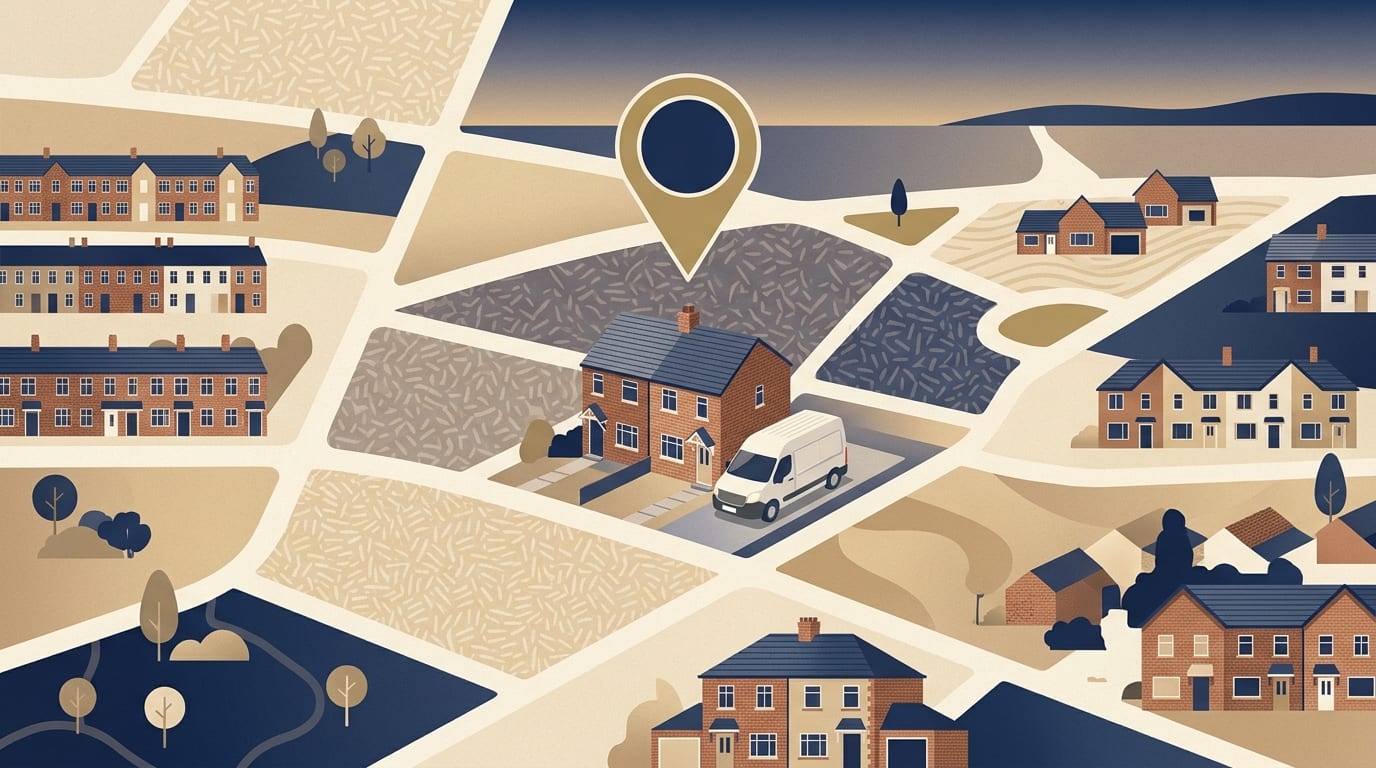
Once your address is hidden, you need to define where you actually work. You can set up to 20 service areas, based on the cities, postcodes or other areas you serve. Google says to be as specific and accurate as possible when choosing these locations.
To add or edit a service area, follow these steps:
- Go to your Business Profile.
- Select Edit profile, then Location.
- Next to Service area select Edit.
- Select a suggested service area or enter one.
- Select Save.
The boundaries of your overall area should not be more than about two hours of driving time from where your business is based. For example, a roofing firm based in a specific town should select that town, a few neighbouring towns, and the specific postcode districts they regularly travel to for repair work. Selecting an entire region that takes much longer than about two hours to drive across goes beyond that limit.
If approved, service area edits may take up to 48 hours to show on your profile.
This table shows the limits and processing times for updating your profile locations.
|
Profile update or limit |
Allowance or processing time |
|---|---|
|
Maximum service areas |
Up to 20 areas |
|
Maximum overall boundary |
About two hours of driving time |
|
Standard profile changes |
About 10 minutes |
|
Service area edits |
Up to 48 hours |
|
Maximum delay for some cases |
Up to 30 days |
Rules that catch businesses out
A common mistake is trying to set a simple mileage circle around your base. You cannot set your service area as a radius distance around your business. If you previously set it up that way, you cannot edit it, and must instead specify your area by city, postcode or another type of area.
If you decide to stop working in a particular city because the traffic is too heavy, you can take it off your profile. To remove a service area, select Edit next to Service area and remove the locations you do not serve under Selected service areas, then Save. To remove all of your service areas you must be a shop front business with your business address on the profile.
If you change from a shop front to a Service Area Business or hybrid business, you must update your settings to match. If you serve customers at your address and also have a service area, enter both. If you do not serve customers at your address, remove the address and only enter your service area.
Verifying a business run from home
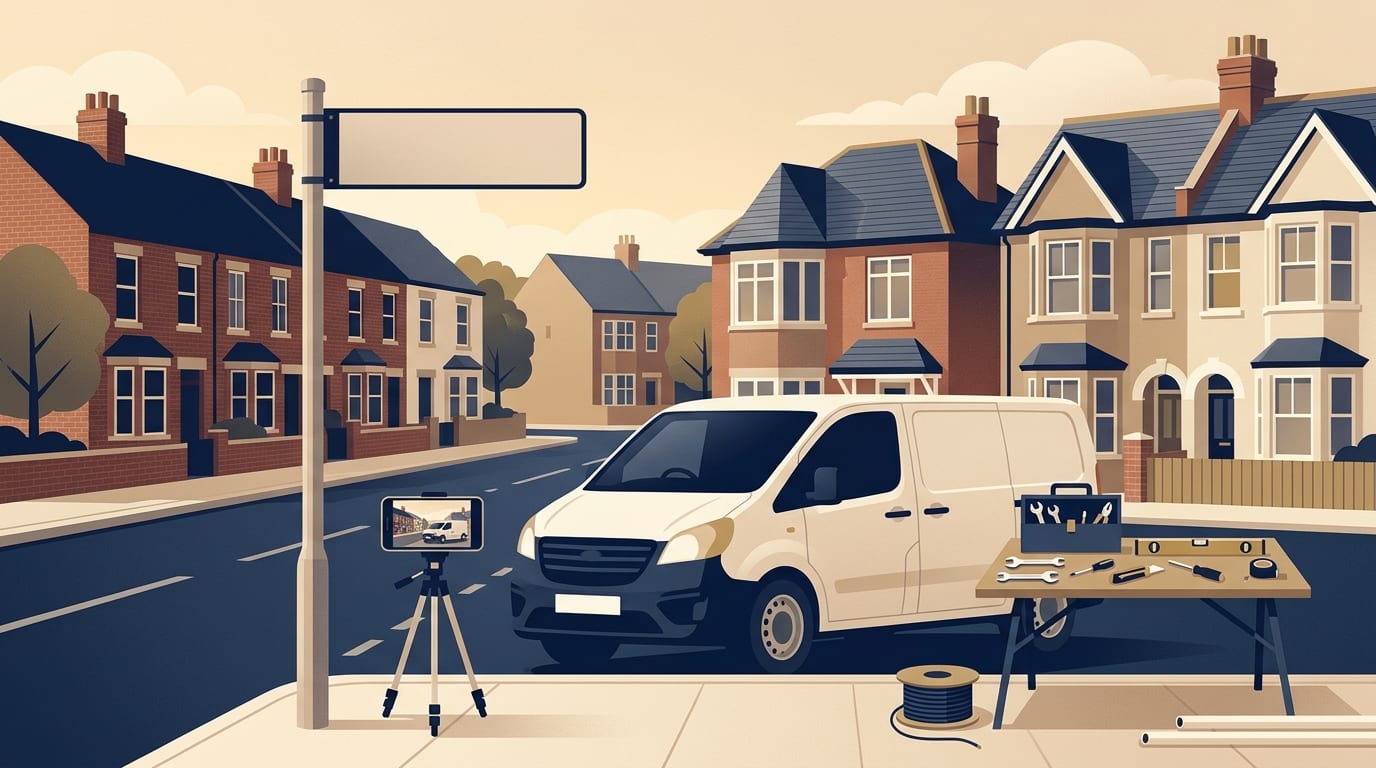
Google decides which verification methods a profile is offered. If video is one of them, a Service Area Business video must show where the business operates. To confirm your location, record street signs, nearby landmarks or other identifiers at your business address, and avoid filming empty land or locations without clear markers.
Google gives a tip for tradespeople without commercial premises. If you run a Service Area Business from your home, you can record landmarks and signs in your immediate neighbourhood to verify the address. Keep other people's faces out of shot while you do. There is more in the guide to verifying your roofing business.
The video should also show that the business exists. Google's examples are the tools, equipment or products you use for work, so a roofer could show the van with the ladders and roof ladder on the rack, and the business name if the van is signwritten. Inside the van or your garage, you can show tools such as a roof ladder, slate ripper, slate cutter, roofing hammer, lead dressing tools and a harness, and materials such as slates, tiles, rolls of lead, felt or breathable membrane and battens. Keep any machinery switched off while you film.
To Google, branded workwear or hi-vis shows that the business exists. To show that you manage or represent the business, you can show paperwork such as an invoice from a roofing or builders' merchant, or a utility bill for the yard, that matches the name on your profile. Keep bank, tax and ID numbers and other private details out of shot.
Safety and privacy are vital during this process. Never film from a roof, ladder or scaffold, and never film at a customer's property, where house numbers and passers-by are private information. Film at your base instead, and keep other people's faces out of shot.
Moving home or base
Roofing firms often relocate when a sole trader moves house or a growing firm rents a larger lockup. If your business moves, Google says not to create a new Business Profile for the new location. Update the existing profile with the new address instead.
Google allows one profile per location for a service business with different locations, each with separate service areas and separate staff. Otherwise a business that travels to customers is allowed one service-area Business Profile. If you offer different services, do not create separate profiles for each service, but list them as services on one profile. Categories are a separate choice from services. Most roofing firms use Roofing contractor as the primary category, and some add categories such as Chimney services, Waterproofing service, Skylight contractor, Cladding contractor or Gutter service, but only where the category describes work the firm really does.
Changing your details affects your verification status. If you change your business name after it is verified, you might need to verify your business again. If you move your business to a new address after it is verified, you must verify your business again.
If you need to request ownership of an existing profile, the route for a Service Area Business differs from a shop front. To request ownership of a Service Area Business that provides services at the customer's location and does not have a physical shop or office, Google says to contact it. In the Tell us what we can help with field enter Transfer ownership of listing, and choose Transfer ownership of listing as the issue description.
Common questions
Will hiding my home address hurt my ranking?
Google's help pages give no rule on whether hiding your address affects your local ranking. What the guidelines do say is that a service-area business should hide its address from customers, and Google asks for service areas to be as specific and accurate as possible. Nobody can promise or pay for a ranking.
Can I show my home address if I have a workshop there?
Only if customers come to you there. A garage or workshop where you only store tools and materials, and do not serve customers, does not make you a shop front or a hybrid business. The signage and staffing guidelines covered earlier apply if you do show an address.
How many areas can I add?
Up to 20, as set out above. Choose cities, postcodes or other areas you really serve, and keep the overall area within about two hours of driving time from your base.
Why can I not edit my radius?
Google does not allow a service area set as a radius distance around your business. If you previously set it up that way, you cannot edit it, so specify your area by city, postcode or another type of area instead.
What if I move house?
If your business moves, you must update the existing profile with the new address instead of creating a new one. Because the address has changed, you must verify your business again. Google decides which verification methods your profile is offered.
Your next steps
Getting your address settings right keeps your private address off a public profile and follows Google's guidelines. If your home address is currently visible to the public, fixing it is a sensible first job.
- Check your current Google Business Profile to see if your residential address is visible.
- Follow the exact menu steps to turn off the address display and hide it from customers.
- Write down up to 20 specific towns and postcodes that fall within a two-hour drive of your base.
- Add these locations to your service area settings and save the changes.
- Allow up to 48 hours for approved service area edits to show on your profile.
- If Google offers you video verification, plan a film at your base showing the tools, materials and paperwork listed earlier.
Taking a few minutes between jobs to update these details keeps your private address off your profile. When you are done, you can look up roofing firms by area.
Find a top rated roofer near you
3,906 roofers across the UK, each ranked on their Google rating and the number of reviews behind it. Start with your county: