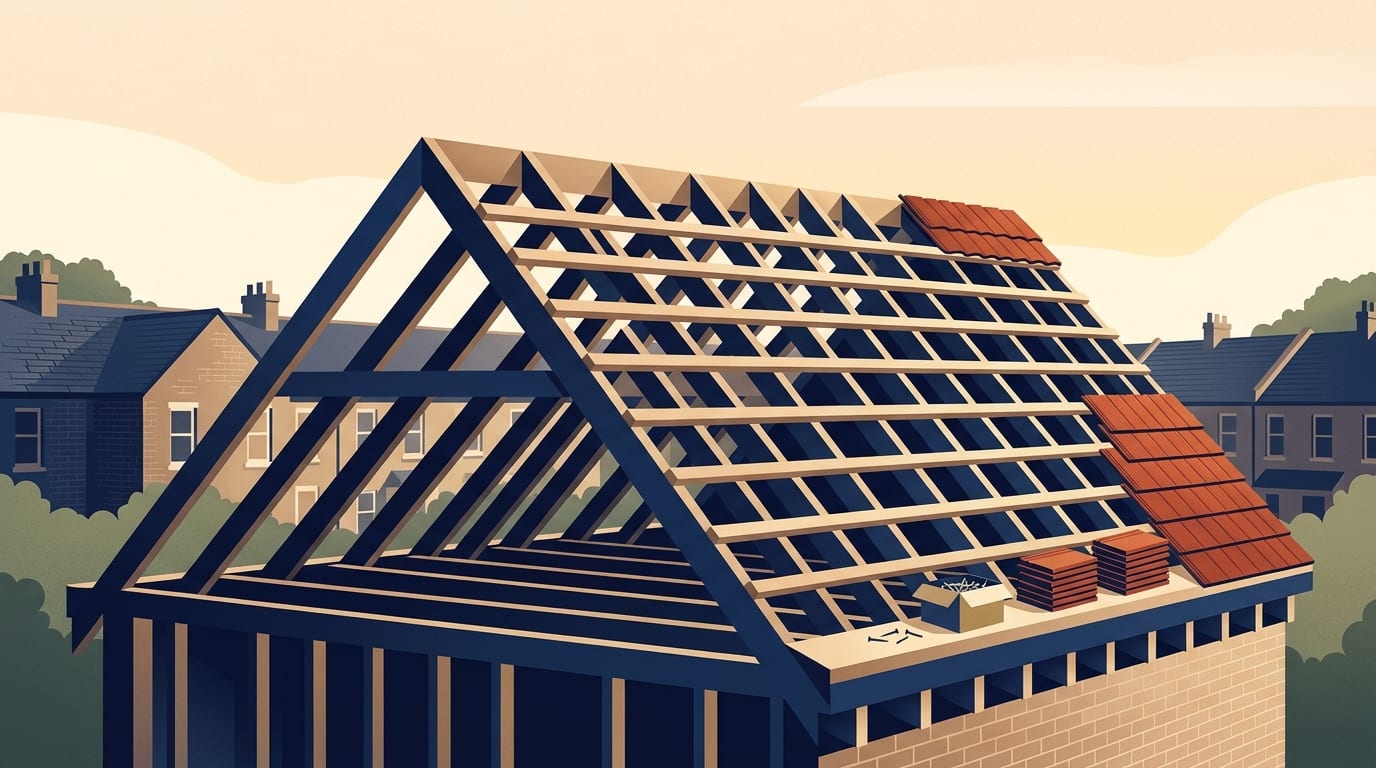
Roof battens are the timber or plastic strips fixed horizontally across your roof rafters that your tiles or slates hang from and are secured to. When a roof is completely re-tiled, any rotten or damaged battens must be replaced to provide a secure fixing. Typical published prices for 2026 put this at an extra £8 to £16 per square metre on top of the main roofing costs when the old timber is rotten. You should never climb on your roof or use ladders at height to check these yourself. Instead, a professional roofer can assess the timber from inside your loft or by lifting a few tiles and taking photographs to show you what is wrong.
What roof battens are and what they do
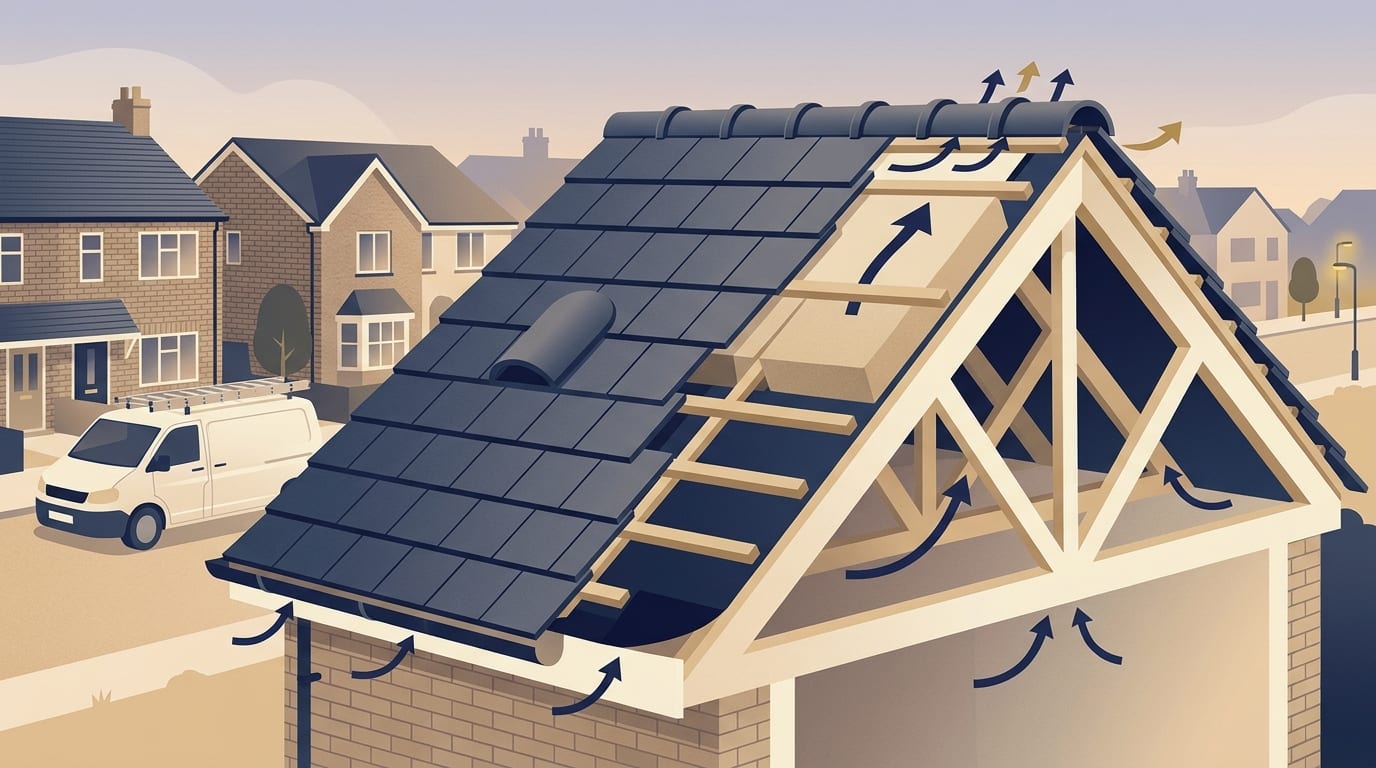
The structure of a pitched roof is made up of several layers. The rafters are the thick structural timbers that form the shape of the roof. Over these rafters, roofers lay an underlay, which is often called felt or a membrane, to catch any wind-blown rain. The roof battens are then fixed over the underlay, running horizontally across the rafters.
Battens do a very specific job. They keep the roof covering in straight, even rows and provide a solid anchor for the nails or clips that secure the tiles or slates. They must be strong enough to carry both the dead load, which is the permanent weight of the tiles, and the live load, which includes the weight of snow or wind pressure acting on the roof.
Timber is the typical batten material. Plastic battens are an alternative because they do not decay as easily. The exact installation method and the orientation of the battens depend on your chosen roofing material, the pitch of your roof, and the expected weather conditions for your area.
In some roofing systems, roofers install a grid of battens running in both directions, which are known as counter-battens. This secondary layer improves ventilation beneath the tiles. Counter-battens are more necessary when insulation boards sit above the rafters, which is a setup known as a warm roof. The grid also helps to reduce cold bridging.
Why tiles slip and when battens fail
Tiles slip out of place when the timber beneath them fails or when the metal fixings holding them rust away. Old undersized or non-graded battens rot and split, which can let tiles slip.
If the timber is sound but tiles are still moving, the problem is often corroded fixings. Rusty nails let tiles and ridge pieces slip out of place, especially after heavy storms. A small number of slipped tiles does not justify a full roof replacement, and a local repair is usually enough.
However, if your roof has lost its nail fixing across a large area, this widespread nail sickness points to a full recover rather than piecemeal refixing. When fixings fail all over the roof, patching it up becomes uneconomic and a replacement is the honest answer.
When a roofer inspects a leaking or damaged roof, they look for specific signs of failure in the batten layer. Common faults include:
- Rotten timber under the tiles.
- Split battens that can no longer grip the nails securely.
- Old undersized or non-graded timber that has rotted or split.
- Corroded fixings that have let tiles and ridge pieces slip.
How roof tiles are fixed with nails and clips
How your tiles are held on depends on their design, their weight, and the weather exposure of your house. The roofer, the tile manufacturer, and building control decide the exact specification, which is why a good quote will not just guess the fixings. BS 5534 is the code of practice for slating and tiling, including shingles, for pitched roofs and vertical tiling.
Single lap tiles need larger battens than double lap tiling, although they weigh less overall. They should be mechanically fixed with either a clip or a nail. Double lap plain tiles have at least two nibs under the head, so they hang on the battens that are nailed over the rafters. These double lap tiles are usually nailed only on every fourth course, unless the roof exposure to wind is high.
Aluminium or stainless steel tile nails are recommended for securing tiles, and the fixing the tile manufacturer recommends is the one to follow. If a fixed interlocking tile comes loose, it can sometimes be re-fixed to its neighbours using an epoxy resin adhesive rather than replacing the whole section.
Because the correct batten sizes, nail lengths, and fixing spacings depend entirely on the tile, the roof, and BS 5534, your roofer will calculate these and state them in your quote. You can read our guide on parts of a roof explained in plain English to help understand the terminology your roofer uses.
Are battens replaced in a re-roof?
Yes, rotten battens must be replaced when tiles come off during a roof repair or replacement. Decaying timber is not a sound base for new tiles.
A full recover uses new treated battens that are graded to BS 5534. These battens are fixed at a specific distance apart, known as the gauge. The gauge is set to suit your chosen tile and determines the headlap, which is how much one tile overlaps the one below it. Getting this headlap right directly affects the weather performance and waterproofing of your roof.
If your roofer is installing a warm roof system where the insulation sits above the rafters, counter-battens are more necessary. The grid improves ventilation beneath the tiles. To understand more about the waterproof layer beneath the timber, read our guide on roof underlay explained and when it needs replacing.
What battens add to the cost of a re-roof
Small repairs to a few battens and tiles are usually priced as a fixed job or on a day rate. Larger batten replacements and full roof recovers are calculated per square metre, plus the cost of access. Scaffolding is often a separate and significant line on your bill, and waste removal and VAT may or may not be included, so you must always ask.
Because nobody can see the true condition of your timber until the old covering is off, the exact cost can change. A good quote will state clearly how extra rotten timber will be priced if it is discovered later.
The table below shows batten-related prices for repairs and replacement work.
|
Job description |
Typical price |
|---|---|
|
Renewing battens and membrane on a re-tile |
£8 to £16 per square metre extra |
|
Membrane and battens on a full re-tile (about 90 square metres) |
£700 to £1,300 |
|
Membrane, battens and fixings, including VAT (38 square metre rear pitch in Leeds) |
£410 |
|
Refixing or swapping a handful of tiles after wind or a leak |
£170 to £450 |
|
Replacing broken tiles or slates for a small area |
£150 to £500 |
These are typical published figures for 2026, and local quotes will vary depending on your location and the complexity of the roof. Prices are generally higher in London and the South East.
Building regulations and roof weight
In England, repairing or re-covering a roof will not normally need a building control application if less than 25 per cent of the building envelope and less than 50 per cent of the roof is affected, according to the Planning Portal. Above that threshold, approval is needed and your insulation may have to be upgraded to modern standards.
Approval is also required if a new covering increases the weight of the roof covering by 15 per cent or more. The Planning Portal notes that if a new covering is significantly heavier or lighter than the existing one, the roof structure may need modifying and strengthening. They advise checking with a structural engineer or surveyor before starting work, and you can read their guidance to ensure your rafters can handle the load. Replacing a glazed or polycarbonate conservatory roof with a solid one takes the conservatory out of its exemption, so building regulations apply to the new roof.
The National Federation of Roofing Contractors (NFRC) operates a government-authorised competent person scheme called CompetentRoofer. Registered roofers can self-certify roof refurbishment in England and Wales, meaning you receive a building regulations compliance certificate without going through council building control or a registered building control approver. The NFRC states that all roofing components should be fitted in line with current building regulations, industry codes of practice and, where specified, manufacturer's guidance, which is detailed on their frequently asked questions page.
Under the NFRC scheme, a weight change of more than 15 per cent requires a structural survey. If you live in a listed building, historic features such as cleft or riven battens and no underlay are not accepted under the scheme because they do not meet modern British Standards. If you are in Scotland or Northern Ireland, building rules differ, so you should check directly with your local council rather than guessing.
What a good quote says about battens
A quote is a fixed price that you can rely on, whereas an estimate is just a rough guess that can increase. When you are comparing prices for a new roof or a large repair, the paperwork should be detailed enough to hold the roofing firm to account.
A vague one-line quote that just says "replace roof" is a warning sign. Instead, a proper written quote will break down the materials and the methods being used.
A good roofing quote should include:
- The size and type of the new battens being used.
- Confirmation that the battens are treated and graded to BS 5534.
- The gauge at which the battens will be fixed to suit your chosen tiles.
- The type of fixings being used, such as aluminium or stainless steel nails.
- Exactly how any extra rotten timber discovered after the old tiles are removed will be priced.
- Whether scaffolding, waste disposal, and VAT are included in the total figure.
By getting three written quotes that include these details, you can compare the firms fairly and avoid unexpected bills once the old roof covering has been stripped away. Knowing what a roofing quote should include protects you from being overcharged.
Common questions
What size are roof battens and how far apart are they spaced?
There is no single standard size or spacing for roof battens. The required dimensions and the gauge depend entirely on the type of tile or slate you are using, the pitch of your roof, and the BS 5534 code of practice. Your roofer will calculate these measurements based on the manufacturer's guidance and state them clearly in your written quote.
Are roof battens treated against rot?
A recover uses new treated battens that are graded to BS 5534 and fixed at the gauge suited to the chosen tile. Ask your roofer to state the treatment in the quote.
Can you fix roof tiles without battens?
No. Tiles and slates are fixed to battens, which anchor the nails or clips that secure them. On listed buildings, historic features such as cleft or riven battens and no underlay are not accepted under the NFRC competent person scheme because they do not meet modern British Standards.
Why do roofers use counter-battens?
Counter-battens are a grid of battens running in both directions. They are used to improve ventilation beneath the roof covering. They are especially necessary in warm roof designs, where insulation sits above the rafters, to help reduce cold bridging.
What to do next
If you have slipped tiles or have been told your roof battens are failing, take a calm and methodical approach to hiring a roofer. Do not be pressured by cold callers who claim they have spotted a loose tile from the street, and never hand over a large cash deposit without a proper written contract. Contracts agreed at home, by phone or online normally carry a 14-day cooling-off period, but if you ask for work to start inside that period you must pay for what has been done.
To protect yourself and your home, follow these steps:
- Ask the roofer to take photographs of the damaged battens or slipped tiles from the loft or the roof so you can see the problem yourself.
- Get at least three written quotes that itemise the cost of the battens, membrane, fixings, and scaffolding.
- Check the quote states how any extra rotten timber found during the job will be priced.
- Look for a roofer registered with a competent person scheme like CompetentRoofer, or check the TrustMark register for endorsed businesses.
- Agree to staged payments, and only make the final payment when the job is completely finished and you have your building regulations compliance certificate.
- Pay by credit card if possible, as this gives you Section 75 consumer protection on purchases over £100 and up to £30,000.
Under the Consumer Rights Act 2015, all roofing work must be done with reasonable care and skill. If it is not, you can ask for it to be put right or for money back, and Citizens Advice is the best place to get independent support in a dispute. When you are ready to get quotes and compare local professionals, you can find a roofer near you to inspect your tiles and provide a detailed written price.
Find a top rated roofer near you
3,906 roofers across the UK, each ranked on their Google rating and the number of reviews behind it. Start with your county: