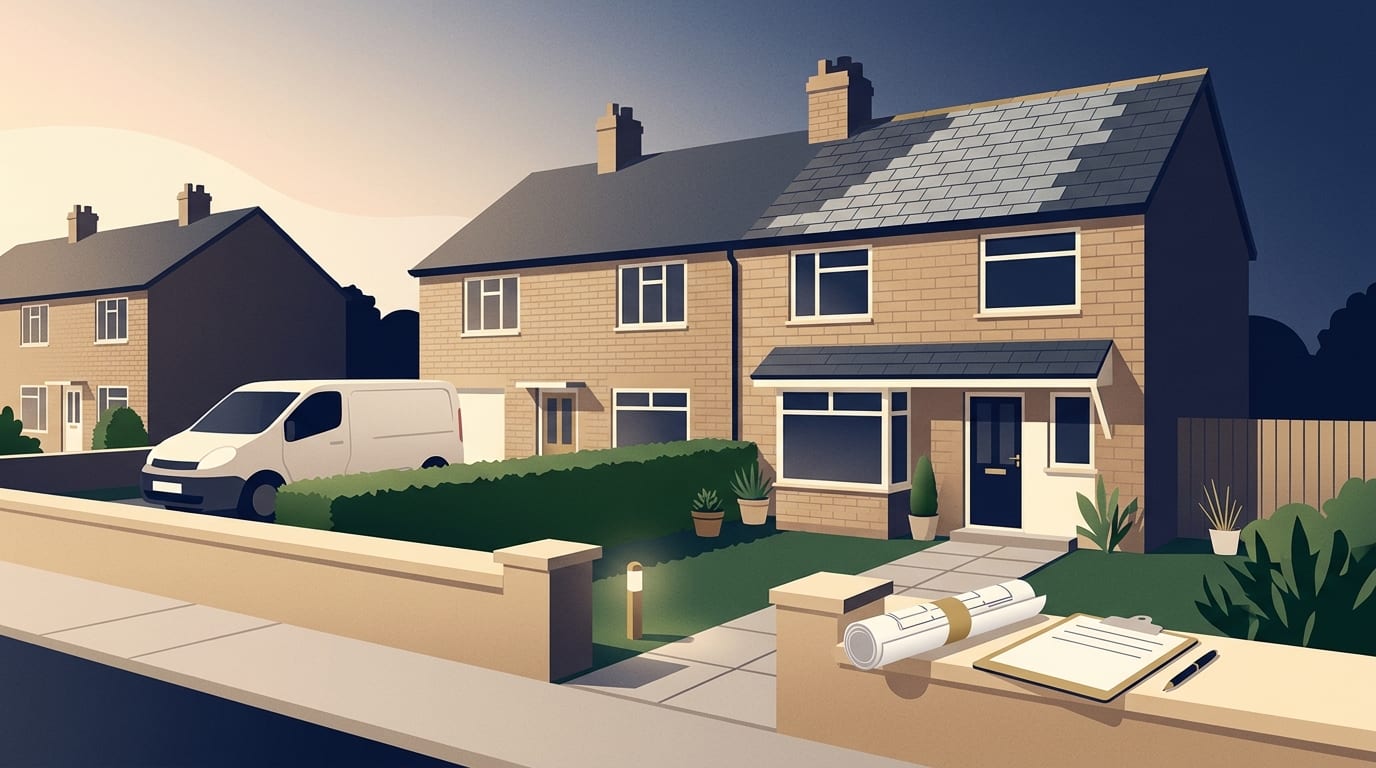
Replacing a roof with the same kind of covering, which does not materially affect the external appearance of the house, generally does not need planning permission in England. There are important exceptions for conservation areas, listed buildings and flats. You must also remember that building regulations are a separate set of rules entirely.
Planning permission and building regulations are different
Homeowners often confuse planning permission with building regulations. Planning permission is concerned with how a building looks, where it is sited and how it affects the local environment. Building regulations are concerned with the structural safety, fire resistance and energy efficiency of the property. You can have a roofing project that needs no planning permission but still requires building regulations approval.
Re-roofing work in England will often need building regulations approval, depending on how much of the roof and building is affected. This is separate from planning permission. According to the Planning Portal, approval is likely to be needed if the covering is replaced with a different material. Where the replacement is significantly heavier or lighter than the existing covering, the roof structure may need modifying or strengthening.
Repairing or re-covering a roof does not normally need a building control application if less than 25 per cent of the building envelope and less than 50 per cent of the roof is affected. Above that threshold, approval is needed and the insulation may have to be upgraded. Approval is also needed for structural alterations, where a new covering performs significantly differently in fire, or where it adds 15 per cent or more to the weight. If you are not sure which applies to your roof, ask building control or a registered roofer.
You can handle this approval through your local council building control department or a registered building control approver. Alternatively, you can use a roofing contractor registered with CompetentRoofer. This is a government-authorised competent person scheme run by the National Federation of Roofing Contractors. Registered roofers can self-certify roof refurbishment in England and Wales, and you should receive a building regulations compliance certificate when the job is done. You can read more about this in our guide on building regulations for a new roof.
When like-for-like replacement needs no permission
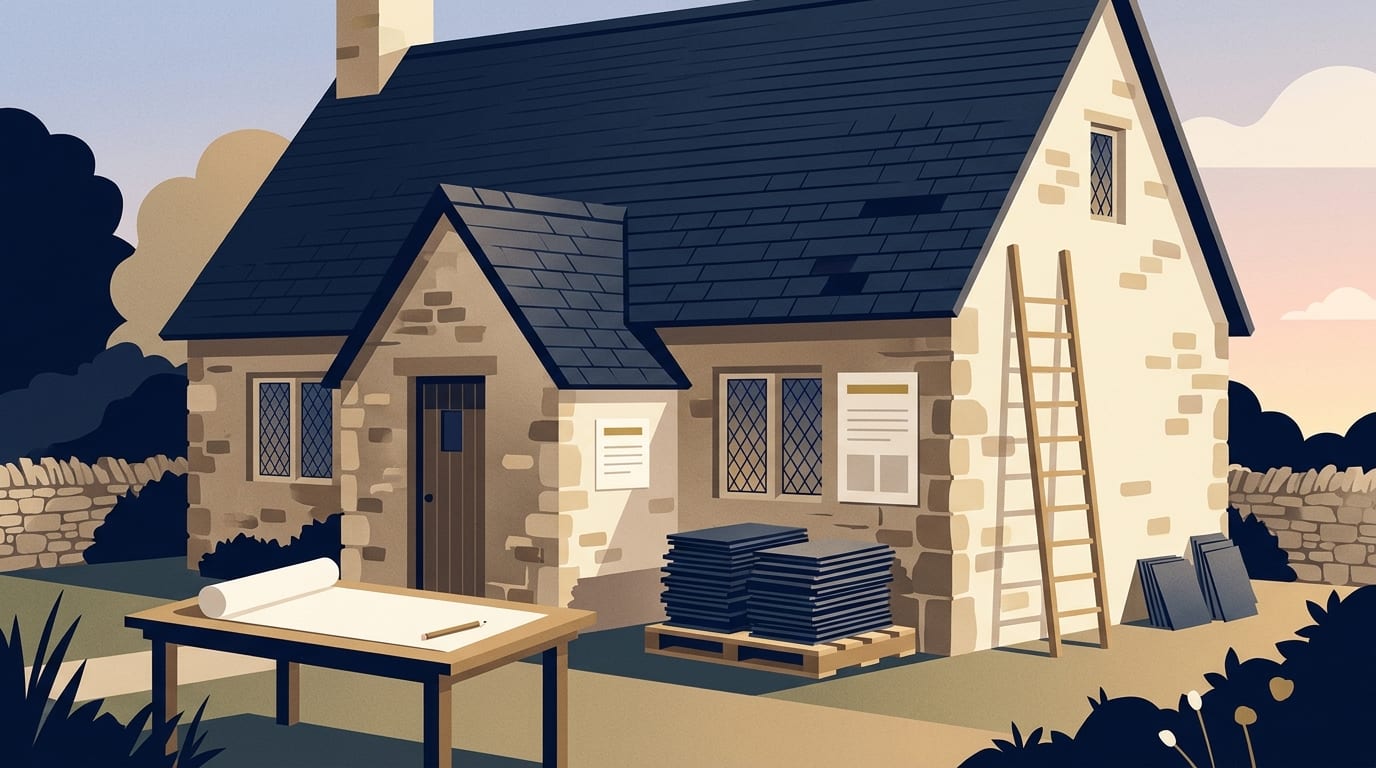
Houses in England generally have permitted development rights. These rights allow you to perform certain types of building work without having to make a full planning application. According to the Planning Portal, work to the roof of a house such as re-roofing that does not materially affect its external appearance generally does not need planning permission.
This means that a straightforward like-for-like replacement is usually allowed. If your house currently has a pitched roof covered in concrete tiles and you replace them with new concrete tiles of a similar colour, the external appearance remains largely the same. A pitched roof is a standard sloping roof. The same applies if you replace natural slate with new natural slate, or clay tiles with matching clay tiles.
The internal and hidden layers of your roof do not affect its external appearance. Roofers will strip away the old covering to reveal the timber structure underneath. They will replace the underlay, which is often called felt or a membrane, and fix new timber battens across the roof to hold the tiles. Because these parts are completely hidden once the roof is finished, updating them does not require planning permission.
You can also replace the various edge and corner pieces of the roof provided they look similar. The ridge is the peak of a pitched roof, hips are the sloping corners, valleys are the internal corners, verges are the outer edges and eaves are the lower edges. Replacing the lead flashing, which is the metal used to seal joints between the roof and brickwork, is likely to be treated the same way if the appearance does not change materially, but ask the council if unsure.
Raising or reshaping the roof
A roofing project becomes more complicated if the new design changes the shape or the height of the property. The Planning Portal states that roof alterations must not project more than 150 millimetres from the plane of the existing roof slope. Alterations must also not exceed the height of the existing roof.
If these conditions are not met, an application for Householder or Full Planning Permission will be required. Additional local rules may also affect what permissions are needed. If you are in doubt, you should contact your local planning authority. Changing the height can happen when a flat roof is upgraded with more insulation.
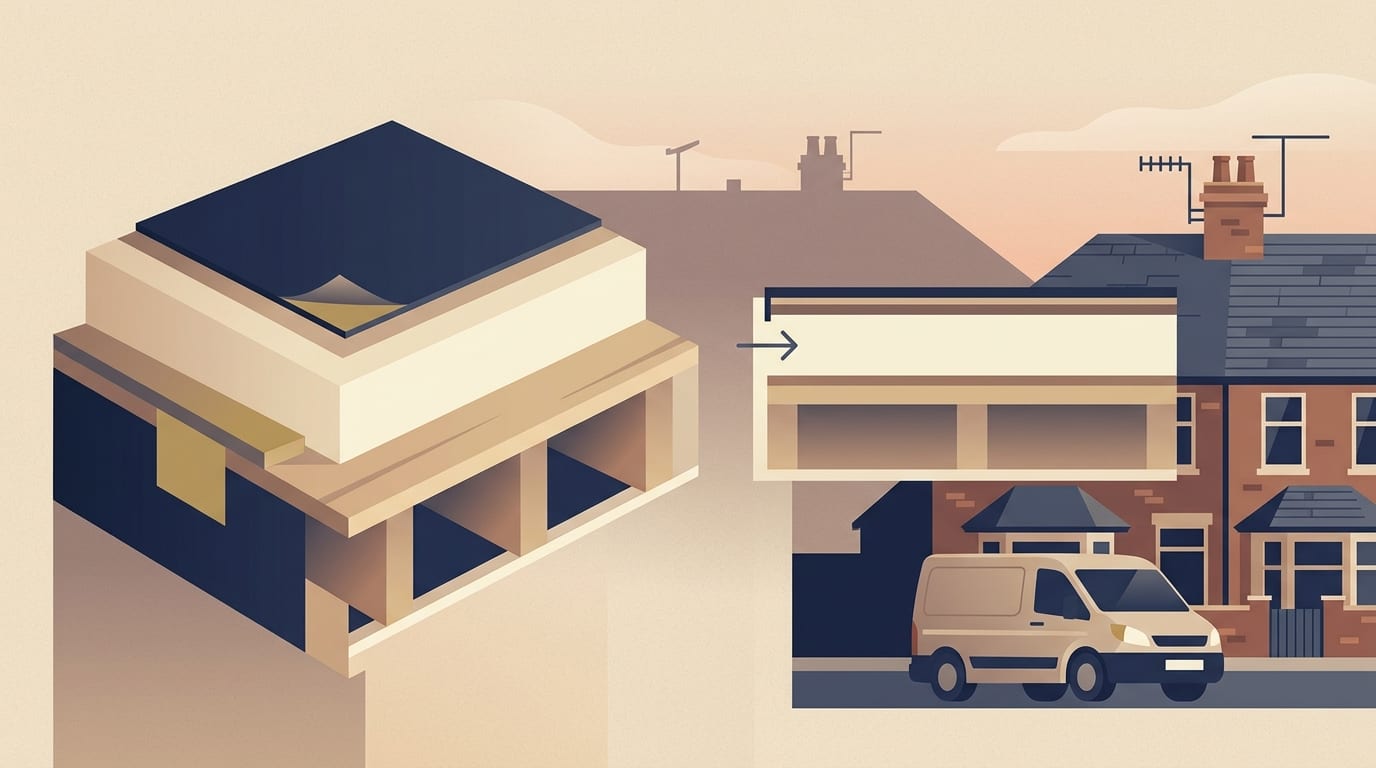
A flat roof has a timber deck, which is the structural base layer that supports the waterproofing. A cold roof design has insulation placed between the timber joists under the deck. A warm roof design places the insulation above the timber deck. Converting a cold roof to a warm roof can raise the overall height of the roof structure, which might exceed the height of the existing roof, so ask the council before you start.
The Planning Portal guidance does not specifically address changing roof materials. A changed material that noticeably alters the external appearance of your house is a reason to ask the council before you start work. Switching from a traditional natural slate to a modern fibre cement slate, or changing a built-up felt flat roof to an EPDM rubber system, could change the appearance of your house, so ask the council whether it matters before you start.
Conservation areas and Article 4 directions
Your permitted development rights are not absolute and they vary depending on where you live. In designated areas such as a conservation area, permitted development rights are more restricted. Work that needs no application elsewhere may need planning permission there.
A local planning authority can also remove some permitted development rights entirely by issuing an Article 4 direction. The Planning Portal notes that Article 4 directions are most common in conservation areas. If your street is covered by one of these directions, you might have to apply for planning permission for work that would not normally need it, so check with the council.
Local councils may use these rules to protect the character of a neighbourhood. The council may have conditions that require you to use specific materials to match the surrounding houses.
Ask the council early whether any conditions apply to the roof covering you plan to use. The same goes for flat roof systems such as built-up felt (usually torch-on), EPDM rubber, GRP fibreglass, single-ply membranes and liquid coatings.
Listed buildings
If your home is a listed building, the rules are much stricter. Different requirements apply to a listed building compared to a standard home in a conservation area.
Controls apply to works to demolish, alter or extend a listed building that are likely to affect its character as a building of special architectural or historical interest. The Planning Portal does not say whether basic repairs or a like-for-like roof replacement need listed building consent. Because of this uncertainty, you should ask your local council before touching the roof.
The penalties for ignoring these rules are severe. It is a criminal offence to carry out work which needs listed building consent without obtaining it beforehand. You cannot simply build the roof and hope to smooth things over later. Retrospective consent does not remove liability for earlier work, and you could face prosecution.
Consider asking for a roofer with experience of listed buildings, and ask the council what it will expect. Roofline features such as fascias, soffits and guttering may also be affected by the work, so raise them at the start.
Flats and maisonettes
The permitted development rights that make replacing a roof so straightforward for most homeowners do not apply to every property type. The rights for houses do not apply to flats, maisonettes or other buildings. Do not assume the rules for houses apply to a flat.
If you live in a flat or a maisonette, you must check with your local planning authority before starting any external roofing work. Ask whether planning permission is needed for the work, even if you are just swapping old tiles for new ones of the same colour and style.
You should also check the terms of your lease and speak to the freeholder before starting any work on the roof.
Bats and roofs
Replacing a roof does not just affect the people living underneath it. It can also disturb bats, which are protected by law. According to GOV.UK guidance, all bat species, their breeding sites and resting places are fully protected by law.
Activities that can affect bats include repairing or replacing a roof. Roof work can disturb bats and their breeding sites or resting places.
The legal consequences for harming bats are serious. Penalties can include up to six months in prison and an unlimited fine. If you suspect you have bats in your roof, you must stop work immediately and seek expert guidance.
Free advice is available from the National Bat Helpline. The helpline cannot advise on building works that need planning permission. A bat survey and, if harm cannot be avoided, a Natural England mitigation licence may be needed.
Scotland, Wales and Northern Ireland
The planning rules across the UK are not uniform. The Planning Portal guidance referenced in this guide relates specifically to the planning regime for England. The Planning Portal notes that the policy in Wales may differ, so Welsh homeowners should verify the exact permitted development limits with their local authority.
The Planning Portal guidance does not mention Scotland or Northern Ireland at all. These nations have their own separate planning systems and permitted development frameworks. Do not assume that the English rules on roof height, materials or conservation areas apply there.
Readers in Scotland and Northern Ireland must check directly with their local council before starting a roofing project. Guessing the rules based on English guidance is risky. Your local authority website will have a dedicated planning section explaining the exact requirements for your area.
Avoiding common roofing scams
Unfortunately, the roofing industry attracts its share of rogue traders. Cold callers often knock on doors claiming they have spotted a loose tile or moss on your roof from the street. They will use pressure tactics to force you to decide today, warning that a leak will destroy your home if you wait.
Never hire a roofer who demands cash only, asks for a huge deposit upfront, or cannot provide a physical business address. You should also be wary of vague one-line quotes that do not itemise the costs. A quote is a fixed price for the work, whereas an estimate is just a rough guess, so the final cost could be higher.
Look out for these common warning signs when hiring a roofer:
- Cold callers claiming to spot a loose tile or moss from the street.
- High pressure tactics designed to make you decide today.
- Demands for cash only or unusually large upfront deposits.
- Vague one-line quotes with no physical business address provided.
- Being sold a whole new roof when a simple local fault is to blame.
- Firms selling roof coating, painting or pressure washing as maintenance.
Under the Consumer Rights Act 2015, all roofing work must be done with reasonable care and skill. If the work is substandard, you have the right to ask for it to be put right or for your money back. If you agree to a contract at home, over the phone or online, you normally have a 14-day cooling-off period. If you ask for emergency work to start inside that period, you must pay for what has been done.
Paying by credit card gives you Section 75 protection on purchases over £100 and up to £30,000. This means the credit card company shares liability with the roofer if something goes wrong with the work. If you end up in a dispute with a trader, Citizens Advice is the best place to go for independent guidance.
What a proper roofing quote looks like
Before you agree to any major roof work, you should get three written quotes from different local firms. Scaffolding is often a separate and significant line on the bill, so check if it is included. Waste removal and VAT may or may not be included, so you must ask the roofer to clarify. You can read more about this in our guide on what a roofing quote should include.
Nobody can see rotten timber until the old covering is stripped off. A good quote will state clearly how any extra repairs will be priced. Small repairs are usually a fixed price or a day rate, while larger work is priced per square metre plus the cost of access.
A professional written quote should always include:
- A fixed price for the work rather than a rough estimate.
- Clear itemised costs for scaffolding, waste removal and VAT.
- A clear statement on how hidden timber repairs will be priced.
- Proof of the firm's employers' liability and public liability insurance.
- A staged payment plan with the final payment due on completion.
Prices are generally higher in London and the South East. A trustworthy roofer will provide proof of their insurance and offer a staged payment plan. You should only make the final payment when the job is completely finished and you have all the necessary paperwork, including your building regulations compliance certificate.
You should look for membership of TrustMark, which is the government-endorsed quality scheme for work in and around the home. Membership is a good sign of a professional firm, though it is not an absolute guarantee of perfect work. You can check a roofer's credentials on the scheme's own register.
Common questions
Can I change a flat roof to a pitched roof without permission?
Changing a flat roof to a pitched roof is likely to alter the external appearance of your house and may exceed the height of the existing roof or project more than 150 millimetres from the plane of the existing roof slope. If those conditions are not met, an application for Householder or Full Planning Permission will be required, so ask the council before you start.
Do I need permission to put a solid roof on a conservatory?
Replacing a glazed or polycarbonate conservatory roof with a solid one changes how the structure looks, so you should ask the council if planning permission is required. This change also takes the conservatory out of its building regulations exemption. Building regulations apply to the new solid roof.
Will adding a roof lantern require a planning application?
The Planning Portal page does not specifically address roof lanterns, so ask the council before you order one. Roof alterations must not project more than 150 millimetres from the plane of the existing roof slope and must not exceed the height of the existing roof. If your property is a flat or located in a conservation area, check with the council first.
What happens if I ignore an Article 4 direction?
If you replace your roof without the necessary planning permission in an area covered by an Article 4 direction, you risk problems with the council, so check whether an Article 4 direction applies before work starts and ask the council if you are unsure.
How to check before work starts
Assuming your roof falls under permitted development is a common and expensive mistake. To protect yourself and your property, you should confirm the rules before any scaffolding goes up or any materials are ordered.
Follow this checklist to ensure your new roof is fully compliant:
- Ask the local council planning department if your specific project falls under permitted development.
- Check whether an Article 4 direction applies to your street or neighbourhood.
- Ask your roofer if they are registered with CompetentRoofer to self-certify the building regulations.
- Ask the roofer who deals with the building control approvals if they are not registered.
- Check your leasehold agreement and ask the freeholder for permission if you live in a flat.
- Look for signs of bats in your loft and contact the National Bat Helpline if you find any.
A professional roofing contractor will be happy to discuss planning and building regulations with you during the quoting process. They should provide a detailed written quote that explains exactly what materials they will use and how they will manage the building control paperwork. If you are ready to get quotes for your project, you can find a roofer near you to inspect your property and give you a fixed price for the work.
Find a top rated roofer near you
3,861 roofers across the UK, each ranked on their Google rating and the number of reviews behind it. Start with your county: