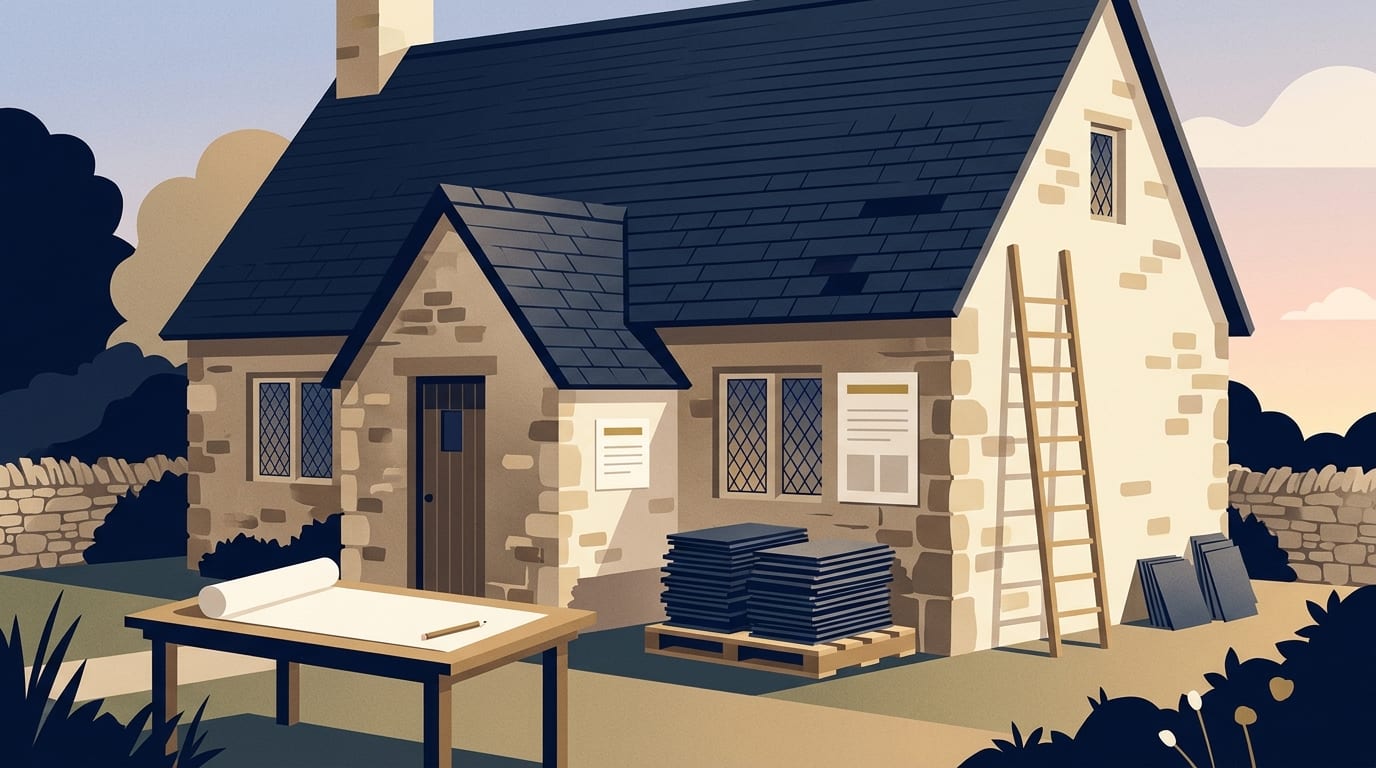
If you own a listed building, check with your council's conservation officer before doing any roof work beyond replacing a few slates. It is a criminal offence to carry out work that needs listed building consent without obtaining it first. If your home is in a conservation area, the rules are tighter for some projects and a local council can remove some of your normal rights with an Article 4 direction.
Historic roofs have extra rules to protect their special architectural and historical interest. Traditional pitched roofs, which slope downwards, are often covered in natural slate or clay tiles. Modern alternatives like concrete tiles or fibre cement slate can look different and change the character of the building. The details matter just as much as the main covering. Altering the ridge at the peak of the roof, the sloping external corners known as the hip, or the internal sloping joints called the valley can harm the property's appearance.
The edges of your roof are also protected. The verge is the edge of the roof at the gable end, while the eaves are the lowest overhanging edges. Replacing traditional timber fascias and soffits, which are the boards at the eaves, or the guttering that carries rainwater away, with modern plastic versions may need consent on a listed building, so ask the council first. The lead flashing is the metal strip used to seal joints around chimneys and valleys.
Because you cannot see your own roof properly, you have to take a stranger's word for what is wrong and what it should cost. On a listed building, taking bad advice can lead to work being done without the consent it needs. This is why you must understand the rules before you allow anyone to erect scaffolding.
Listed building consent and the criminal offence of skipping it
The Planning Portal, which appears to be written for England, states that strict controls apply to any works to demolish, alter or extend a listed building that are likely to affect its character as a building of special architectural or historical interest. Listed building consent is the formal approval you need from your local planning authority to carry out these works.
It is a criminal offence to carry out work which needs listed building consent without obtaining it beforehand. You cannot simply do the work and hope to apply for permission later. Work done before consent is granted can still be prosecuted. Ask the council before you start.
This applies to seemingly minor changes as well as full roof replacements. Changing the type of tile, altering the height of the roof, or removing a traditional chimney stack may affect the building's character, so ask the council. You must have the official consent document in your hand before any work begins.
Repair or re-roof and why councils differ
You might wonder if a simple repair crosses the line into work that needs formal consent. The honest answer is that it depends entirely on your local council, as they interpret the rules differently. You must ask your own council rather than relying on national assumptions.
For example, one Welsh council states that re-roofing will almost certainly need listed building consent, even when reusing existing slates or tiles. This is because they expect around 25 per cent of the original tiles to break on removal, meaning new materials have to be introduced. Their exemption for like-for-like work covers external redecoration and localised repointing, not re-roofing.
In contrast, one English council's guidance on roof coverings on historic buildings states that patch repairs covering no more than 50 per cent of one roof slope, in materials to match the existing, generally do not need consent. Larger areas do need approval. Stripping a roof slope and re-laying the existing covering needs consent. However, small-scale ridge replacement, or a spar coat in matching materials, generally does not need formal consent under their specific guidelines.
These are just two examples to show how much local rules vary. Rules also differ entirely in Scotland, Wales and Northern Ireland, so if you live there, you must check with your local council rather than guessing. Getting the council's view early will help you decide whether to repair or replace your roof safely.
Matching materials and reusing what you can
When working on a historic roof, the priority is preservation. Council guidance states that salvageable materials should always be reused, where possible. This means a roofer cannot simply throw all your old natural slates or clay tiles into a skip. They must carefully remove them, sort the sound ones from the broken ones, and set them aside to be re-laid.
You will still need new materials to replace the components that have failed over time. The battens, which are the wooden strips the tiles are fixed to, will usually need replacing. The underlay, often called felt or a membrane, sits under the tiles to catch blown rain and will also need updating. When buying replacement tiles or slates to make up for breakages, they should match the existing covering, as the council will expect.
Ask the council what it needs to see, such as samples, before it agrees to the work. Flat roofs are covered with systems such as built-up felt (usually torch-on), EPDM rubber, GRP fibreglass, single-ply and liquid coatings, and whether any of them is acceptable on your building is for the council to decide.
Conservation areas and Article 4 directions
If your home is not listed but sits in a conservation area, you still face tighter rules than a standard property. The Planning Portal explains that in designated areas, which include Conservation Areas, National Parks, Areas of Outstanding Natural Beauty, World Heritage Sites and the Norfolk and Suffolk Broads, permitted development rights are more restricted. You may need planning permission for work that would not need it elsewhere.
A local planning authority can also remove some permitted development rights through an Article 4 direction. These directions are made when the character of an area of acknowledged importance would be threatened, and they are most common in conservation areas. If an Article 4 direction is in place, you might need planning permission for work that would not need it elsewhere.
It is also vital to know that permitted development rights for many house projects do not apply to flats and maisonettes in the same way. Listed buildings have entirely different requirements. Always assume you need permission until the council confirms otherwise in writing.
Building regulations and bats still apply
Listed building consent is about appearance and character, but building regulations are about safety and energy efficiency. These safety rules still apply to historic roofs. In England, repairing or re-covering a roof does not normally need a building control application if less than 25 per cent of the building envelope and less than 50 per cent of the roof is affected. The building envelope means the walls, floor and roof combined.
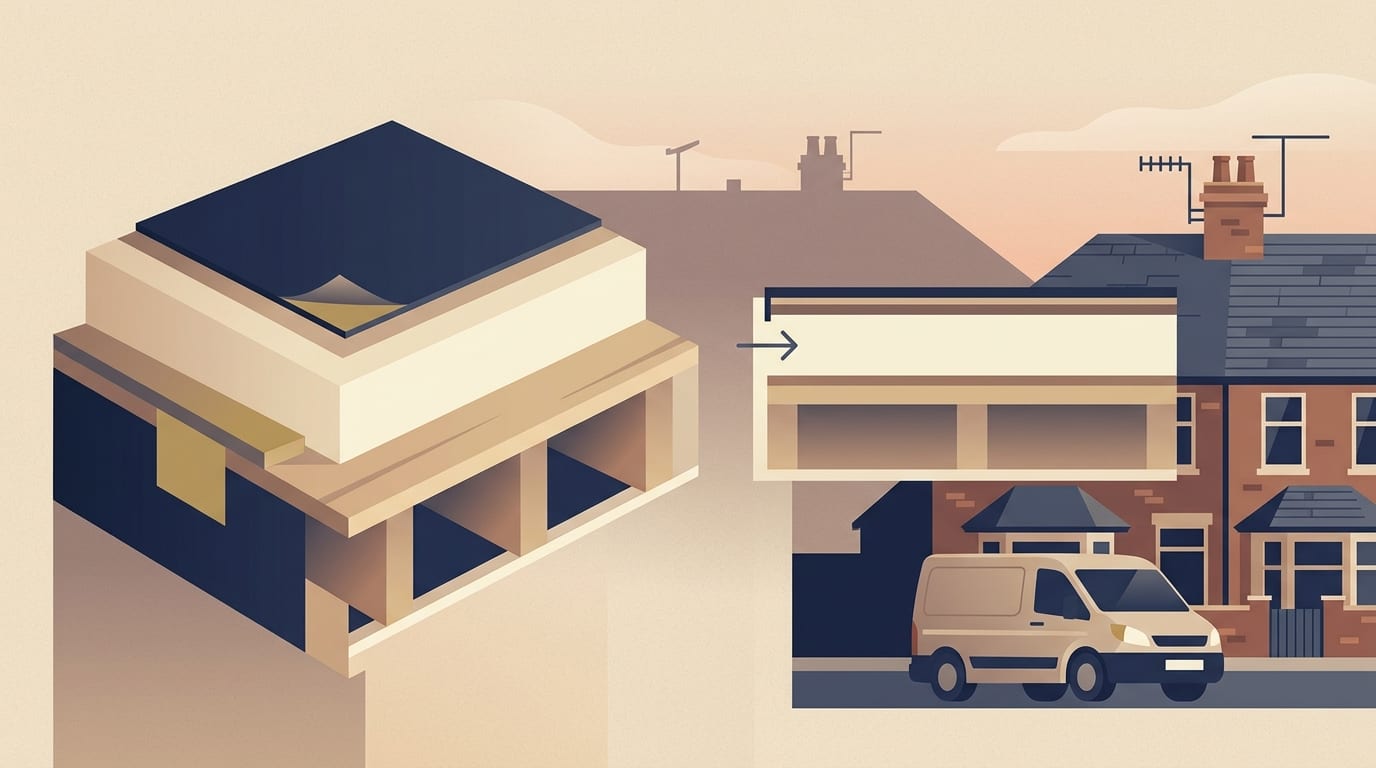
If your work goes beyond those limits, building regulations approval is needed and the insulation may have to be upgraded to modern standards. Upgrading insulation means understanding your roof structure. A cold roof has insulation between the joists. A warm roof has insulation above the deck. For flat roofs, the timber deck on a flat roof must also be considered.
Approval is also needed for structural alterations, where a new covering performs significantly differently in fire, or where it adds 15 per cent or more to the weight of the roof. If you are replacing a glazed or polycarbonate conservatory roof with a solid one, this takes the conservatory out of its exemption, so building regulations apply to the new roof.
You must also consider wildlife before you start stripping tiles. Council guidance advises contacting an ecologist if protected species such as bats could be affected by your work. Ask the council whether a survey is needed before scaffolding goes up.
Ask the council before you get quotes
Do not invite roofers round to quote before you know what you are legally allowed to do. The Planning Portal recommends asking for pre-application advice from your local planning authority. The local authority will normally have details of how to go about this on its website.
Contact your local council's conservation or heritage team to discuss your roof. Explain exactly what is leaking or failing, and ask if your proposed repair needs formal consent. Also, contact their building control department to check whether a building regulations application is needed for the insulation or structural changes.
Getting this advice in writing gives you a clear brief to hand to roofing contractors. It stops roofers from guessing what the conservation officer might accept. It also protects you from accidentally committing a criminal offence based on a tradesperson's misunderstanding of the local rules.
Choosing a roofer with heritage experience
Historic roofs can need different skills, especially natural slate, clay tiles and leadwork. You need a roofer who understands these traditional materials and respects the strict consent rules.
Start by asking roofers if they have specific experience working on listed buildings or in conservation areas. Ask to see examples of similar local work. Look for membership of official bodies to check their credentials. CompetentRoofer is a government-authorised competent person scheme run by the National Federation of Roofing Contractors (NFRC). Registered roofers can self-certify roof refurbishment in England and Wales, meaning you receive a building regulations compliance certificate directly. Otherwise, the work must go through council building control or a registered building control approver.
You can also check for TrustMark, the government-endorsed quality scheme for work in and around the home. Membership is a good sign, not a guarantee, so always check the scheme's own register to confirm they are actually members.
Watch out for common mistakes and scams in this trade. Avoid cold callers who claim to have spotted a loose tile or moss from the street. Never accept pressure to decide today, and reject roofers who demand cash only, ask for big deposits, or have no physical address. Be highly suspicious of vague one-line quotes, or roofers who try to sell you a whole new roof for a minor local fault. Be cautious about roof coating and painting claims. Be cautious about pressure washing sold as maintenance.
What to put in the quote and contract
A proper written quote protects you from being overcharged and ensures both you and the roofer know what is expected. Knowing what a proper written quote contains is vital before you sign anything. Under the Consumer Rights Act 2015, work must be done with reasonable care and skill, and if it is not, you can ask for it to be put right or for your money back.
A quote is a fixed price, while an estimate is not. Small repairs are usually charged at a fixed price or a day rate. Larger re-roofing work is priced per square metre plus the cost of access. Nobody can see rotten timber until the old covering is off, so a good quote always says exactly how any extra repairs will be priced. Ensure your quote clearly separates out these costs:
- The cost of the materials, including matching heritage tiles or slates.
- The labour cost for the main roof work.
- Scaffolding, which is often a separate and significant line on the quote.
- Waste removal, such as skip hire for the broken tiles.
- Whether VAT is included in the final figure.
When you agree to the work, make the contract conditional on having the listed building consent reference in writing. Never let work start until that consent is officially granted. Contracts agreed at home, by phone or online normally carry a 14-day cooling-off period. If you ask for work to start inside that period, you must pay for what has been done.
Arrange staged payments for larger jobs, and only make the final payment when the job is completely finished, the scaffolding is down, and you have all your paperwork. Paying by credit card gives you Section 75 protection on purchases over £100 and up to £30,000. Be wary of long guarantees, as they are worthless if the firm folds unless they are insurance-backed. If you end up in a dispute with a roofer, Citizens Advice is the place to go for help.
Common questions
Can I use modern flat roof materials on a historic home?
Modern flat roof systems like EPDM rubber or GRP fibreglass may or may not be acceptable on a listed building. Whether a modern system is acceptable is for the council to decide, so ask the conservation officer and get the answer in writing first.
Does replacing a conservatory roof need permission?
Replacing a glazed or polycarbonate conservatory roof with a solid one takes the conservatory out of its exemption. This means building regulations apply to the new solid roof. If the building is listed, ask the council whether you also need listed building consent.
What happens if I repair a listed roof without asking?
It is a criminal offence to carry out work that needs listed building consent without obtaining it beforehand. Work done before consent is granted can still be prosecuted, so never start without checking.
Do flats in conservation areas have permitted development rights?
Permitted development rights for many house projects do not apply to flats and maisonettes, so they do not have the same rights as houses. If you live in a flat in a conservation area, ask your local planning authority what you need before starting work.
Your next steps
Taking the right steps in the right order ensures your historic roof is repaired legally and correctly. Use this numbered checklist to guide you:
- Take photos of the leak or damage from the ground or inside the loft, but never climb on the roof or use ladders at height yourself.
- Contact your local council's conservation officer for pre-application advice and ask if you need listed building consent.
- Check with council building control to see if the work goes beyond the building regulations limits and needs approval.
- Find out if you need an ecologist to check the roof for protected species like bats.
- Ask three experienced heritage roofers for itemised written quotes that clearly separate scaffolding, waste and VAT.
- Check the roofers' credentials on the TrustMark or CompetentRoofer registers.
- Get the listed building consent reference in writing before allowing any work to start.
- Keep all your consent paperwork and building regulations certificates safe, as you will need them if you sell the property.
Once you have spoken to your local council and understand exactly what permissions you need, you can confidently find a roofer near you who has the right experience to handle traditional materials.
Find a top rated roofer near you
3,861 roofers across the UK, each ranked on their Google rating and the number of reviews behind it. Start with your county: