Many old roofs have a slight stable dip and still do their job, but a sag that is getting worse, with cracks or leaks, needs an expert soon. If your roof has developed a visible bow in the ridge line or a wave in the slope, something in the timbers underneath may have moved or weakened. You should never ignore new movement, because ignored rafter spread and rot can progress to partial collapse.
What a sagging roof looks like
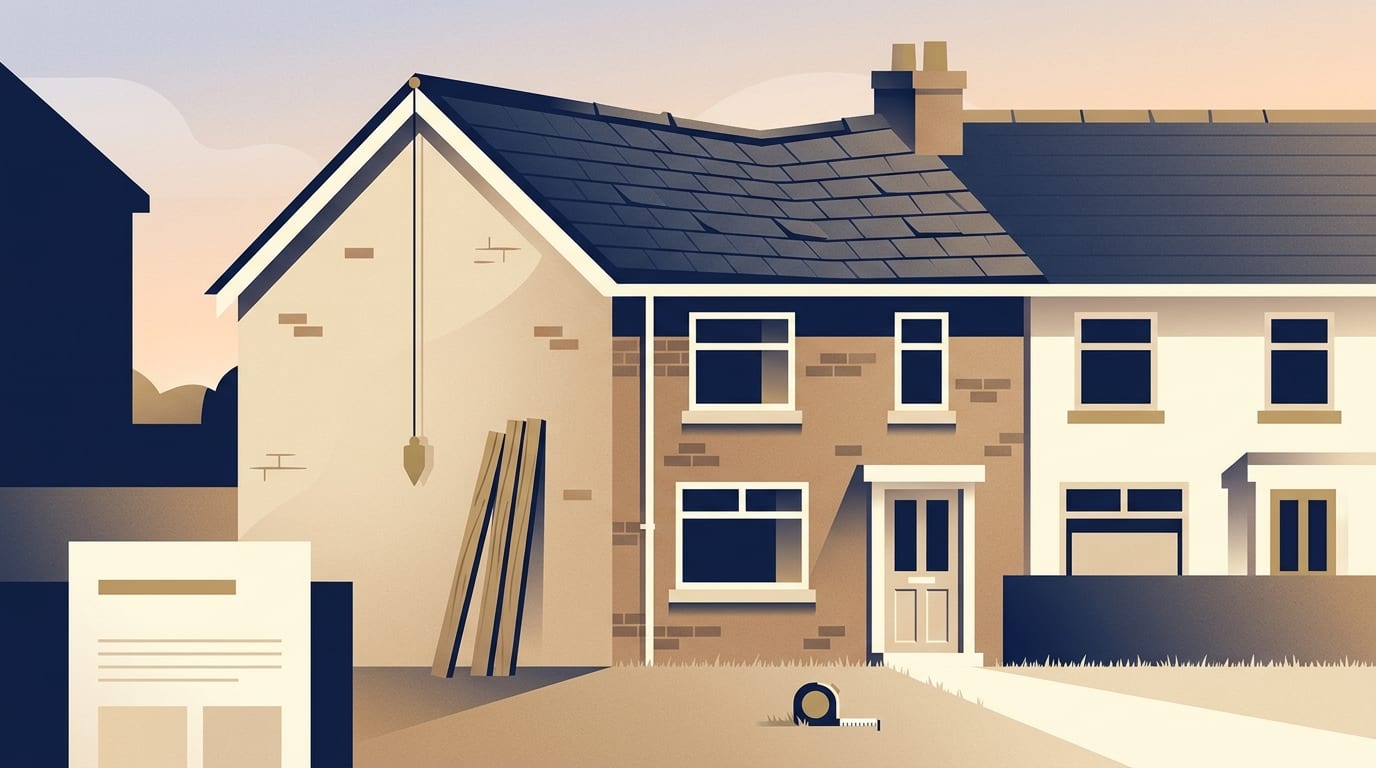
A sagging roof is often noticed from the street when the normally straight lines of the house look uneven. You might see a dip in the ridge, which is the horizontal peak where the two sides of a pitched roof meet. A pitched roof is simply a traditional sloped roof. You might also notice a wave in the main slope of the tiles, where the surface drops inwards rather than sitting flat.
Movement can also affect the edges of the structure. The eaves are the lower edges that overhang the walls, while the verge is the outer edge of a gable roof. A hip is the outer junction where two slopes meet, and a valley is the internal angle where water runs down. If any of these straight lines look bowed, it may mean the timber structure underneath has shifted or weakened.
Is it old movement or getting worse?
Appearance alone does not show a serious problem. The key question is whether the roof still keeps the building weather and watertight. Some old buildings with sagging roofs have stood for centuries and still perform their function perfectly well. A slight, long-standing dip is often cosmetic and stable.
The most important check happens inside the loft. A surveyor checks inside for water ingress, as a roof that dips but remains completely dry is much less of a worry than one that lets rain in. Professional advice should be sought if anything raises concern. If you notice a sag that is getting worse, or you find new damp patches on your ceilings, you need to call a professional.
Common causes of a sagging roof
A roof sags if something happens to the timbers of the roof structure. The structure relies on a balance of forces, and if one part weakens or moves, the roof line drops. Common causes of this movement include the following.
- Rafter spread, which happens when the rafter feet kick out at the wall plate.
- A sagging purlin that is bowing under the weight of the roof.
- Undersized or notched timbers that are too weak to support the load.
- Water damage rotting the rafter feet or the timber deck on a flat roof.
- Fungal decay such as wet or dry rot attacking the wood.
- Woodworm compromising the strength of the structural timbers over time.
- Damage caused during past repairs or renovation work.
- A loose ridge board or failed battens in minor cases.
Rafter spread is one of the recognised causes. The rafters are the sloping timbers that hold the roof up, and the wall plate is the horizontal timber resting on your brickwork. If the rafters push outwards, the ridge at the top drops down. Another cause is a sagging purlin, which is a large horizontal beam that supports the rafters mid-way down the slope. If a purlin is undersized, or if timbers have been notched too deeply for pipes and cables, they can bow under the weight.
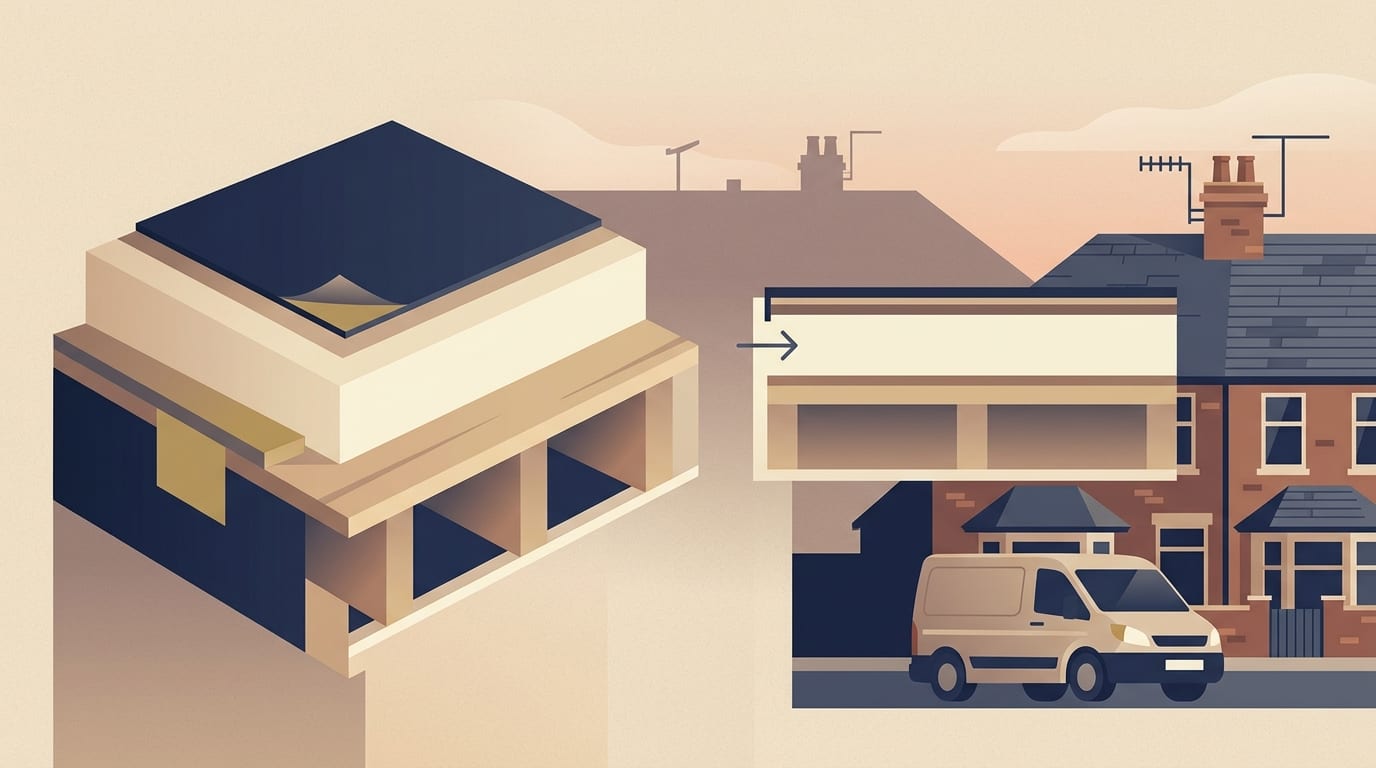
Water damage will also cause a sag if it rots the rafter feet or the timber deck on a flat roof. A flat roof is nearly horizontal and relies on a timber deck beneath the waterproofing. Flat roof systems include built-up felt (usually torch-on), EPDM rubber, GRP fibreglass, single-ply and liquid coatings. If a leaking gutter lets water into the timber, fungal decay can take hold. Lead flashing is the metal used to seal joints between the roof and the brickwork.
In minor cases, a sag might just be a loose ridge board or failed battens. Battens are the thin strips of wood that the tiles or slates sit on, laid over the underlay. The underlay is often called felt or membrane. If the battens rot, the tiles will dip, but the main roof structure might be completely sound.
Heavier roof coverings and past alterations
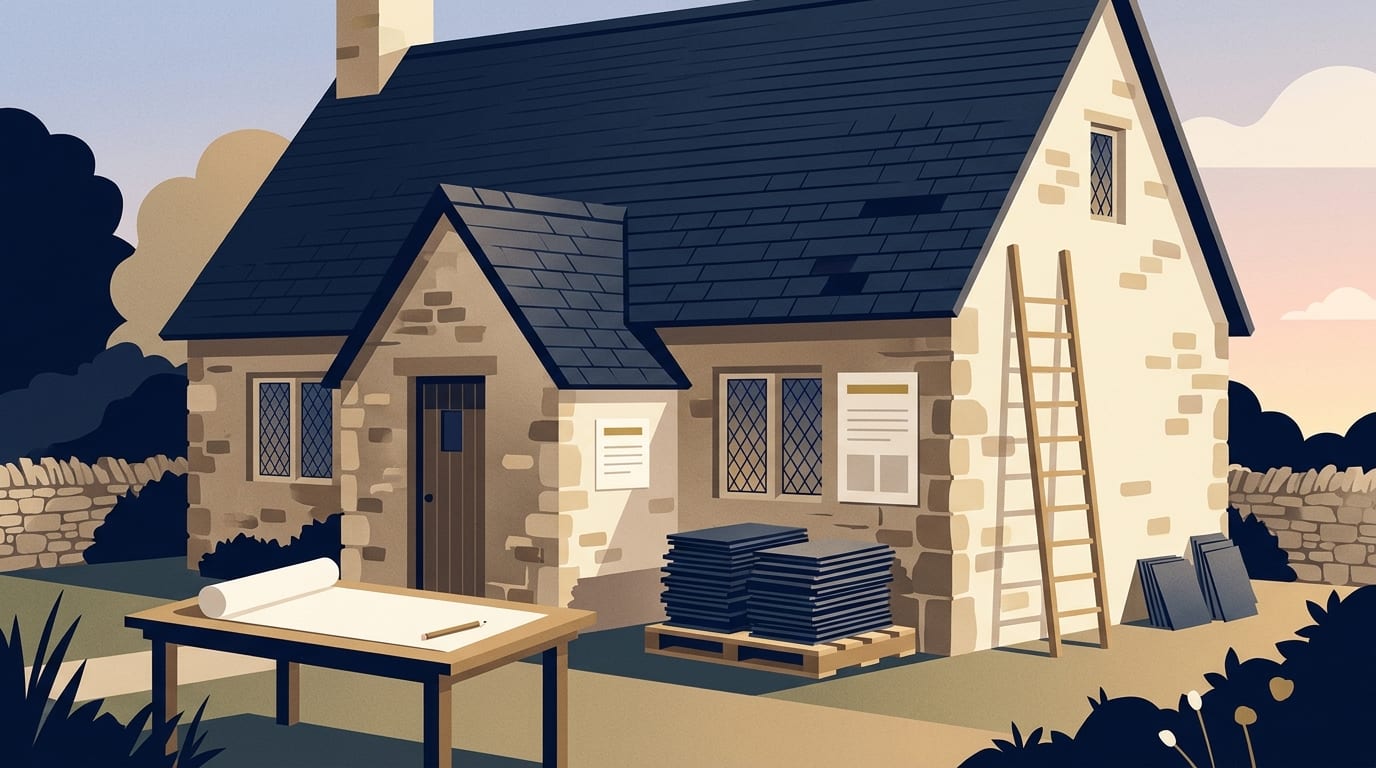
Extra weight is a recognised reason for a roof to sag. This can happen when a lighter original covering is replaced with a heavier one over the years, for example concrete tiles added to a roof built for slate.
If you are planning to change your roof covering, you must consider the weight. The Planning Portal advises checking with a structural engineer or surveyor if the weight changes significantly. Replacing a covering with a different material, such as slate to tiles, is likely to need building regulations approval, mainly for structural stability where the new material is much heavier or lighter.
The Planning Portal states that approval is needed for structural alterations, where a new covering performs significantly differently in fire, or where it increases the weight of the roof covering by 15 per cent or more.
Warning signs that need fast attention
Some defects can wait, but others require prompt attention before they cause serious damage to your home. These are the main warning signs of a problem with the structure:
- A visible dip or bow in the ridge line or roof slope.
- A sag that is getting worse over time.
- Cracking plaster on the ceilings or walls directly below the roof.
- Water coming through the roof into the loft or living space.
A sag that is getting worse needs prompt attention. Cracking plaster below the roof is another warning sign, and a roofer or structural engineer should look at it before the repair is decided.
Water coming through the roof also needs prompt attention. Water that reaches the structural timbers can lead to rot and decay. You can read more about why your roof is leaking to understand how water enters the building and causes damage.
Who to call first for a sagging roof
If you are worried about a sagging roof, a roofer or structural engineer should inspect the roof before deciding on repairs. It is important to understand the difference between the two professions. A structural engineer calculates loads and designs structural fixes, such as specifying the exact size of a new timber or steel beam. A roofer carries out the practical work to install the fix and make the roof watertight.
Never climb onto the roof yourself to investigate. The Health and Safety Executive (HSE) states that all work on roofs is highly dangerous, even if a job only takes a few minutes. Almost one in five deaths in construction work involve roof work. The HSE advises that all roofs should be treated as fragile until a competent person has confirmed they are not.
Many deaths each year involve smaller builders working on the roofs of domestic dwellings. Sloping roofs require scaffolding to prevent people or materials falling from the edge. If you suspect a structural fault, a roofer or structural engineer should inspect the roof before the repair is decided, and the inspection is done from inside the loft or by someone equipped to work safely. Do not go onto the roof yourself.
Typical repair costs by type of fix
Small repairs are usually a fixed price or a day rate, while larger work is priced per square metre plus access. Scaffolding is often a separate and significant line on your quote. Waste removal and VAT may or may not be included, so you must ask the contractor to clarify. Prices are generally higher in London and the South East.
Nobody can see rotten timber until the old covering is off, so a good quote always says how extras will be priced. The table below shows typical costs for fixing a sagging roof based on the scale of the problem.
|
Type of repair |
Typical cost range |
|---|---|
|
Minor or localised fix (re-bed ridge, replace battens, prop one rafter) |
£350 to £900 |
|
Rafter or purlin reinforcement (collar ties, new purlin, sistering) |
£1,500 to £4,500 |
|
Structural repair with partial re-cover |
£4,500 to £9,000 |
|
Full re-roof where the structure is beyond economic repair |
£9,000 to £18,000 or more |
These figures are typical 2026 prices, and local quotes will differ. A structural calculation costs £300 to £600 and is typically needed if a steel purlin is added or the structure is altered. Building control sign-off costs £300 to £500 where it is needed.
Building regulations and sign-off
A like-for-like repair generally does not need building regulations approval, but approval is usually required if you alter the structure. In England, you will not normally need a building control application for roof work if less than 25 per cent of the total building envelope and less than 50 per cent of the roof is affected.
If your work exceeds these limits, building regulations apply and the insulation may have to be upgraded at the same time. A warm roof has insulation above the deck, while a cold roof has it between the joists. Ask the roofer or building control whether the insulation will need upgrading.
You can comply with the rules in two ways. The work can go through your local council building control or a registered building control approver. Alternatively, you can use a contractor registered with CompetentRoofer, a government-authorised competent person scheme run by the National Federation of Roofing Contractors (NFRC). Registered roofers can self-certify roof refurbishment in England and Wales, and you should receive a building regulations compliance certificate. Rules differ in Scotland and Northern Ireland, so you must check with your local council rather than guessing.
How to avoid common roofing mistakes and scams
When hiring someone to fix a sagging roof, you must protect yourself from poor practice. Be wary of cold callers who knock on your door claiming they have spotted a loose tile or moss from the street. A reputable roofer will not pressure you to decide today, ask for cash only, or demand big deposits without providing a business address.
Always insist on a proper written quote before any work begins. A quote is a fixed price, whereas an estimate is not. Avoid vague one-line quotes that do not detail the materials and labour. Be cautious if a contractor tries to sell you a whole new roof for a local fault, or offers roof coating and painting claims to fix structural issues. Pressure washing is sometimes sold as maintenance, but it will not fix a sagging roof and power washing can damage the roof.
Under the Consumer Rights Act 2015, work must be done with reasonable care and skill. If it is not, you can ask for it to be put right or for money back. Contracts agreed at home, by phone or online normally carry a 14 day cooling-off period. If you ask for work to start inside that period, you must pay for what has been done. Paying by credit card gives Section 75 protection on purchases over £100 and up to £30,000. If you encounter a dispute, Citizens Advice is the best place to seek guidance.
You should also check if the firm is registered with TrustMark, the government-endorsed quality scheme for work in and around the home. Membership is a good sign, not a guarantee. Guarantees are worthless if the firm folds because they are not insurance-backed, so always ask for an insurance-backed warranty.
Buying or selling a house with a sagging roof
If you are buying or selling a property with a sagging roof, it is important to get an objective assessment. Do not panic, as a slight long-standing dip might be completely harmless and purely cosmetic.
The best step is to instruct a chartered surveyor or a structural engineer to inspect the roof timbers inside the loft. They can check inside the loft for water ingress and for the condition of the timbers. You can also ask a roofer to inspect the fascias, soffits and guttering from the ground. Fascias are the long straight boards that run along the lower edge of the roof, soffits are the boards tucked under them, and guttering carries the rainwater away. If the roof requires structural work, the report will help you get quotes for the repair before you decide.
Common questions
Is a sagging roof always dangerous?
No, a sagging roof is not always dangerous. Many old properties have roofs with a slight, long-standing dip that has been stable for decades. However, if the sag is getting worse, or if it is accompanied by cracking plaster and water ingress, it needs prompt attention.
Can you fix a sagging roof without replacing it?
Often, if the problem is caught early. A minor or localised fix such as re-bedding the ridge or replacing battens is at the lower end of the cost table. Rafter or purlin reinforcement, such as collar ties, a new purlin or sistering, costs more, and a roofer or structural engineer should decide which is needed. Where the structure is beyond economic repair, a full re-roof may be the answer.
Does adding a solid roof to a conservatory require building regulations?
Replacing a glazed or polycarbonate conservatory roof with a solid one takes the conservatory out of its exemption, so building regulations apply to the new roof. Ask a structural engineer or surveyor to check whether the existing structure can take the weight of a solid roof.
How long does it take to reinforce a sagging roof?
The time needed depends on the fault, so ask each contractor how long the job will take and put the start and finish dates in the written contract. A full re-roof will involve scaffolding.
Your next steps
Before you hire a professional to fix your sagging roof, take these practical steps to ensure you get the right advice and a fair price.
- Take photos of the dip or bow from the street, and photograph any damp patches or cracks on your ceilings inside.
- Ask a structural engineer to inspect the timbers if you suspect a serious fault or rafter spread.
- Get three written quotes from roofing contractors, ensuring each quote itemises the cost of materials, labour, scaffolding and waste removal.
- Ask the contractor for proof of their public liability insurance and check their trading address.
- Agree a staged payment plan and only make the final payment when the job is completely finished and the site is cleared.
- Ensure you receive a building regulations compliance certificate if the work needs building regulations approval, and check the rules with your council if you are not in England.
A sagging roof does not always mean a huge bill, but a sag that is getting worse needs prompt attention. Take the time to get proper structural advice, compare detailed written quotes, and find a roofer near you who can explain exactly what the job involves.
Find a top rated roofer near you
3,861 roofers across the UK, each ranked on their Google rating and the number of reviews behind it. Start with your county: