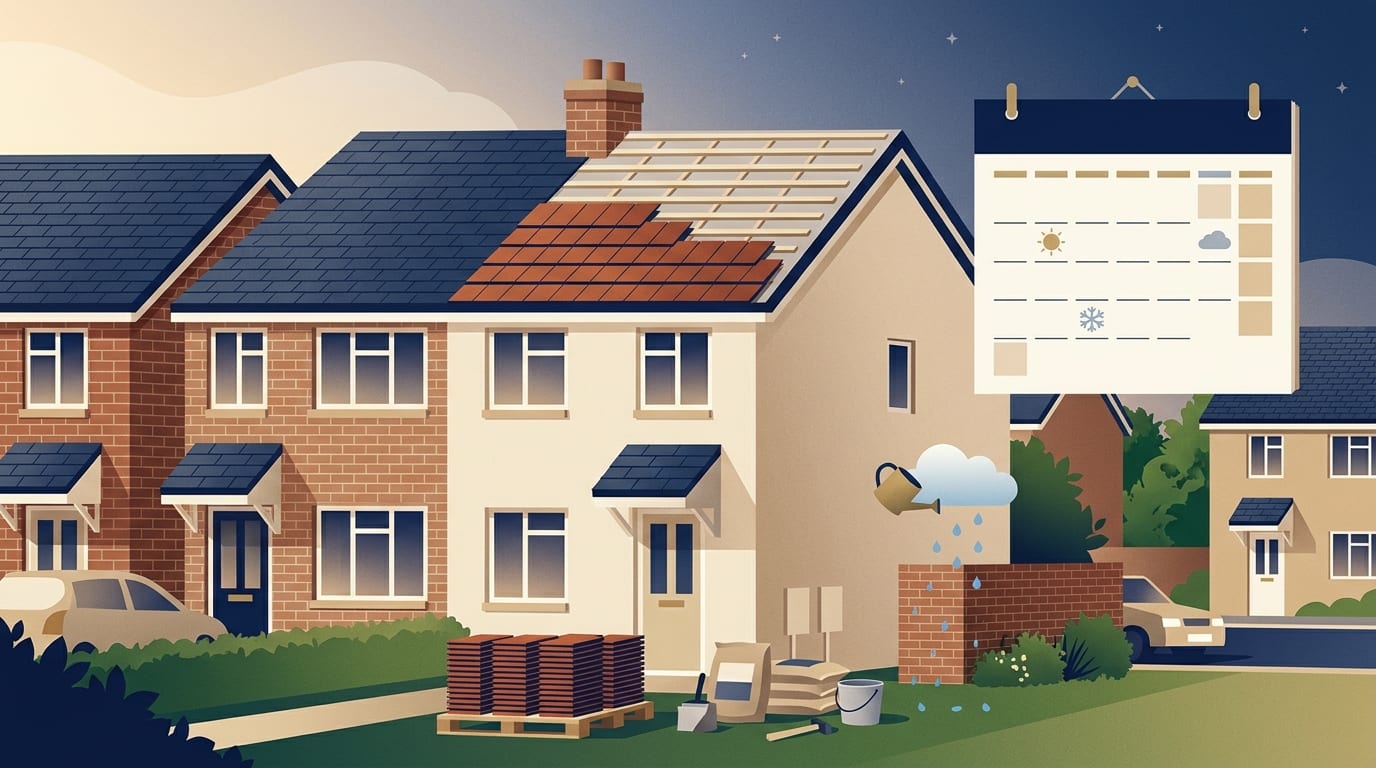
Buildings insurance usually covers roof leaks caused by sudden damage such as a storm, but claims are commonly refused where the insurer says the cause was wear and tear or gradual deterioration. Whether your home insurance will pay for the repair depends entirely on your policy wording and the exact cause of the leak. Your best chance of a successful claim comes down to acting quickly and providing clear evidence from a professional roofer.
Sudden damage versus wear and tear
Insurance policies are designed to step in when an unexpected event causes financial loss. If a healthy roof is suddenly damaged by violent winds or a fallen tree, your buildings insurance will usually cover the cost of the repairs. The problem arises when the roof was already reaching the end of its natural life.
Many policies exclude damage caused by wear and tear or gradual deterioration. The onus is on the insurer to show that an exclusion applies to your claim. A property not being in perfect condition before the storm will not necessarily mean the damage was a result of wear and tear. The Financial Ombudsman Service weighs up whether the condition of the property or the storm was the primary cause.
However, insurers expect you to maintain your home. It is unlikely a complaint will be upheld where a flat roof was already in a poor state of repair that would or should have been clear to the customer, and the storm merely highlighted the existing problem. If your roof already had rotten timbers or a perished membrane that you knew about or should have spotted, an insurer is likely to treat the leak as a maintenance issue rather than storm damage.
How your roof type affects your claim
The materials on your roof dictate how it ages and where it might fail during bad weather. Pitched roofs are angled to let rain run off quickly. They are built with a timber frame, covered by underlay (often called felt or membrane), timber battens, and finally the outer covering. This covering is usually concrete and clay tiles, or natural and fibre cement slate.
A storm might dislodge a few tiles at the vulnerable edges of a pitched roof. These include the ridge at the very top, the hip where two angles meet, the valley where water collects, or the verge and eaves at the sides and bottom. High winds can also peel back the lead flashing, which is the metal used to seal the joints around chimneys. If the rest of the roof is sound, that supports the case that the storm was the main cause.
Flat roofs are built differently. They use a structural timber deck covered by a waterproof system, such as built-up felt (usually torch-on), EPDM rubber, GRP fibreglass, single-ply or liquid coatings. Flat roofs also have insulation to keep the building warm. A warm roof has insulation above the deck, while a cold roof has it between the joists.
Because water sits on flat roofs for longer, they are more exposed to gradual deterioration. You are expected to know the condition of your flat roof. If the timber deck is already rotting or the felt is blistering, an insurer is likely to argue that the roof failed due to old age rather than a sudden storm.
What counts as a storm
Policies do not always define what a storm is. Some insurers define storm-force winds by a specific point on the Beaufort scale. However, the Financial Ombudsman Service says a storm generally involves violent winds, usually accompanied by rain, hail or snow. In some cases, rain, hail or snowfall by itself can constitute a storm.
Where a claim for bad weather damage has been declined, the Ombudsman asks three questions. Were there storm conditions on or around the date the damage is said to have happened? Is the damage consistent with what is generally seen as storm damage? Were storm conditions the main cause of the damage, or were there other factors that meant it might have happened anyway?
To answer these questions, the Ombudsman uses historic weather data. Met Office named storms are a good indication, but it still checks local weather records for your exact area. The Ombudsman is unlikely to be persuaded where a customer says damage was caused by a storm some time in the past or by general bad weather over time.
Emergency repairs before the claim is settled
A sudden roof leak can ruin your ceilings, floors and wiring. You must contact your insurance company, and your landlord if applicable, to tell them what has happened, to get advice and take instruction. If water is entering the house, switch off the electricity at the consumer unit if it is safe to do so, and do not use affected electrics until a registered electrician has checked them, as advised by Electrical Safety First.
You are usually expected to prevent further damage to your home, which means arranging emergency weatherproofing. Ask your insurer if they will send their own contractor or if you should hire a local roofer to make the roof watertight. Keep every invoice and receipt for this emergency work, and make sure the insurer is told about any temporary fix.
Never climb onto the roof to fit a tarpaulin or take photographs yourself. All work on roofs is highly dangerous, even if a job only takes a few minutes. The Health and Safety Executive warns that almost one in five deaths in construction work involve roof work, and many are people repairing and cleaning roofs. A professional roofer will carry out checks safely from the ground, from inside the loft, or by using proper access equipment.
For sloping roofs, safe access requires scaffolding to prevent people or materials falling from the edge, complete with edge protection at the eaves. On terraced properties, this is needed at the rear as well as the front. Where work is of short duration, meaning tasks measured in minutes, properly secured ladders and proper roof ladders may be used.
Here is a summary of typical published prices for emergency roof work in 2026.
|
Type of emergency work |
Typical cost |
|---|---|
|
Emergency call-out fee |
£100 to £300 |
|
Temporary weatherproofing |
£100 to £300 |
|
Emergency storm work |
£300 to £1,200+ |
These figures are typical published prices for 2026, and local quotes will differ depending on your location and the exact problem.
What a roofer's report should include
Insurers usually rely on a surveyor's report to decide a claim, and sometimes customers have their own. Clear and detailed reports explaining the expert's thinking, supported by photographs of the damage, tend to be the most persuasive evidence.
An emergency roof inspection after storm damage costs £250 to £450 and takes one to three hours. It costs more than a routine check because you are paying for a same-day call-out. You should ask the roofer to provide a comprehensive written report to support your insurance claim.
A strong roofer's report needs to include:
- The exact cause of the leak in the roofer's professional opinion
- The date the damage likely occurred and the weather conditions at the time
- Clear photographs of the specific damage to the roof covering
- Photographs showing the general condition of the surrounding roof
- A detailed written quote for the permanent repair
Where an insurer relies on an aerial photograph and the roof has not been inspected properly, the Ombudsman may not be persuaded unless the photograph clearly shows deterioration. A roofer's own close inspection, with photos, can give you evidence to set against it.
Making a claim step by step
Handling a roof leak claim properly from the start gives you the best chance of a fast settlement. Keep a record of all calls, emails and evidence from the moment you notice the water.
- Contact your insurer promptly to register the claim and check your policy wording
- Take photographs and notes of the internal damage and the exact date it happened
- Keep any damaged materials such as fallen tiles if it is safe to do so
- Get a roofer's written report detailing the cause and the repair cost
- Get permission from your insurer before any major permanent work begins
- Keep every invoice for emergency call-outs and temporary weatherproofing
What to look for in a repair quote
When you are ready to arrange the permanent repair, Citizens Advice recommends getting written quotes from at least three different traders. A quote is a fixed price, whereas an estimate is not.
The quote should show a fixed total price rather than a daily rate. It needs to include a breakdown of all the work and materials, how long the price is valid for, whether it includes VAT and when the price can go up. You must check that the trader has public liability insurance, and contact your buildings insurer before work starts.
Do not agree to a deposit of more than 25 per cent. Pay by debit or credit card if you can, otherwise use a bank transfer, and do not pay with cash. Avoid traders who only accept cash or want everything upfront. Paying by credit card for work costing between £100.01 and £30,000 can give you Section 75 protection if something goes wrong.
Under the Consumer Rights Act 2015, work must be done with reasonable care and skill, and if it is not the customer can ask for it to be put right or for money back. Contracts agreed at home, by phone or online normally carry a 14-day cooling-off period. However, if the customer asks for work to start inside that period they must pay for what has been done.
Understanding roof repair costs and rules
Small repairs are usually a fixed price or a day rate. Larger work is priced per square metre plus access. Scaffolding is often a separate and significant line on the quote. Prices are higher in London and the South East. Nobody can see rotten timber until the old covering is off, so a good quote says exactly how extras will be priced. Waste removal and VAT may or may not be included, so you must ask the roofer to clarify.
If a storm has caused severe damage, you might need to replace large sections of the roof. In England, repairing or re-covering a roof does not normally need a building control application if less than 25 per cent of the building envelope and less than 50 per cent of the roof is affected. Above that, approval is needed and the insulation may have to be upgraded. Approval is also needed for structural alterations, where a new covering performs significantly differently in fire, or where it adds 15 per cent or more to the weight.
Rules differ in Scotland and Northern Ireland, so check with your local council there rather than guessing.
If re-roofing work needs building regulations approval, a firm registered with CompetentRoofer can self-certify it. This is a government-authorised competent person scheme run by the National Federation of Roofing Contractors (NFRC). Registered roofers can self-certify roof refurbishment in England and Wales, and you should receive a building regulations compliance certificate. Otherwise the work goes through council building control or a registered building control approver. TrustMark is the government-endorsed quality scheme for work in and around the home. Check membership on each scheme's own register. Membership is a good sign, not a guarantee.
Avoiding common roofing scams after a storm
Severe weather often brings rogue traders into the area. Watch out for cold callers who knock on your door claiming they have spotted a loose tile or moss from the street. They often apply pressure to decide today. You should avoid any roofer asking for cash only, demanding big deposits, or supplying vague one-line quotes with no trading address.
A common scam is being sold a whole new roof for a local fault that could easily be repaired. You should also be wary of roof coating and painting claims, and of pressure washing sold as maintenance, which can damage tiles. A guarantee that is not insurance-backed can be worthless if the firm folds, so do not rely on a paper promise from a cold caller.
Knowing how to choose a roofing company carefully is just as important as getting the insurance claim approved. A genuine tradesperson will never pressure you into signing a contract on the doorstep.
If your claim is turned down
If your insurer refuses to pay for the roof repair, ask for the exact reason. Check your policy wording carefully. Where a storm claim was reasonably declined, you may still be able to claim under the accidental damage section of the policy if there is one. Insurers are expected to check whether any part of the policy could provide cover.
If you disagree with the decision, complain to your insurer first and tell it how you would like things put right. Keep a record of calls, emails and evidence. For most complaints, the business has up to 8 weeks to send a final response. If you are unhappy with the final response, or have not had one in time, you can bring the complaint to the Financial Ombudsman Service.
You must take it to the Financial Ombudsman Service within 6 months of the date on the final response. The service is free and you do not need to pay a lawyer or claims management company to represent you. Complaints also arise where a claim is accepted but the customer disputes the repairs or the replacement materials. Where the Ombudsman finds against the insurer it can tell it to reconsider the claim, pay for further work, add interest to any payment and pay compensation for distress or inconvenience.
Keeping your roof in a claimable state
Insurers expect you to maintain your property. If you neglect minor repairs, a small leak can become a major problem that your policy may not cover. Keeping your gutters clear of debris helps water drain away instead of backing up under the roof covering.
Have slipped or missing tiles replaced promptly. If you spot damp patches in the loft, ask a roofer to check the lead flashing around your chimney. Dealing with why your roof is leaking early, and keeping the invoices, shows you have maintained the building if you later need to make a storm claim.
Common questions
Does buildings insurance cover roof leaks?
Yes, buildings insurance usually covers roof leaks if they are caused by a sudden, unexpected event like a storm or a falling branch. It does not normally cover leaks caused by general wear and tear, lack of maintenance or old age.
Is a leaking roof covered by insurance UK?
It depends entirely on what caused the leak and how your specific policy is worded. Sudden damage is typically covered, but gradual deterioration of the roof covering is usually excluded. The insurer will look at the condition of your roof before the leak started.
Does home insurance cover roof repairs?
Home insurance may pay for roof repairs if the damage was caused by an insured event such as a storm, or by accidental damage if your policy includes that cover. It does not normally pay for routine repairs, such as replacing old underlay or repointing a weathered chimney.
How do I make a storm damage roof claim?
Contact your insurer immediately to report the damage and ask if they need to send their own surveyor. Arrange emergency weatherproofing to protect your home, keep all receipts, and gather clear photographic evidence of the damage to support your claim.
Next steps
If water is coming through your ceiling right now, taking the right steps will protect your home and your insurance claim.
- Move valuables away from the leak and put buckets down to catch the water
- Call your buildings insurer to report the damage and check your cover
- Ask if you should arrange your own emergency weatherproofing
- Hire a local roofer to make the roof watertight and assess the damage
- Ask the roofer for a detailed report with photographs and a fixed written quote
Finding a reliable tradesperson quickly is the best way to stop the damage getting worse, so take a moment to find a roofer near you who can safely secure your property.
Find a top rated roofer near you
3,859 roofers across the UK, each ranked on their Google rating and the number of reviews behind it. Start with your county: