Setting up a complete, accurate profile involves adding your real-world business details, choosing the right categories and verifying the business. Google says that providing complete and accurate information makes a business more likely to show in local results. This guide walks a roofing firm through the steps, from signing up to adding photos.
Adding or claiming your profile
To add a business that isn't on Google, go to business.google.com/add and click Add your business to Google. You then follow the on-screen instructions to add your details and select a verification option. Adding or claiming a business costs nothing at all. Google changes these screens from time to time, and the button and menu names used in this guide are the ones Google's help pages used in November 2026.
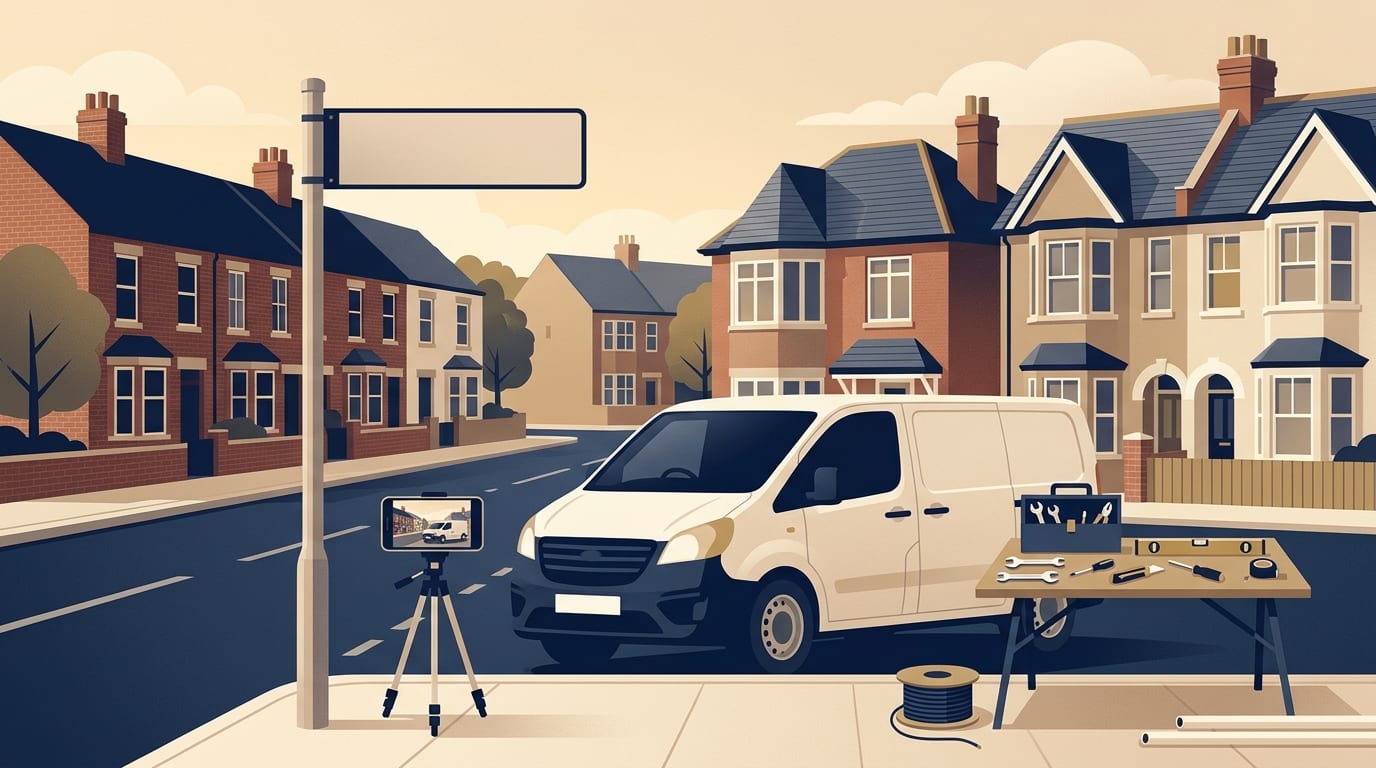
When you reach the verification step, Google decides which verification options your business is offered. Many roofing firms work from home and do not serve customers at their own address, which fits Google's definition of a Service Area Business. If you are asked to show evidence of the business, for example on a video, examples that suit a roofer include a van, often signwritten with the business name, with ladders and a roof ladder on the rack, branded workwear or hi-vis, and an invoice from a roofing or builders' merchant or a utility bill for the yard in the business name.
Safety and privacy come first if you film. Never film from a roof, ladder or scaffold, and never film at a customer's property, where house numbers and passers-by are private information. Film at your base instead, showing tools such as a roof ladder, slate ripper, slate cutter, roofing hammer, lead dressing tools and a harness, or materials such as slates, tiles, rolls of lead, felt, breathable membrane and battens in the van or yard. If you need more help with the verification step, you can read about how to verify a roofing business.
Getting the business name right
Your business name on Google should reflect your real-world name, as used consistently on your shop front, website, stationery and as known to customers. Getting this right is critical because including unnecessary information in the business name isn't permitted and could result in the suspension of your Business Profile. Google's examples of what a name must not include are marketing taglines, fully capitalised words, phone numbers or website URLs, opening hours, service or product information and location information.
To include special characters or legal terms such as Ltd in your Business Profile name, Google says you must provide real-world proof. This means showing signage, business cards or invoices that consistently display them as part of your business name. If your van just says your trading name but your registered name includes Ltd, stick to the name on the van unless your paperwork proves the limited company name is used every day.
Changing your business name later may mean you have to verify the profile again. It is better to get the name exactly right on the first day. A clean, accurate business name tells customers exactly who they are dealing with when they search for local trades.
Choosing your categories
You must choose a primary category that best describes your business, picking a specific category from the list that appears. You cannot create your own category, so if the specific one you want is not there, pick a more general one. The categories you select affect your local ranking on Google, so picking the most accurate one is a priority for any firm. Roofing contractor is the primary category on most UK roofers' Google Business Profiles.
You can select up to nine more categories after the primary one, and the category in the first field is your primary category. Google says not to use categories solely as keywords or to describe features of your business. Google's guidelines say to use as few categories as possible to describe your overall core business. They must be as specific as possible but representative of your main business, and you should pick categories that complete the statement 'This business IS a' rather than 'this business HAS a'.
Roofers often add categories such as Chimney services, Waterproofing service, Skylight contractor, Cladding contractor and Gutter service. Pick only those that describe what the business is, type them in, and choose from Google's list. If you add or edit a business category, you might be asked to verify your business again.
To add or edit categories, follow these steps:
- Go to your Business Profile and select Edit profile.
- Next to 'Business category' select Edit.
- Enter a category in the 'Primary category' box and pick one from the list.
- Select Add another category for each extra one.
- Select Save.
Adding your services
Businesses in certain categories, like service businesses, can show their services on their Business Profile. You choose from suggested options tailored to your business type, just as a plumbing business might see 'Install tap' or 'Repair toilet'. You can also create custom services, group them, and add descriptions and prices. You can group your services, for example by keeping all the flat roof options together.
Custom services that break policy are rejected automatically by Google. You must avoid profanity, gibberish, personal information, prices or phone numbers in custom service names. Examples of custom services for a roofer include roof repairs, re-roofing, flat roofs, leadwork, chimney repairs and guttering.
To add services to your profile, follow these steps:
- Go to your Business Profile and select Edit services.
- Select the services you want and Save.
- To add more, select Edit services, then Add more services.
- Select Add custom service for anything not listed.
Service area or address
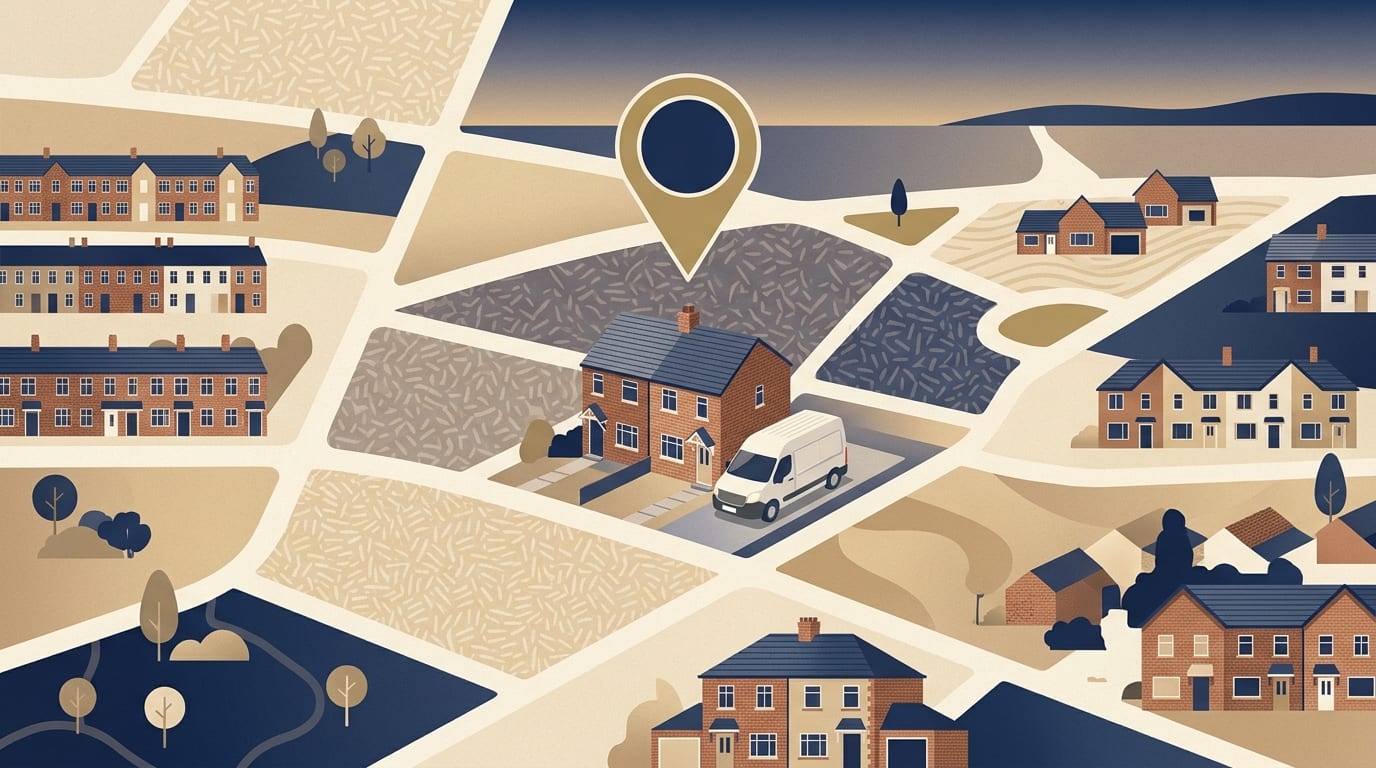
The address on your Business Profile is public, but if you do not serve customers at your business address, such as a service area business, you can choose not to show your address and list your service area instead. Most roofers serve customers at their homes and should not show a home address on the map, especially if they run the business from a residential property or a yard that customers rarely visit. You can set up to 20 service areas, based on the cities, postcodes or other areas you serve across your region. The boundaries of your overall area shouldn't be more than about two hours of driving time from where your business is based, and Google says to be as specific and accurate as possible.
Hours, phone number and description
Google's guidelines say to provide your regular customer-facing hours of operation, and you may use current seasonal hours as your regular hours. During an off season you can mark the business as temporarily closed, which is useful if you take a long winter break. Many roofers take emergency calls in storms, so you should set the hours you really answer the phone rather than listing a 24-hour service if you do not answer calls at night.
Special hours are for holidays, special events and other exceptional circumstances, such as bank holidays or a few days off. You can set them if your business temporarily adjusts its hours or stays closed for up to six days in a row. Google suggests confirming your hours for official holidays even if they are the same as your regular hours. Keeping them up to date lets customers know when you are available.
You can adjust your schedule for bank holidays or time off. To set special hours, follow these steps:
- Go to your Business Profile, select Edit profile, then Hours.
- In the 'Opening hours' section next to 'Special hours' select Edit.
- Pick the date and update the hours by unticking 'Closed' and entering times, or leave 'Closed' ticked.
- Select Save.
Google's guidelines say the phone number must be under the direct control of the business. You should use a local number instead of a central call centre helpline number whenever possible, and premium numbers are not acceptable.
The business description shows in the 'From the business' section of your profile. Google suggests including what you offer, what makes you special and how long you have been in business. It must not include URLs or HTML code, must not exceed 750 characters, and should focus on the business rather than promotions, prices or sales.
When writing the description, talk about the core work you do, such as slate repairs, flat roofs or leadwork. Mention how many years you have been trading, any relevant qualifications, and the main areas you cover. Keep the tone professional and helpful, avoiding any marketing slogans or limited-time offers.
Photos that work
You can add a logo, a cover photo and business photos to your profile. A cover photo isn't guaranteed to show as the first image, and if it is low quality a user-submitted photo may be shown instead. Uploads can take up to 24 to 48 hours to appear, and show as Pending, Not approved or Live. Photos and videos show up on Google only after you verify your Business Profile.
Google's photo guidelines require images to be in JPG or PNG format, between 10 KB and 5 MB. The recommended resolution is 720 px tall by 720 px wide, with a minimum of 250 px by 250 px. Photos must be in focus and well lit, without significant alterations or excessive filters. The table below compares the file limits for uploading photos to your profile.
|
Photo specification |
Google requirement |
|---|---|
|
File format |
JPG or PNG |
|
File size |
Between 10 KB and 5 MB |
|
Recommended resolution |
720 px tall by 720 px wide |
|
Minimum resolution |
250 px by 250 px |
Videos on the profile can be up to 30 seconds long, up to 75 MB and 720p or higher.
What works best for a roofer is showing finished roofs and leadwork photographed from the ground or a safe vantage point. You can also upload photos of the van and the team at work without faces of customers. High-quality images of neat lead flashing or straight tile lines show your craftsmanship far better than a blurry shot.
Always ask the customer before photographing their property and keep house numbers, number plates and faces out of the shot. Remember to follow the safety rules mentioned earlier, keeping both feet on the ground when operating a camera. Never compromise your safety on site just to get a picture for your profile.
Local ranking explained
Google says local results are mainly based on relevance, distance and popularity. Relevance means how well a profile matches what someone is searching for, and distance is how far the searcher is from the business. Popularity is described by Google as prominence, which means how well-known a business is in the real world and online.
Prominence takes in information like how many websites link to the business and how many reviews it has. Google says there is no way to request or pay for a better local ranking, so be wary of anyone who claims they can guarantee you the top spot for a fee.
Nobody can promise you a ranking, but a complete profile with accurate categories, up-to-date hours and clear photos gives customers what they need. Asking satisfied customers for an honest review is one way a business becomes better known.
Common questions
Which category should I choose?
Roofing contractor is the primary category most UK roofing firms use. You can also select additional categories like Gutter service, Chimney services or Skylight contractor if you offer those specific services, but keep them to a minimum to describe your core business.
Can I put my town in the business name?
Google does not allow location information in your business name unless it is part of your real-world name. Your profile name should exactly match the signage on your van, your website and your stationery to avoid a suspension.
How many categories can I have?
You can have one primary category and up to nine additional categories, making ten in total. Google advises using the fewest categories possible to describe your overall core business accurately.
How long until photos show?
Photo and video uploads can take 24 to 48 hours to appear on your profile. They will show as Pending, Not approved or Live, and they will only show up publicly after you have successfully verified the business.
Can I list prices on my profile?
You can list prices when adding custom services to the services section of your profile. However, you must not put prices in the names of custom services, and the business description should focus on the business rather than prices.
Your next steps
Follow this checklist to set up your profile:
- Gather paperwork in the business name, such as a utility bill for the yard or an invoice from a merchant.
- Take clear photos of your van, branded workwear and tools at your base.
- Check your business name matches your van and stationery exactly.
- Choose Roofing contractor as your primary category.
- Write a business description under 750 characters without sales pitches or links.
- Set your regular customer-facing hours and add your service areas.
Once your profile is verified and live, keep your hours and photos up to date. If you want to see how roofing firms in other areas are found, you can browse roofers by location.
Find a top rated roofer near you
3,906 roofers across the UK, each ranked on their Google rating and the number of reviews behind it. Start with your county: