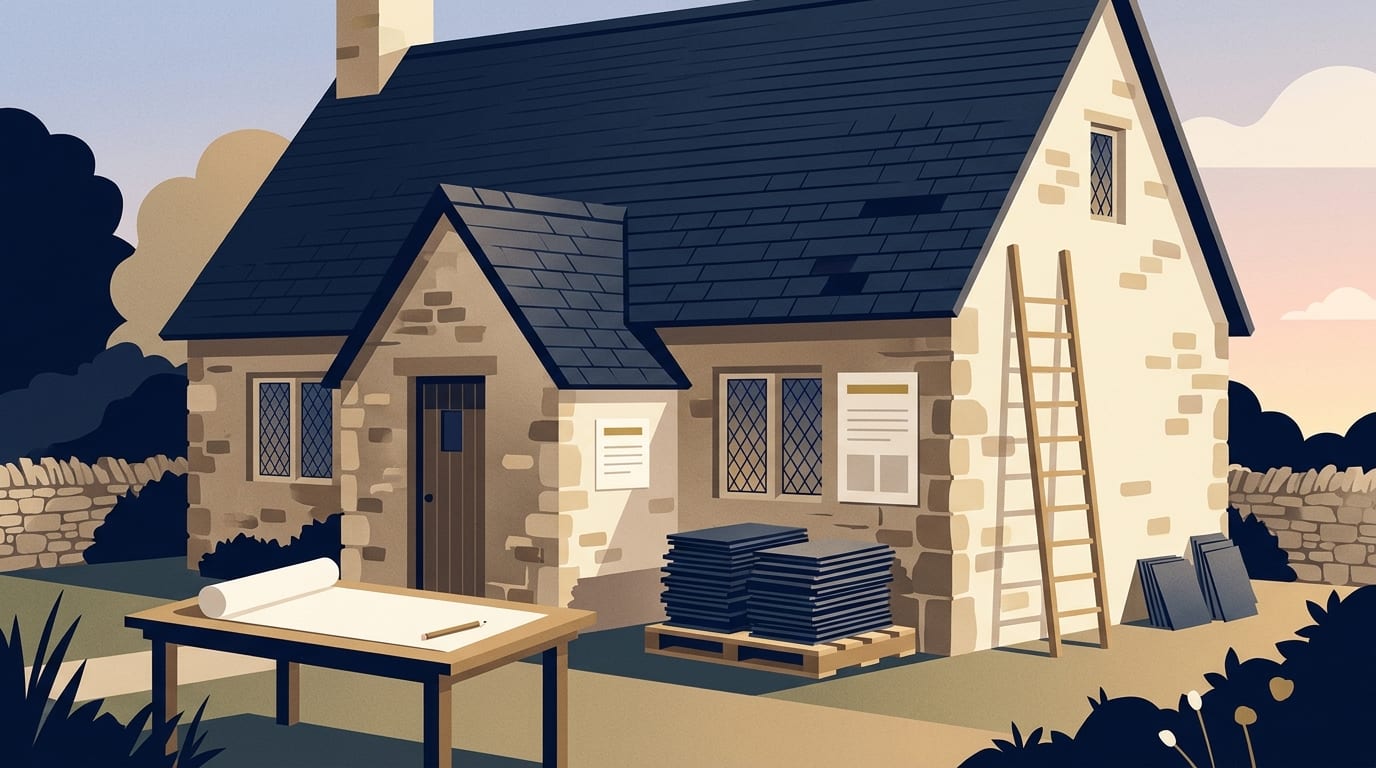
There is no general government grant for a new roof in the UK, and anyone offering a free government roof is usually selling something. If you are on a low income or worried about costs, you might find some help with insulation or home adaptations. Standalone re-roofing is almost never grant-funded.
Why there is no general new roof grant
There is no universal free new roof grant in the UK. Government funding is aimed at insulation and energy measures to make homes warmer and cheaper to run. Standalone re-roofing, as opposed to insulation, is almost never grant-funded.
Replacing a roof involves removing the old covering, whether that is concrete and clay tiles, or natural and fibre cement slate. The roofer then has to strip out the old timber battens and the underlay, which is often called felt or membrane. They must inspect the underlying timber structure for rot, which nobody can see until the old covering is off.
For flat roofs, the process involves tearing up the old flat roof systems and checking the timber deck underneath. These systems typically include:
- Built-up felt, which is usually torch-on.
- EPDM rubber.
- GRP fibreglass.
- Single-ply membranes.
- Liquid coatings.
A new roof is a significant cost. Large work is priced per square metre plus access, and scaffolding is often a separate and significant line on the bill. Waste removal and VAT may or may not be included in a quoted price, so you must always ask. Prices are also higher in London and the South East.
The Great British Insulation Scheme has closed
Many people search for grants hoping that national energy schemes will pay for a new roof. The Great British Insulation Scheme was one such programme, but it mostly funded single insulation measures and did not pay to replace roof coverings or tiles. According to Ofgem, this scheme is now closed to new installations.
The scheme ended on 31 March 2026, after beginning in April 2023. Do not apply for it or trust any company claiming they can secure funding for your roof through this route. Even when it was active, it did not pay to replace roof coverings or tiles.
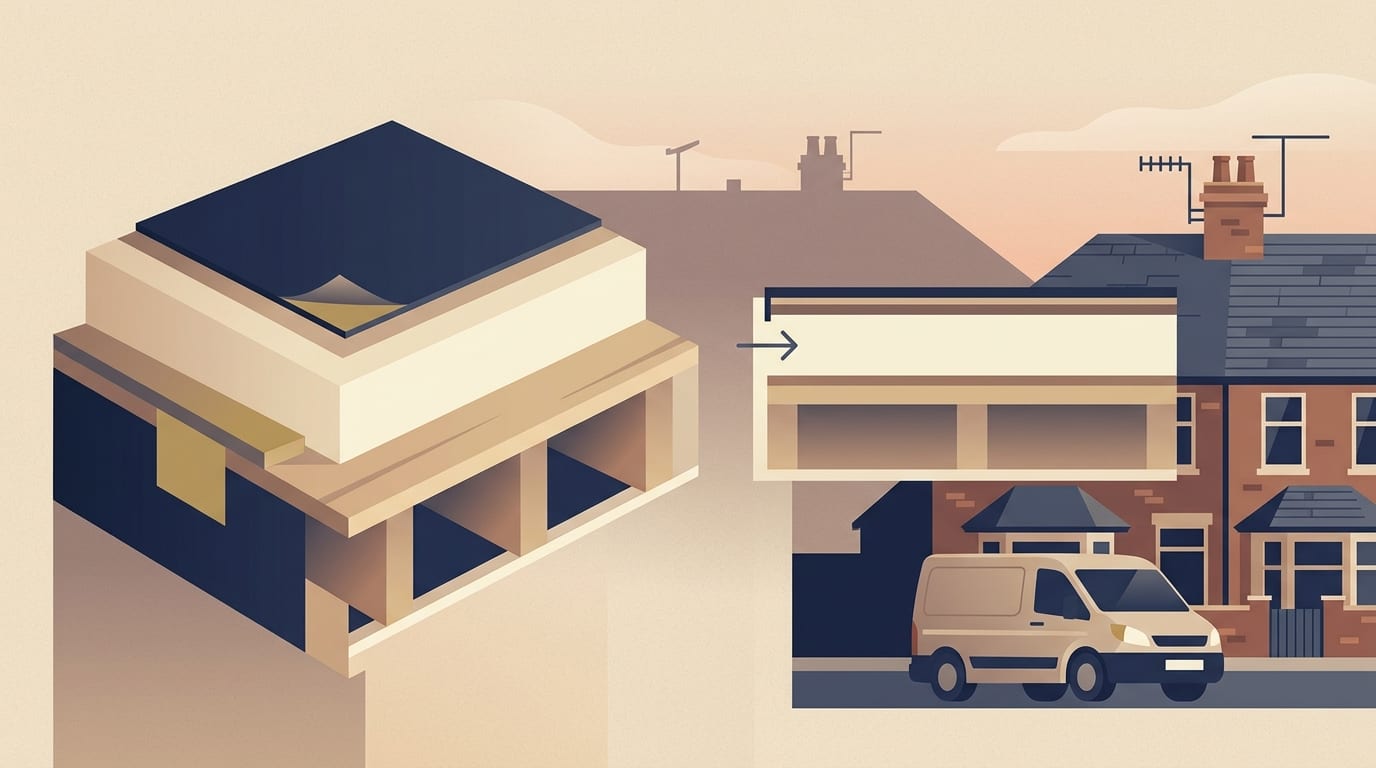
Insulating a roof is entirely different from replacing the tiles or slate on the outside. A warm roof has insulation placed above the deck, while a cold roof has it placed between the joists inside the loft.
How ECO4 handles roof work
The Energy Company Obligation is a government energy efficiency scheme in Great Britain designed to tackle fuel poverty. It supports energy efficiency measures in the homes of those considered to be in fuel poverty. The current iteration, ECO4, applies to measures installed from 1 April 2022.
According to Ofgem, ECO4 will run until 31 December 2026, following a nine-month extension. The official page does not mention roof repairs or replacement, and it does not set out exact eligibility rules. However, ECO4 funds insulation and heating, and roof repairs are included only where needed to install insulation.
This means you should not assume the scheme will pay for roof work. Do not rely on it to cover a new roof or repairs that are not needed to install insulation. You should check eligibility directly through your energy supplier or with your council, and you should not rely on the scheme still being open or willing to fund your specific repair.
Disabled Facilities Grants explained
If you are disabled and need to make changes to your home, you could get a grant from your council. It will not affect any benefits you currently receive.
The official GOV.UK page states that this funding is for adaptations. Examples include widening doors, installing a stairlift, or adapting heating or lighting controls. It does not mention roof work, as this is not a general repair grant.
How much you get usually depends on your household income and your household savings over £6,000. Disabled children under 18 can get a grant without their parents' income being taken into account. The maximum amounts vary by location, though some councils may give more.
The table below shows the maximum grant amounts available by country.
|
Country |
Maximum grant amount |
|---|---|
|
England |
Up to £30,000 |
|
Wales |
Up to £36,000 |
|
Northern Ireland |
Up to £25,000 |
|
Scotland |
Not available |
These are the maximum amounts published by GOV.UK. Some councils may give more, and how much you get usually depends on household income and savings.
Getting help from your local council
While national grants for roof replacements do not exist, your local council might have some help available. You can contact your local council's housing team or your local home improvement agency to ask what repair help exists in your area.
What exists, if anything, depends entirely on where you live and the budget your council has available. Do not assume or expect that any help exists, but it is always worth a phone call to ask.
When you speak to the housing team, explain exactly what is wrong with the roof. Tell them if water is coming into the living areas, if it is affecting the electrics, or if it is causing severe damp. They can tell you what help, if any, exists in your area.
When a repair is enough to save replacing the roof
If you cannot get a grant, your main priority is to keep costs down by avoiding a full replacement. A good roofer will often suggest a repair if the main structure and the majority of the tiles are still in good condition. Small repairs are usually a fixed price or a day rate, which is often cheaper than replacement.
You might only need to replace a few broken tiles, re-bed a loose ridge tile at the top of the roof, or fix the lead flashing around the chimney. Problems often occur at the edges and junctions of a roof, such as the hip, valley, verge and eaves. Fixing these specific areas can help you avoid the expense of a full replacement.
You should also check the condition of your fascias, soffits and guttering. Sometimes a leak is caused by a blocked or broken gutter pushing water back under the eaves, rather than a failure of the main roof covering. Ask a roofer to take photos of the defect so you can see exactly what is wrong without having to climb a ladder yourself.
Other ways to spread the cost of roof work
When you have to fund the work yourself, you might wonder if your insurance will cover the bill. Insurance covers sudden damage from events such as storms, fire or impact. It does not cover wear and tear, so you should check if your insurance covers a leaking roof before making a claim.
To make a large bill more manageable, ask roofers about staged payments. A staged schedule might mean paying a portion when the scaffolding goes up, another when the old roof is stripped, and a final payment only when the job is completely finished.
Always get three written quotes for the work. A proper quote is a fixed price, whereas an estimate is not, so you should know exactly what a quote should include. Ask how any extras will be priced, because nobody can see rotten timber until the old covering is off.
Building regulations and your consumer rights
If you are paying for your own roof repairs, you need to understand the rules that protect you. Under the Consumer Rights Act 2015, work must be done with reasonable care and skill. If it is not, you can ask for it to be put right or for your money back.
Contracts agreed at home, by phone or online normally carry a 14-day cooling-off period. However, if you ask for work to start inside that period, you must pay for what has been done. Paying by credit card gives you Section 75 protection on purchases over £100 and up to £30,000, and Citizens Advice is the place to go if you have a dispute.
You also need to comply with building regulations. In England, repairing or re-covering a roof does not normally need a building control application if less than 25 per cent of the building envelope and less than 50 per cent of the roof is affected. Above that, approval is needed and the insulation may have to be upgraded.
Approval is also needed for structural alterations, where a new covering performs significantly differently in fire, or where it adds 15 per cent or more to the weight. Replacing a glazed or polycarbonate conservatory roof with a solid one takes the conservatory out of its exemption, so building regulations apply to the new roof. Rules differ in Scotland and Northern Ireland, so you must check with your council rather than guessing.
Registered members of CompetentRoofer, a government-authorised competent person scheme run by the National Federation of Roofing Contractors, can self-certify roof refurbishment in England and Wales. You should receive a building regulations compliance certificate from them. Otherwise, the work goes through council building control or a registered building control approver.
Spotting a free roof scam
Scammers may target homeowners with fake grant offers. There are several warning signs that you are dealing with a rogue trader rather than a legitimate government scheme.
A common tactic is cold callers who knock on your door claiming they have spotted a loose tile or moss from the street. They might say they are working in the area and can offer you a free government roof. This is usually a sales gimmick.
Other clear scam signs include:
- Cold calls or adverts offering a free government roof.
- Pressure to sign a contract today to secure funding before it runs out.
- Installers who do not have TrustMark or MCS registration.
- Requests for an up-front grant admin fee, which legitimate schemes do not charge.
- Demands for cash only payments or very large deposits.
- Vague one-line quotes with no company address or contact details.
- Being sold a whole new roof when a minor local fault is the only issue.
- Claims that roof coating, painting or pressure washing will fix structural problems.
TrustMark is the government-endorsed quality scheme for work in and around the home. Membership is a good sign, though it is not a guarantee of perfect work, so always check a firm's credentials on the scheme's own register. Avoid guarantees that are not insurance-backed, as they are worthless if the firm folds.
Where to check what you are eligible for
If you want to find out what genuine help is available for making your home more energy efficient, you should go straight to the official sources. Do not trust adverts on social media or leaflets through your door that promise free grants.
Homeowners in England and Wales can get recommendations for home improvements via the GOV.UK online service. This page points to the Energy Company Obligation and Help to Heat for energy grants. It is a sensible starting point.
You should also check with your energy supplier, who can tell you whether you may be eligible for help. Finally, contact your local council to see if they have any local schemes or discretionary funds for urgent home repairs.
Common questions
Can pensioners get a free roof?
There is no specific grant that gives pensioners a free roof. You can ask GOV.UK, your energy supplier or your council whether you could get help with insulation through ECO4. Under that scheme, roof repairs are included only where needed to install insulation.
Will my energy supplier pay for roof repairs?
Energy efficiency schemes fund insulation and heating measures, not general home maintenance. Under ECO4, roof repairs are included only where needed to install insulation, so do not assume a scheme will pay for a new roof.
Does a leaky roof qualify for a grant?
A leaking roof does not automatically qualify for any national grant. Funding is aimed at insulation and energy measures, not at fixing leaks. If your roof is leaking, you will usually have to pay for the repair yourself or check if your home insurance covers the specific cause of the damage.
What happens if I cannot afford a roof repair?
If you cannot afford a repair, ask your local council's housing team or home improvement agency what repair help exists in your area. You should also ask a reputable roofer to quote for a temporary patch repair. This can stop the leak getting worse while you save up for a permanent fix.
Your next steps
Finding out that there is no grant for a new roof is disappointing, but you can still take control of the situation. By following the correct steps, you can get the problem sorted safely and avoid being overcharged.
- Check your eligibility for insulation support through your energy supplier or GOV.UK.
- Contact your local council to ask about emergency repair assistance or Disabled Facilities Grants if you need adaptations.
- Ask a roofer to inspect the damage from the ground or inside the loft and provide photos of the defect.
- Get three written, itemised quotes to see if a small repair is enough.
- Ask the roofer for proof of insurance, staged payment options, and details of how extras will be priced.
Take your time to compare the quotes and do not let anyone pressure you into making a decision on the doorstep. When you are ready to get the work priced properly, you can find a roofer near you to inspect the problem and give you an honest assessment.
Find a top rated roofer near you
3,861 roofers across the UK, each ranked on their Google rating and the number of reviews behind it. Start with your county: