Replacing a roof on a typical three-bed semi-detached house takes several working days, with typical 2026 figures giving between three and nine working days depending on the covering. The physical roofing work is relatively quick, but scaffolding will be erected around your home for much longer to ensure safe access. Figures for slate and concrete work sometimes differ by a day or so, so you should treat all typical timelines as approximate and ask your roofer for the exact dates for your roof.
How long by roof covering
The type of material you choose for your new roof has a huge impact on the timeline. In fact, your choice of roof covering can have a twofold impact on the number of labour days required for the job. In the table below, concrete tiles are the quickest of the tile and slate coverings and Welsh natural slate the slowest.
Clay interlocking tiles come in at 4 to 7 days and clay plain tiles at 5 to 8 days, and fibre-cement slate at 4 to 6 days. For flat roofs, the timeline depends on the surface area and the system being installed, whether that is built-up felt (usually torch-on), EPDM rubber, GRP fibreglass, single-ply or liquid coatings.
Below is a breakdown of how many working days you can expect the roofing crew to be on site. These are typical published figures for 2026 based on a standard three-bed semi-detached house with a roof area of about 85 square metres. Local quotes will differ, and these figures do not include the time it takes to put up or take down scaffolding.
|
Roof covering |
Typical working days |
|---|---|
|
Concrete tile |
3 to 6 days |
|
Clay interlocking |
4 to 7 days |
|
Clay plain |
5 to 8 days |
|
Welsh natural slate |
5 to 9 days |
|
Spanish or Brazilian slate |
5 to 8 days |
|
Fibre-cement slate |
4 to 6 days |
|
Flat roof under 40 square metres |
2 to 4 days |
|
Flat roof over 60 square metres |
4 to 7 days |
These are typical published prices and timelines for the stated year, and you should always remember that local quotes will differ.
Does house size change the time?
A larger roof naturally takes longer to strip and re-cover, but the shape and style of your home also matter. Other typical published figures for 2026 suggest that a small terraced house takes about two to three days for the main roofing work and a typical semi-detached or detached home three to five days. These do not match the table above exactly, so treat all the figures as approximate.
If your home has a complex roof structure, the job will take longer, and larger or more complex roofs can easily take one to two weeks or more. Features such as valleys (the internal corners where two roof slopes meet), the ridge at the peak, hips on the outer sloping corners and the verge at the gable end are typical of more complex roofs, so ask the roofer to allow for them in the schedule.
Replacing the fascias, soffits and guttering at the eaves, which is the lower edge of the roof, is extra work, so ask for it to be timed separately. When you are looking into how much a new roof costs, remember that extra days on site mean higher labour costs. Sometimes a minor fix is sufficient, and you can read our guide on when a repair is enough to avoid being talked into a full re-roof unnecessarily.
Where scaffolding fits in
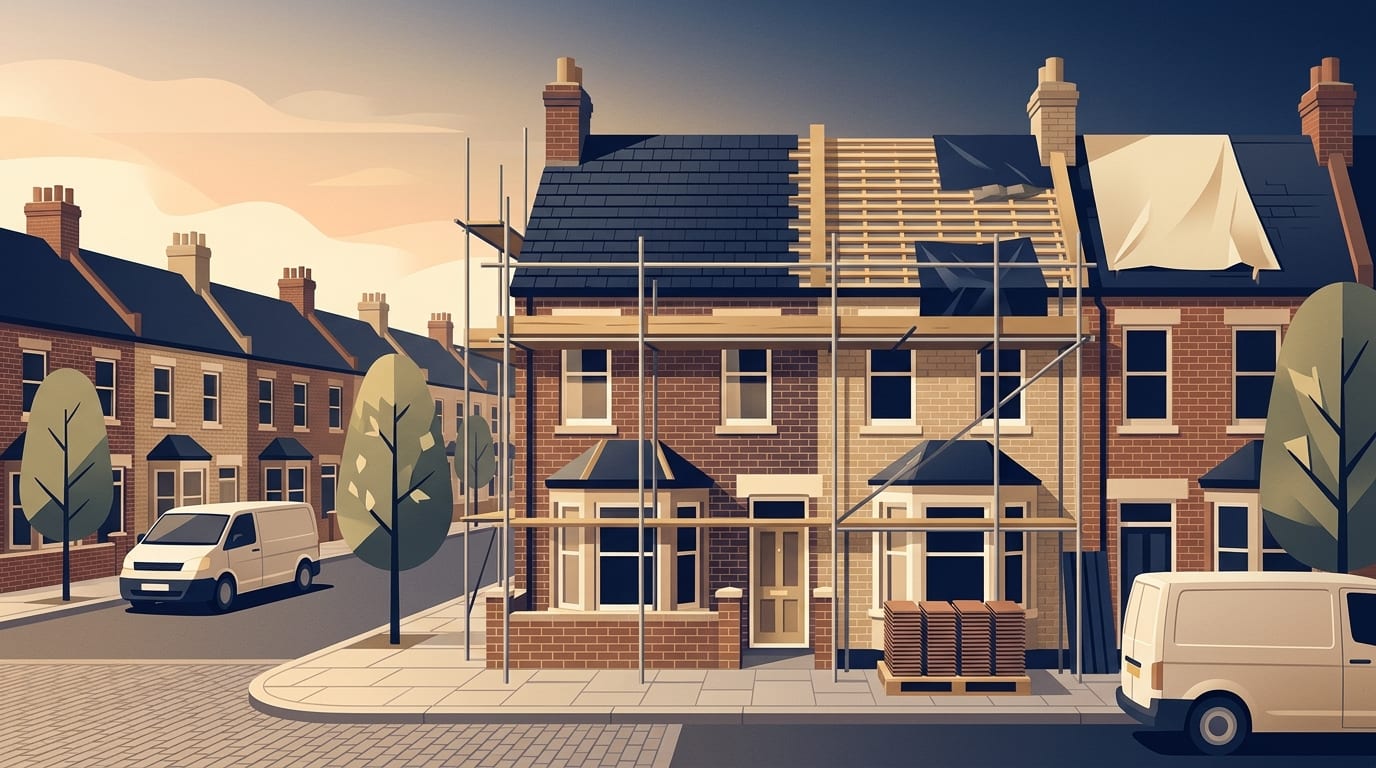
The days spent laying tiles are only part of the timeline, as the scaffold is on site before and after the roofing crew. Scaffolding is a separate stage of the project and it stays on site much longer than the roofing crew. The scaffold goes up on day zero, before any materials arrive or the old roof is stripped.
It is struck, meaning taken down and removed, at the very end of the job after a final walkover to check the work. This removal typically happens on day seven or eight for a standard semi-detached job. However, you will usually pay for the scaffolding for a much longer period than the time the roofers are actually working.
Scaffolding companies typically set a minimum hire period of six to eight weeks. Scaffolding hire fees are not included in roof prices in the published guidance, so you must check your quote carefully to see if it is a separate line item.
For a six-week hire, scaffolding at the front of a property typically costs between £3,750 and £4,950. Wrapping a semi-detached property completely costs between £5,350 and £6,250 for the same six-week period. These are typical published figures for 2026, and your location will affect the final price, particularly as prices are higher in London and the South East.
How weather changes the schedule
Roofing is highly weather dependent, as working at height in high winds or icy conditions is extremely dangerous. Heavy rain also risks exposing your open roof structure to severe water damage. A professional roofer will monitor the forecast and delay the start rather than risk stripping your roof just before a storm hits.
The time of year you book the work will dictate how many days are lost to bad weather. The published figures put weather losses at an average of 0.7 days per week from April to September and 2.4 days per week from November to February.
When rain stops play, the job is pushed back and the scaffolding comes down later. Ask the roofer what happens if it rains, how an open roof is protected, and whether weather delays change the price.
What can add days to the job
Nobody can see rotten timber until the old covering is off, so hidden problems are usually only discovered on day one. Fixing these structural faults must be done before the new underlay and battens are fitted, and this will add days to your project. Underlay, often called felt or membrane, is the waterproof layer that sits under the tiles, and battens are the timber strips the tiles are fixed to.
Common issues that extend the timeline include:
- Rotten rafters or wallplates, which take one to three extra days to replace.
- Chimney rebuilds, which add one to three days per stack.
- New skylights, which require half a day to one and a half days of labour each.
- Material lead times, especially for natural slate, which can take two to six weeks to arrive.
- Certification delays of up to three days if your roofer is not registered with CompetentRoofer and you have to wait for council building control.
Rafters are the sloping timbers that support the roof, and the wallplate is the horizontal timber that sits on top of your brickwork to bear the load. Replacing these rotten structural timbers is essential for a safe roof, and a good roofer will always explain how these extras are priced before proceeding.
Can you stay at home during the work?
Replacing a pitched roof is generally non-disruptive to the inside of your house. You can stay at home, carry on with your normal routine and sleep in your own bed. Ask the roofer whether they will need access to the house during the work.
You will experience noise and vibration throughout the day. Stripping the old tiles, hammering new battens into place and loading heavy materials onto the scaffold will be loud. It is a good idea to tell your neighbours about the work in advance so they are prepared for the noise and the scaffolding lorries blocking the road.
Dust and debris will fall into your loft while the old roof is removed and the new underlay is fitted. You should clear any valuable items out of the roof space or cover them with heavy plastic sheeting before the work begins. Do not enter the loft while the work is happening, as you could get in the way of the structural work or be exposed to falling debris.
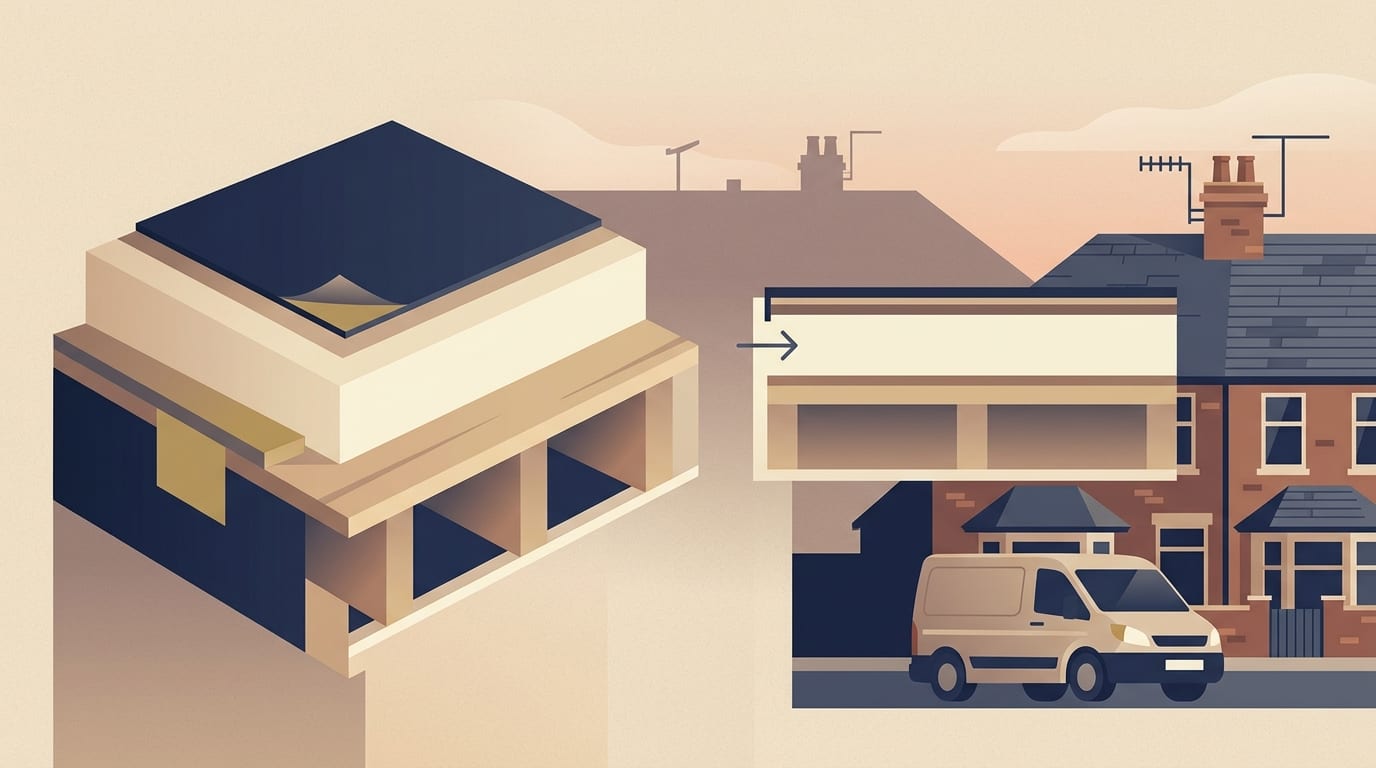
If you are having a flat roof replaced, the process is similar but involves the timber deck. The deck is the structural wooden base of a flat roof, and if it is rotten it will need replacing. A warm roof has insulation above this deck, while a cold roof has it between the joists.
Booking lead times and the best months
Because weather plays such a big role in the safety and speed of the job, the summer months are the most popular time for roof replacements. May to September are the best months to schedule the work, as you have the lowest weather losses in the published figures. April and October are the second best options for booking a major project.
You should avoid December and January if possible. The short daylight hours, frequent rain, and high chance of freezing conditions make these the hardest months for roofing work. A leak might force an emergency patch repair in winter, but planned full replacements are best left for the warmer and drier months.
Good roofers are usually booked up well in advance, especially during the peak summer season. A lead time of four to eight weeks is typical for reputable roofers. Be wary of anyone who knocks on your door, says they have spotted a loose tile or moss from the street and can start tomorrow, especially if they press you to decide today.
Questions to ask your roofer about timing
Getting a clear timeline in writing helps you plan around the disruption and understand what you are paying for. A good roofer will happily explain their schedule and how they handle unexpected delays. Ask these questions before you agree to any quote:
- When is your earliest start date and how long is the material lead time?
- How many working days will your crew actually be on site?
- What happens to the schedule and the open roof if it rains heavily?
- How long will the scaffolding be up after the work is finished?
- Are scaffolding hire fees included in this quote for the full six to eight weeks?
- Who is responsible for removing the waste and is VAT included?
- How will you price extra days if you find rotten timber under the old tiles?
A proper written quote will be itemised and state clearly what is included. An estimate is just a guess, but a quote is a fixed price. Never accept a vague one-line quote or a price given verbally over the phone, and always ensure you understand how extras will be priced before work begins.
Common questions
Do you need building regulations approval for a new roof?
In England, repairing or re-covering a roof does not normally need a building control application if less than 25 per cent of the building envelope and less than 50 per cent of the roof is affected. Above that, approval is needed and your insulation may have to be upgraded to current standards. Approval is also needed where a new covering performs significantly differently in fire, or where it adds 15 per cent or more to the weight of the roof.
What happens if I replace a conservatory roof?
Replacing a glazed or polycarbonate conservatory roof with a solid one takes the conservatory out of its exemption. This means building regulations apply to the new roof and you will need formal approval. Rules differ in Scotland and Northern Ireland, so you should check with your local council rather than guessing.
What is the CompetentRoofer scheme?
CompetentRoofer is a government-authorised competent person scheme run by the National Federation of Roofing Contractors (NFRC). Registered roofers can self-certify roof refurbishment in England and Wales. This means the customer should receive a building regulations compliance certificate directly, without needing to hire a registered building control approver.
How long is the cooling-off period?
Contracts agreed at home, by phone or online normally carry a 14-day cooling-off period under UK consumer rights law. If you change your mind within this window, you can normally cancel. However, if you ask for work to start inside that period, you must pay for what has been done.
Next steps
Replacing your roof is a major investment and you have to take a stranger's word for what is wrong. Taking the time to find the right tradesperson and getting everything in writing is the best way to protect yourself against scams like pressure washing sold as maintenance or false roof coating and painting claims. Use this checklist to ensure a smooth project:
- Take photos of the defect from the ground or inside the loft to show roofers what you are concerned about.
- Get three written quotes that itemise the cost of materials, labour, scaffolding, waste removal and VAT.
- Check the TrustMark register to see if the company is part of the government-endorsed quality scheme for work in and around the home.
- Ask to see proof of insurance, as guarantees are worthless if the firm folds because they are not insurance-backed.
- Agree a staged payment plan and only make the final payment when the job is finished and the building regulations certificate is handed over.
Paying by credit card gives you Section 75 protection on purchases over £100 and up to £30,000. Under the Consumer Rights Act 2015, any work you commission must be done with reasonable care and skill. If the work is substandard, you can ask for it to be put right or for money back, and Citizens Advice is the best place to go if you have a dispute. If you are ready to get itemised quotes and compare timelines, you can find a roofer near you to start the process.
Find a top rated roofer near you
3,861 roofers across the UK, each ranked on their Google rating and the number of reviews behind it. Start with your county: