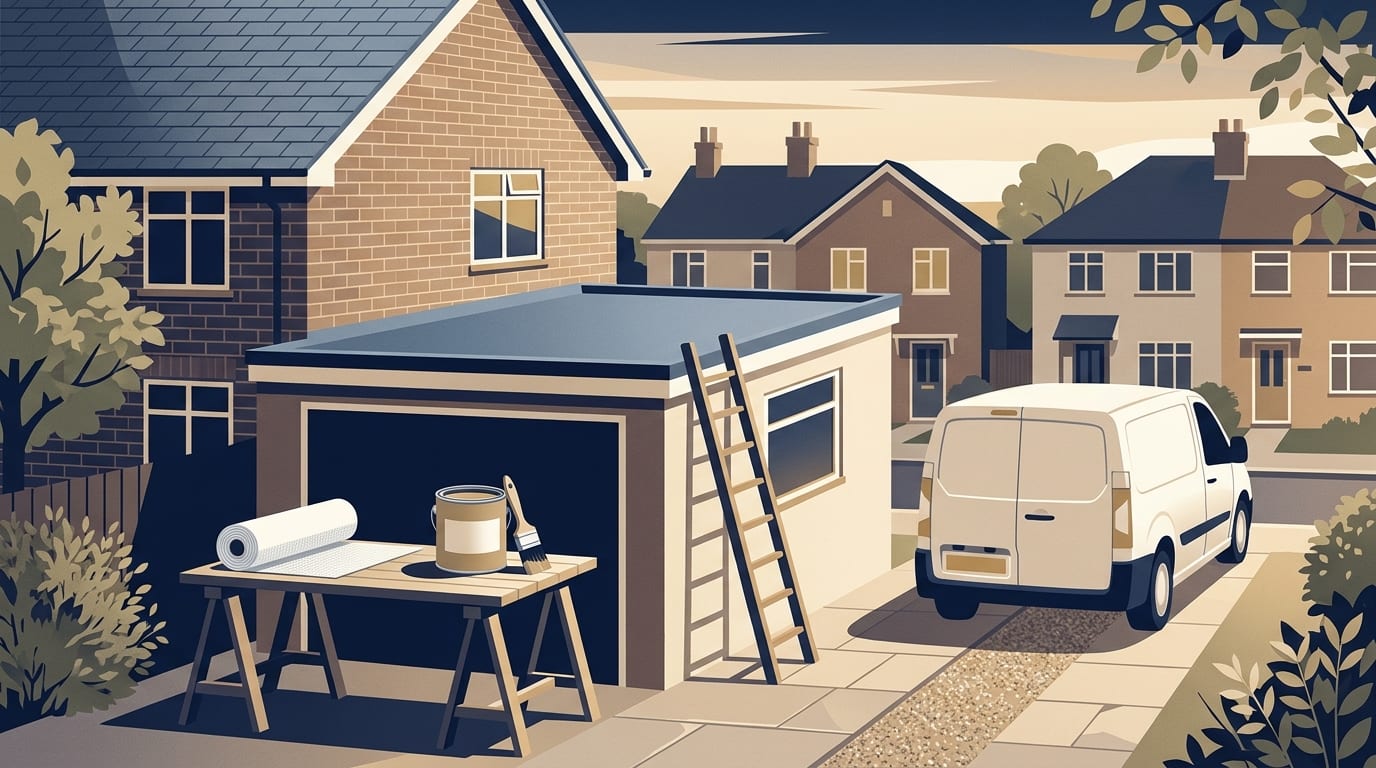
Torch-on felt is a bitumen membrane bonded to your roof using a gas torch, typically applied in two or three layers. Typical 2026 prices put a two layer system at £60 to £90 per square metre and a three layer system at £70 to £110 per square metre supplied and fitted. Because the open flame carries a fire risk near timber and homes, the National Federation of Roofing Contractors runs a Safe2Torch campaign to improve safety. Torch on felting is strictly for a trained roofer and is never a do it yourself job.
What torch-on felt is
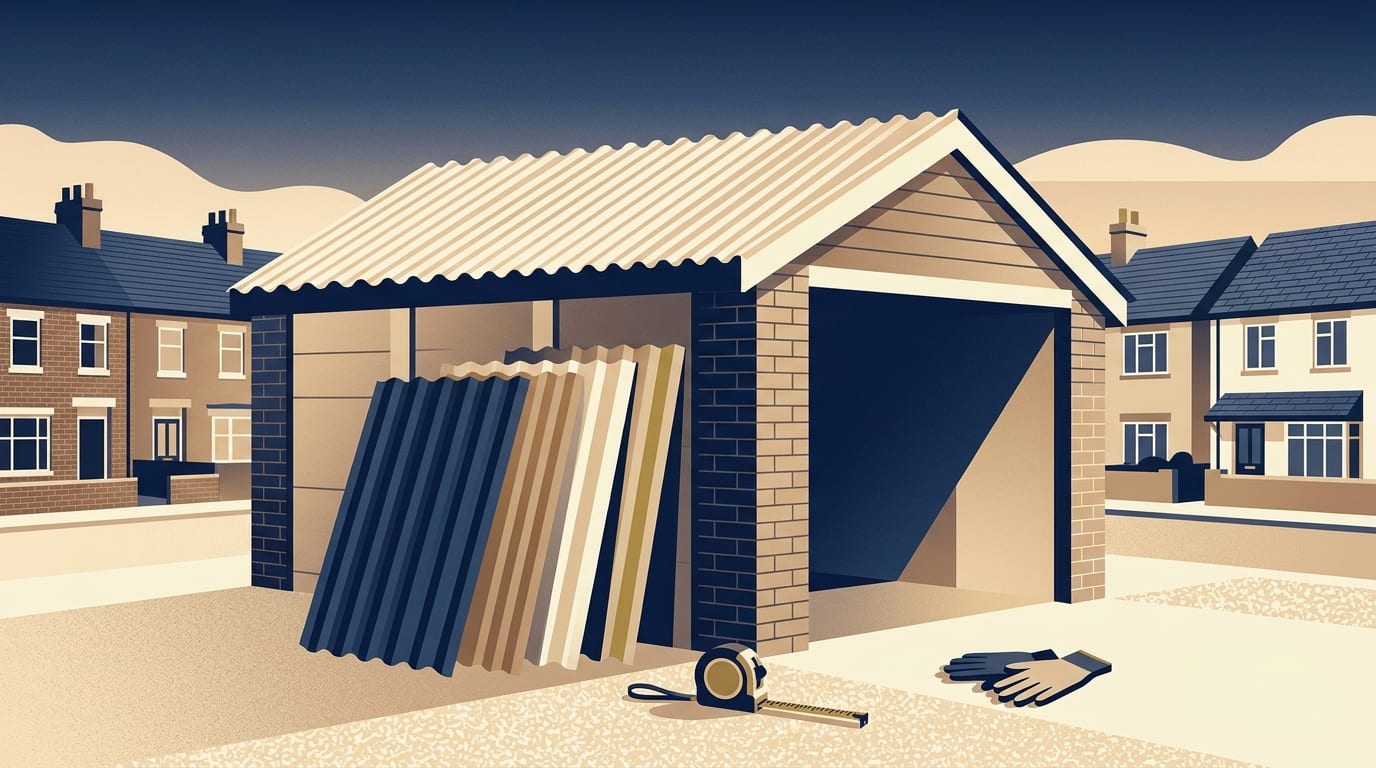
A pitched roof is covered in concrete or clay tiles, or natural or fibre cement slate, and has sloping sides that meet at a ridge at the top, with verges at the side edges, eaves at the lower edges, and sometimes a valley where two slopes meet. Flat roofs are different. They are typically found on garages, extensions and porches, and they rely on a solid timber deck covered by a waterproof membrane.
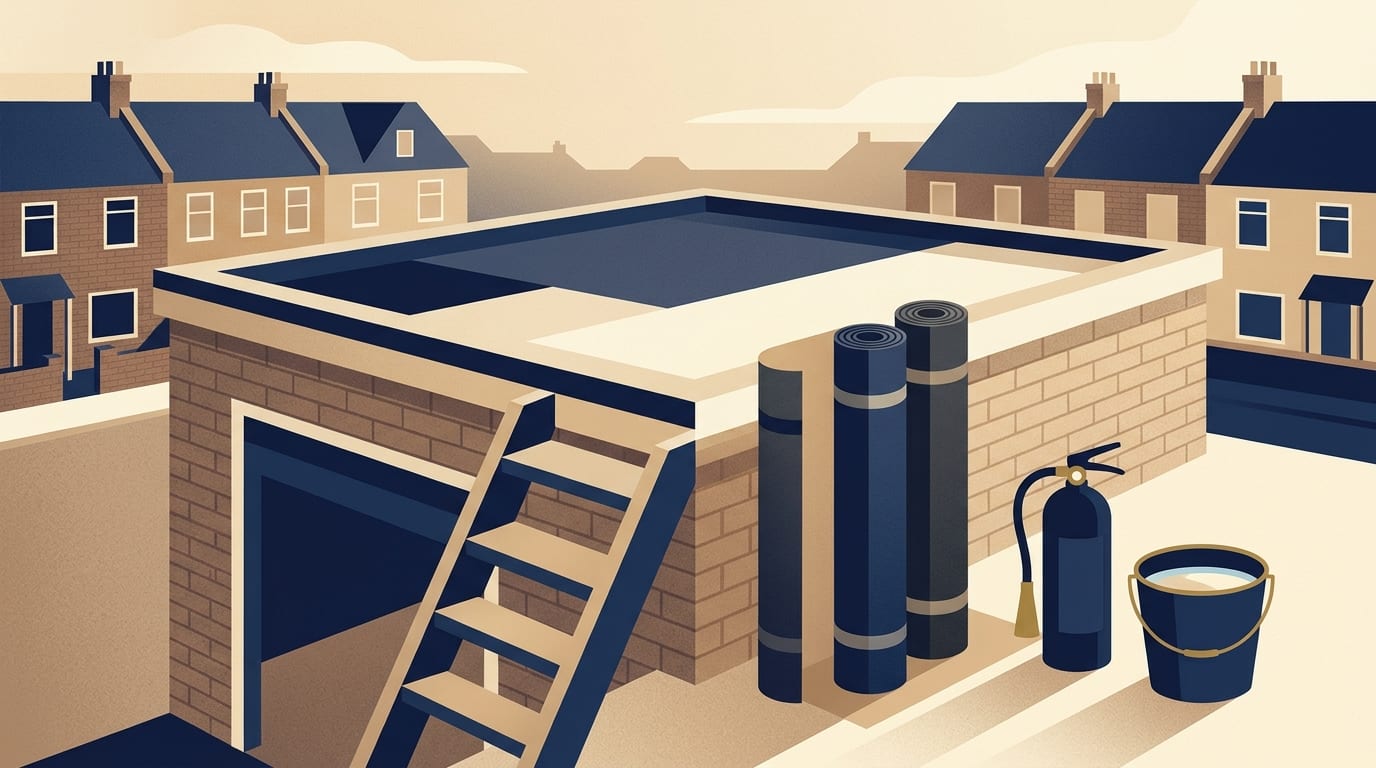
Flat roof systems include built-up felt, EPDM rubber, GRP fibreglass, single ply and liquid coatings. Torch-on felt is described as the most common flat roof system. It involves applying two or three layers of modified bitumen membrane that are heat welded together. A roofer uses a gas blow torch to heat the bitumen backing so the felt bonds firmly to the timber deck and to the layers below it.
A typical three layer specification includes:
- An underlay or vapour layer at the bottom.
- An intermediate layer in the middle.
- A mineral surfaced cap sheet on top.
The term cap sheet simply means the final, top layer of the roof. The membranes themselves are SBS or APP modified bitumen, and your roofer can tell you which type is proposed. Multi layer torch on is the standard SBS modified option.
How much torch-on felt costs in 2026
Estimates vary when pricing a new flat roof. Some 2026 price lists put pour and roll or mineral felt at £40 to £65 per square metre, two layer torch on at £60 to £90 and three layer SBS torch on at £70 to £110. Others put basic mineral felt at £50 to £80 per square metre and SBS modified felt at £80 to £120. A general supply and fit price for flat roof felt is typically £60 to £120 per square metre. The table below shows typical costs for full replacements based on the size of the project.
|
Project size |
Basic mineral felt |
Multi layer SBS torch-on felt |
|---|---|---|
|
Porch (3 square metres) |
£250 to £400 |
£450 to £700 |
|
Bay window (5 square metres) |
£350 to £550 |
£600 to £900 |
|
Shed (8 square metres) |
£400 to £640 |
£640 to £960 |
|
Single garage (15 square metres) |
£750 to £1,200 |
£1,200 to £1,800 |
|
Double garage (25 square metres) |
£1,250 to £2,000 |
£2,000 to £3,000 |
These figures are typical published prices for 2026 and your local quotes will differ. Prices are generally higher in London and the South East.
A different set of 2026 estimates prices larger jobs by size, and quotes are usually priced by the square metre plus access and extras. A small garage or single-storey extension measuring 15 to 25 square metres costs £1,200 to £3,000. A medium extension or larger garage measuring 25 to 40 square metres costs £2,500 to £4,500. A large flat roof measuring 40 to 70 square metres costs £4,000 to £7,500 or more. If you only need a small felt patch repair for a minor leak, this typically costs £150 to £350.
What affects the price of a torch-on felt roof
The square metre rate covers the felt itself, but a complete roof replacement often involves extra work. Stripping and disposing of the old roof typically adds £150 to £400 per job. Waste removal and VAT may or may not be included in your initial estimate, so you must ask the roofer to clarify this in writing.
Nobody can see rotten timber until the old covering is off, so a good quote says exactly how extras will be priced. If the timber deck beneath the old felt is damaged, replacing it with new 18mm OSB3 timber boards usually costs £20 to £35 per square metre. You may also need to replace the fascias and soffits, which are the timber or plastic boards just beneath the roof edge, or the guttering attached to them.
Deciding between a warm roof or cold roof will also affect your final bill. A warm roof has insulation above the timber deck, while a cold roof has it between the joists. Adding warm roof insulation, which includes PIR boards and a vapour control layer, costs £35 to £60 per square metre. Upgrading from a cold roof to a warm roof adds £15 to £35 per square metre over a simple like for like replacement. Scaffolding is often a separate and significant line on your bill that will push the total price up further.
How long torch-on felt lasts
Basic mineral felt on small outbuildings may only last around 10 to 15 years and usually carries little or no meaningful guarantee. A two layer torch on system typically lasts 15 to 20 years and often comes with a 10-year workmanship guarantee from the roofer.
A good three layer SBS torch on roof will last 20 to 25 years. Certified systems applied by approved installers can last 25 years or more, and these often come with a 10 to 20-year manufacturer backed guarantee. Domestic use of this system is described as declining.
The fire risk and what the NFRC says
Torch on felting involves a naked gas flame right next to timber decking, fascias and, often, your house. This raises the fire risk near eaves, fascia timber and adjoining structures. To manage this risk, the National Federation of Roofing Contractors runs the Safe2Torch campaign. This scheme launched on 3 July 2017 and aims to reduce the risk of roof fires from gas torches, whether they are used to dry out roofs or to install torch on membranes.
Under the Safe2Torch guidelines, a roofer must identify fire risks at the survey stage and build them into the specification before it is written. Where a risk is found near combustible materials or cannot be ruled out, the relevant parts of the specification should default to torch free solutions. Torch application can return to the specification only if all parties agree and the area is shown to be safe.
Signatories to the campaign agree to report non conforming specifications, identify and reduce torch fire risks, and train all employees in gas torch use and its risks. They must also ensure supervisors or charge hands complete the Safe2Torch checklist before hot works start. The NFRC provides guidance, a safe system of works for gas torches and a visual checklist. Registration is set to become mandatory for NFRC and Competent Person Scheme members involved in flat roofing.
Hot works need the right insurance, fire extinguishers on site and a fire-watch period after the work is finished. Ask your roofer what their arrangements are.
Torch free options
If an open flame is impractical or too close to timber and fascias, a roofer can use self adhesive felt, which is described as a way to avoid an open flame.
Another option is EPDM, which is a synthetic rubber membrane. EPDM is cold applied with no flame. You can ask your roofer to explain which method is safest for your specific roof based on how close the work is to your home and adjoining structures.
Insurance and guarantees for hot work
Because of the open flame, a contractor should carry the right liability insurance. Ask to see proof of this and whether it covers hot works. Roof work must also be organised and planned so it is carried out safely. A method statement is the usual way to manage roof work and explain precautions. The Health and Safety Executive states that falls from flat roof edges can be prevented with a secure double guardrail and toeboard around the edge.
An Insurance-Backed Guarantee (IBG) can provide valuable protection to you as a homeowner when commissioning roofing work. The contractor would normally provide a workmanship guarantee, and an IBG would apply if the contractor has ceased to trade during that term. It carries an additional cost, but if you use a registered contractor through the NFRC Competent Person Scheme (CPS) for a domestic roof refurbishment, you are automatically issued with a ten year Insurance-Backed Insolvency Guarantee.
TrustMark is the government-endorsed quality scheme for work in and around the home, while CompetentRoofer is a government-authorised competent person scheme run by the NFRC. Membership of these schemes is a good sign, not a guarantee, but it allows registered roofers to self-certify roof refurbishment in England and Wales. Once the work is signed off, you receive a building regulations compliance certificate.
Consumer rights and scams to avoid
Under the Consumer Rights Act 2015, work must be done with reasonable care and skill. If it is not, you can ask for it to be put right or for money back. A quote is a fixed price, an estimate is not. Contracts agreed at home, by phone or online normally carry a 14-day cooling-off period, but if you ask for work to start inside that period you must pay for what has been done. Paying by credit card gives Section 75 protection on purchases over £100 and up to £30,000. Citizens Advice is the place to go with a dispute.
Be highly suspicious of cold callers who claim to have spotted a loose tile, damaged lead flashing or moss from the street. Pressure washing is often sold as maintenance, and roof coating or painting claims need careful checking. Never accept pressure to decide today, cash only deals, big deposits, or quotes with no physical address. A common scam is being sold a whole new roof when a local fault could simply be repaired.
Questions to ask before work starts
Always get three written quotes and compare the details. A vague one line quote is a common sign of a poor contractor. Here is what to ask:
- Have you signed the Safe2Torch pledge and completed the training?
- Will you use a torch free method near my timber fascias, eaves and adjoining structures?
- Does your liability insurance specifically cover hot works on residential properties?
- What fire-watch period will you keep after the work is finished?
- Can you provide a written specification showing exactly how many layers of felt you will use?
- Are waste removal, scaffolding and VAT included in the final price?
Common questions
Do I need building regulations approval for a felt roof?
In England, repairing or re-covering a roof does not normally need a building control application if less than 25 per cent of the building envelope and less than 50 per cent of the roof is affected. Above that 50 per cent mark, approval is needed and your insulation may have to be upgraded. Garage roofs are not reportable unless the garage has fixed heating. Rules differ in Scotland and Northern Ireland, so check with your local council rather than guessing.
Can roofers lay torch-on felt in the rain?
Torch on and self adhesive systems bond poorly to damp decking, so a roofer may reschedule rather than felt in the rain.
What is a cap sheet?
A typical three layer specification has an underlay or vapour layer, an intermediate layer and a mineral surfaced cap sheet. The cap sheet is the top layer.
Do I get paperwork when the job is finished?
If your roofer is registered with a competent person scheme, they can self-certify the work and you will receive a building regulations compliance certificate. Otherwise, the work must go through your council building control or a registered building control approver to get the certificate, which you will need when you come to sell your house. You should also keep your written quote, invoices, and any workmanship or insurance-backed guarantees.
What to do next
If your flat roof is leaking or reaching the end of its life, take these steps to get the right repair:
- Take photos of the defect from the ground or from inside the loft to show the roofer. Never climb on a roof, use ladders at height, or carry out leadwork, torch on felting, structural or electrical work yourself.
- Ask three local firms to inspect the roof and provide itemised quotes.
- Check what a proper written quote contains so you can spot vague estimates and hidden costs.
- Ask to see their liability insurance and check it covers hot works.
- Agree a staged payment plan and only make the final payment when the job is completely finished and the waste is removed.
The lifespans quoted for torch-on felt run from 15 to 25 years, and it is laid safely only by a trained roofer. To start gathering quotes, you can find a roofer near you.
Find a top rated roofer near you
3,906 roofers across the UK, each ranked on their Google rating and the number of reviews behind it. Start with your county: