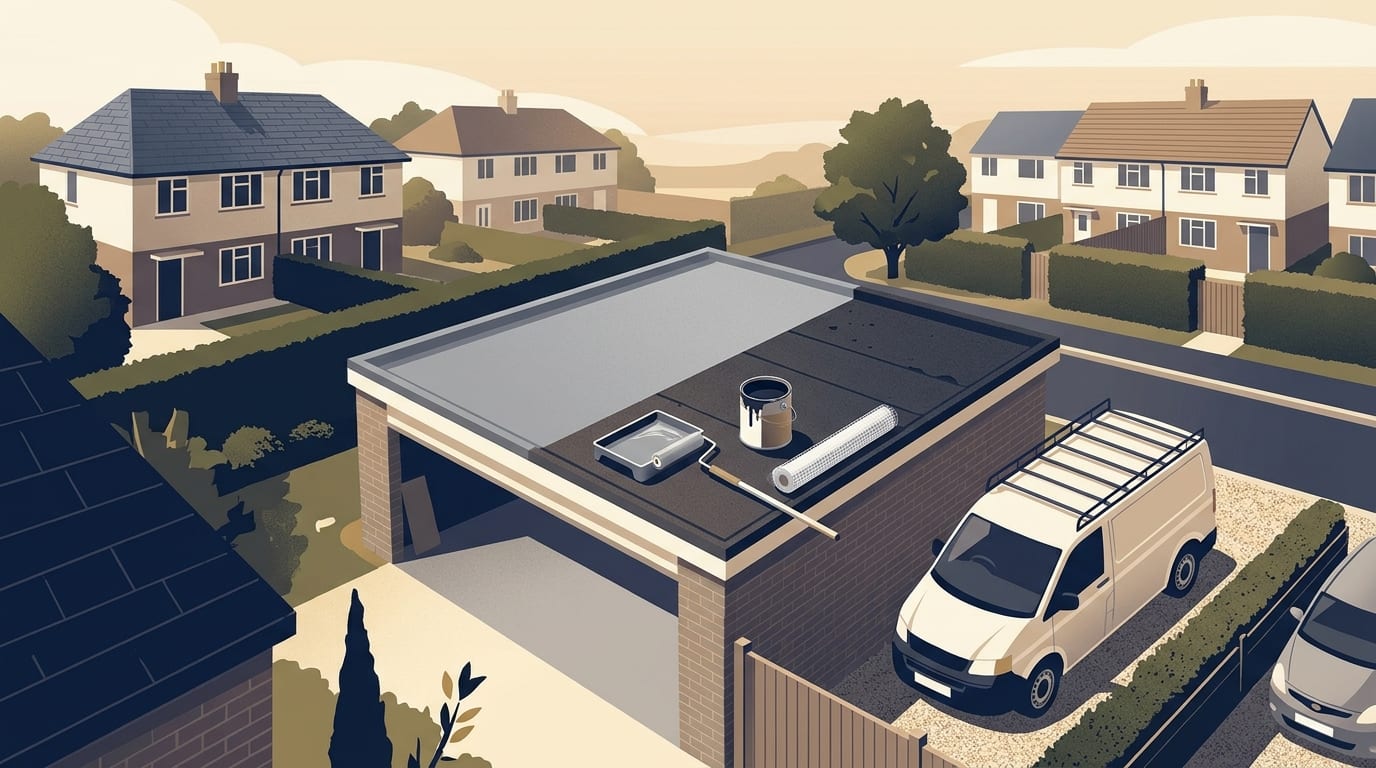
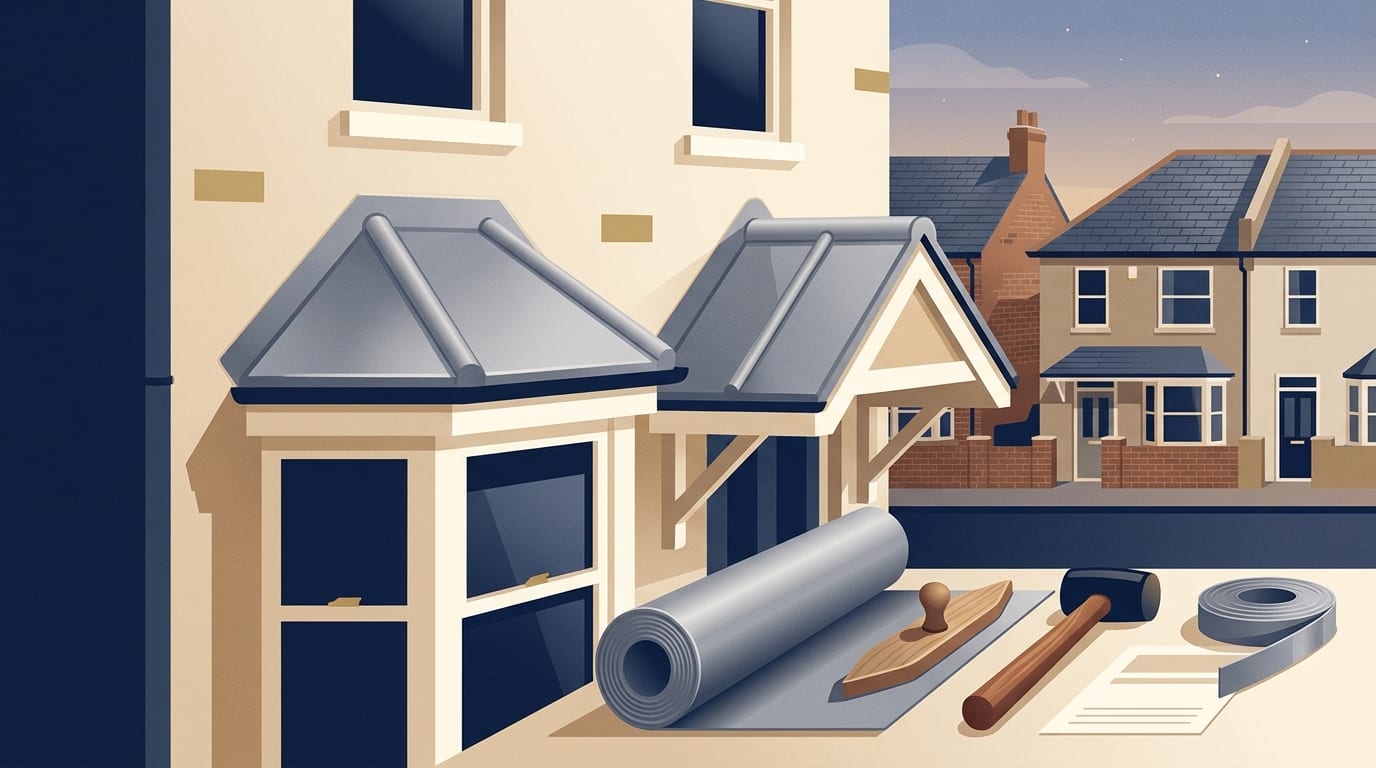
Metal roofs are lighter than slate or tile, last a long time if installed properly, and cost from tens of pounds per square metre for corrugated steel to several hundred for copper. The main variables that determine your final bill are the metal you choose, the profile of the sheets, how much insulation you need and how easy the roof is to access.
Where metal roofing is used on UK homes
Metal roofs are used on extensions, garages and other buildings, and to replace traditional materials such as concrete and clay tiles, or natural and fibre cement slate. Metal weighs far less than slate, which can help older roof structures.
A pitched roof is one that slopes downwards, while a flat roof is almost horizontal but has a slight fall to let rainwater drain away. Every roof has specific parts that need to be sealed correctly. The highest point is the ridge, and the sloping edges are the hips. The internal corners where two roof sections meet are called valleys, the edges at the gable ends are the verges, and the bottom edges where the gutters sit are the eaves.
If your roof joins a brick wall or a chimney, you will also have lead flashing to keep the water out. Metal roofing can be folded and shaped to fit all of these parts of a roof securely. If you are replacing a covering on an existing structure, you must consider whether the new material suits the surrounding area. A metal roof may need permission in a conservation area or on a listed building, as set out below.
The main types of metal roof
There are several ways to put metal on a roof, and the right choice depends on your budget and the look you want. Corrugated or box-profile steel is the lowest priced of the main metals in both tables below.
Standing seam roofs have a higher cost and need specialist installation.
Metal shingles or tiles and metal sheets are two other broad categories, with wide price ranges in the table below.
If you have a flat roof, you might also be considering systems like built-up felt, EPDM rubber, GRP fibreglass, single-ply and liquid coatings. Metal is a different kind of covering from these. Copper is the most expensive metal in both tables below.
Typical costs by metal in 2026
The price you pay depends heavily on which metal and profile you choose. The table below shows typical installed prices for different materials per square metre.
|
Roofing material |
Installed cost per square metre |
|---|---|
|
Corrugated steel |
£70 to £90 |
|
Metal shingles or tiles |
£30 to £100 |
|
Metal sheets |
£50 to £140 |
|
Aluminium panels |
£90 to £120 |
|
Standing seam |
£95 to £120 |
|
Zinc panels |
£110 to £140 |
|
Copper |
£200 or more |
These are typical 2026 prices, and local quotes will differ. 2026 prices for specific metals give different figures. The two sets of figures were worked out differently, so read them separately.
|
Roofing material |
Installed cost per square metre |
|---|---|
|
Corrugated or box-profile steel |
£80 to £110 |
|
Standing seam steel |
£120 to £160 |
|
Aluminium |
£130 to £170 |
|
Zinc |
£150 to £200 or more |
|
Copper |
£220 to £400 |
These are typical 2026 prices, and local quotes will differ. To give you an idea of total costs, covering a 60 to 80 square metre roof in box-profile steel is roughly £4,800 to £8,800. Covering the same roof in zinc is roughly £9,000 to £16,000 or more. Those whole-roof figures exclude insulation and scaffolding. For the first table, the average overall cost of a metal roof is £9,000, with a typical range of £6,000 to £12,000, or £70 to £120 per square metre installed. That is not comparable with the second table.
Lifespan and maintenance
A metal roof can last a long time if it is inspected and maintained, but the lifespan you actually get depends on the metal you choose. Coated steel roofs usually last about 40 years. Aluminium roofs can last 50 years or more, while zinc roofs often last 60 to 70 years or more.
These figures are heavily influenced by the quality of the surface coating, your local environment and the installation quality. You should always check the manufacturer's guarantee for the specific product you are buying, as this will outline what is covered.
Different metals come with different downsides. Corrugated steel is prone to denting, and it will require more maintenance in coastal areas. Standing seam roofs have a higher cost and need specialist installation, which puts them out of reach for some budgets.
A metal roof needs inspecting and maintaining, and any gutter work is best left to a roofer or gutter cleaner. Do not be talked into roof coating and painting claims by cold callers. You should also avoid anyone trying to sell you pressure washing as maintenance, as power washing can damage the roof.
Weight and what it means for older roofs
Metal weighs far less than slate, which can help older roof structures. If you are replacing a heavy covering, ask a structural engineer or surveyor whether switching to metal suits your roof.
However, changing the weight of your roof covering significantly can trigger building regulations. The Planning Portal states that approval is needed if the new covering increases the weight of the roof by 15 per cent or more.
Even if the new roof is much lighter, you still need to be careful. The Planning Portal advises checking with a structural engineer or surveyor if the weight changes significantly either way. A much lighter or much heavier covering is a matter of structural stability.
If your roof structure does need attention, structural reinforcement costs from £500. Nobody can see rotten timber until the old covering is off, so a good quote will always say how any necessary timber repairs will be priced.
Noise and insulation
Many people worry that a metal roof will sound like a drum during a storm. Corrugated, shingle and sheet metal roofs can indeed be noisy in heavy rain or hail without insulation. Ask the installer how the roof will be insulated against noise.
Properly built metal roofs with insulation and acoustic underlay are no noisier in rain than tiled roofs, so noise is a question of how the roof is built.
The way you insulate depends on the design. A warm roof has the insulation placed above the timber deck, keeping the structure warm. A cold roof has the insulation placed between the joists, leaving the space above it cold. Building regulations treat a roof as a thermal element, so when you replace it, you may have to upgrade the insulation to meet current energy standards.
Adding insulation costs £10 to £20 per square metre. You will also need a layer of underlay, often called felt or membrane, which sits under the metal. Underlay costs £5 to £8 per square metre.
Planning permission and building regulations
Planning permission is usually not needed to install a metal roof on a standard house. However, roofs that change shape or height significantly may need permission. You should also check with your local planning authority before ordering materials if you live in a conservation area where an Article 4 direction removes your permitted development rights.
If you live in a listed building, you need special permission. The Planning Portal states it is a criminal offence to carry out work which needs listed building consent without obtaining it beforehand. Replacing a glazed or polycarbonate conservatory roof with a solid one takes the conservatory out of its exemption, so building regulations apply to the new roof.
Building regulations approval is normally needed for a metal roof in England, because the work affects insulation and energy standards, fire resistance especially near party walls, and structural capacity. For repair or re-covering work, the Planning Portal says you will not normally need a building control application if less than 25 per cent of the total building envelope and less than 50 per cent of the roof is affected. Above that, approval is required, so ask building control or a registered roofer before you order. Wales, Scotland and Northern Ireland have their own rules.
You can use a roofer who is registered with CompetentRoofer, a government-authorised competent person scheme run by the National Federation of Roofing Contractors (NFRC). Registered roofers can self-certify roof refurbishment in England and Wales, and you should receive a building regulations compliance certificate. Otherwise, the work goes through council building control or a registered building control approver. Rules differ in Scotland and Northern Ireland, so you should check with your local council rather than guessing.
Extras that push up the price
The square metre price of the metal is only one part of the bill. Insulation, access, scaffolding and old-roof removal can add significantly to the total.
Scaffolding is often a separate and significant line on your quote. It commonly costs £500 to £1,000 for a standard house. You also have to pay for the safe disposal of your old materials. Old roof removal costs £500 to £1,500, and hiring a skip costs £200 to £500.
If your fascias, soffits and guttering need replacing at the same time, this will push the price up further. Fascias are the long boards that run along the lower edge of the roof, soffits are the boards tucked underneath them, and guttering catches the rain. New guttering costs £200 to £800.
Labour is a major factor. Roofers typically charge £180 to £250 per day, or £25 to £50 per hour. An average roofing project takes two to three weeks. A small house might take three to five days, while a medium detached house takes one to two weeks. Prices are generally higher in London and the South East. Waste removal and VAT may or may not be included, so you must ask your roofer to clarify this.
How to compare quotes and choose an installer
A good roofer will give you a written quote that breaks down the costs clearly. Knowing what a written quote contains helps you spot a bad one. Small repairs are usually a fixed price or a day rate, but larger work is priced per square metre plus access. A quote is a fixed price, whereas an estimate is not. You should always get three written quotes based on the exact same specification so you can compare them fairly.
When you speak to roofing companies, you should ask a few specific questions to check their competence:
- How much experience they have with the specific metal you want to use
- Whether they offer an insurance-backed guarantee that protects you if they cease trading
- How they plan to manage waste and whether the skip is included in the price
- Which parts of the roof they will replace and which they will leave alone
You should also watch out for common mistakes and scams in this trade:
- Cold callers who knock on your door claiming they have spotted a loose tile from the street
- Salesmen who put pressure on you to sign a contract or make a decision today
- Traders who ask for cash only or demand a large deposit before materials arrive
- Vague one-line quotes that do not explain how the money will be spent
- Firms that try to sell you a whole new roof when a simple local repair would do
Under the Consumer Rights Act 2015, work must be done with reasonable care and skill. If it is not, you can ask for it to be put right or for money back. Contracts agreed at home, by phone or online normally carry a 14-day cooling-off period. If you ask for the work to start inside that period, you must pay for what has been done. Paying by credit card gives you Section 75 protection on purchases over £100 and up to £30,000. If you end up in a dispute, Citizens Advice is the best place to get help. TrustMark is the government-endorsed quality scheme for work in and around the home, and checking their register is a good starting point.
Common questions
Can I walk on a metal roof?
Do not walk on a metal roof. All work on roofs is highly dangerous, and walking on the panels can dent them or scratch the coating. If you need to inspect a fault, look from the ground or from the loft hatch and ask a professional who has the right access equipment. Never carry out leadwork, torch-on felting, structural or electrical work yourself.
Do metal roofs attract lightning?
Ask your installer if you are concerned about lightning. Fire resistance is covered by building regulations, especially near party walls, and the installer should confirm that the product you choose meets them.
Can I install a metal roof over an existing flat roof?
Ask the roofer. Old roof removal is priced separately at £500 to £1,500, and nobody can see rotten timber until the old covering is off, so a good quote says how any deck repairs will be priced.
What happens if my roofer goes out of business?
A guarantee is worthless if the firm folds and it is not insurance-backed, so ask whether the guarantee is insurance-backed. You should also keep your building regulations compliance certificate safe, as you will need it when you come to sell your home.
Next steps for your metal roof
Before you hire anyone to replace your roof, make sure you have everything in order. Follow this short checklist to protect yourself and your money.
- Take photos of your existing roof from the ground to show roofers the problem
- Get three written quotes based on the exact same specification and materials
- Check that the quotes list scaffolding, insulation and waste removal separately
- Ask for proof of the firm's insurance before they start work on your property
- Agree a staged payment plan and only pay the final balance when the job is finished
Getting a new roof is a major investment, but taking the time to check the details will save you money and stress in the long run. If you know what metal you want and are ready to compare prices, you can find a roofer near you to get your first written quote.
Find a top rated roofer near you
3,861 roofers across the UK, each ranked on their Google rating and the number of reviews behind it. Start with your county: