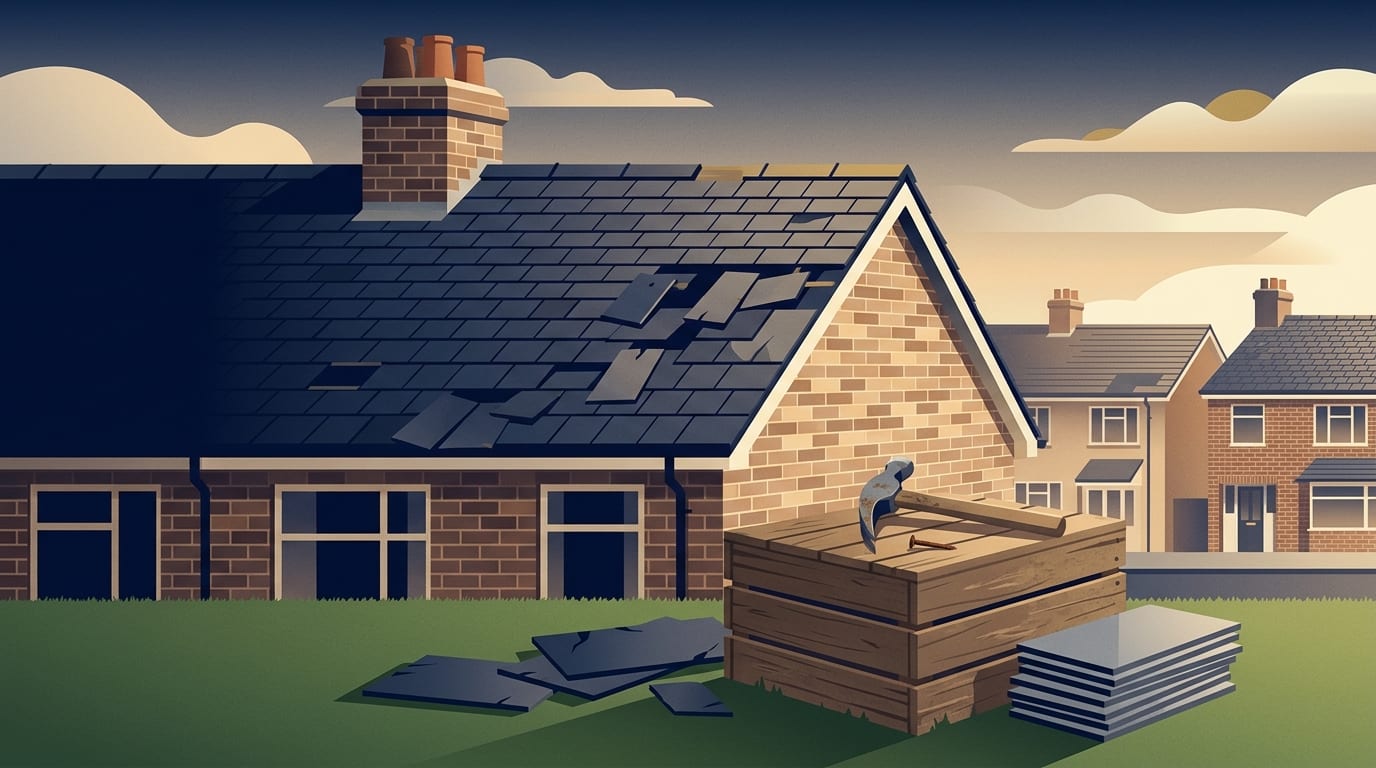
Nail sickness in a slate roof means the nails holding the slates in place have rusted away, causing the slates to slip even though the slate itself is perfectly fine. A few loose slates can be patched by a professional, but when the problem is widespread the roof usually needs re-slating. Fixings like nails and timber battens often need attention long before the slate does, making a mid-life inspection highly recommended.
Nail sickness is a problem of pitched roofs covered in individual slates. It does not affect flat roofs, which are built using a completely different method. Flat roof systems use a flat timber deck covered with continuous materials like built-up felt applied with a torch, EPDM rubber, GRP fibreglass, single-ply membranes or liquid coatings. A flat roof is either a warm roof with insulation above the timber deck, or a cold roof with insulation between the ceiling joists.
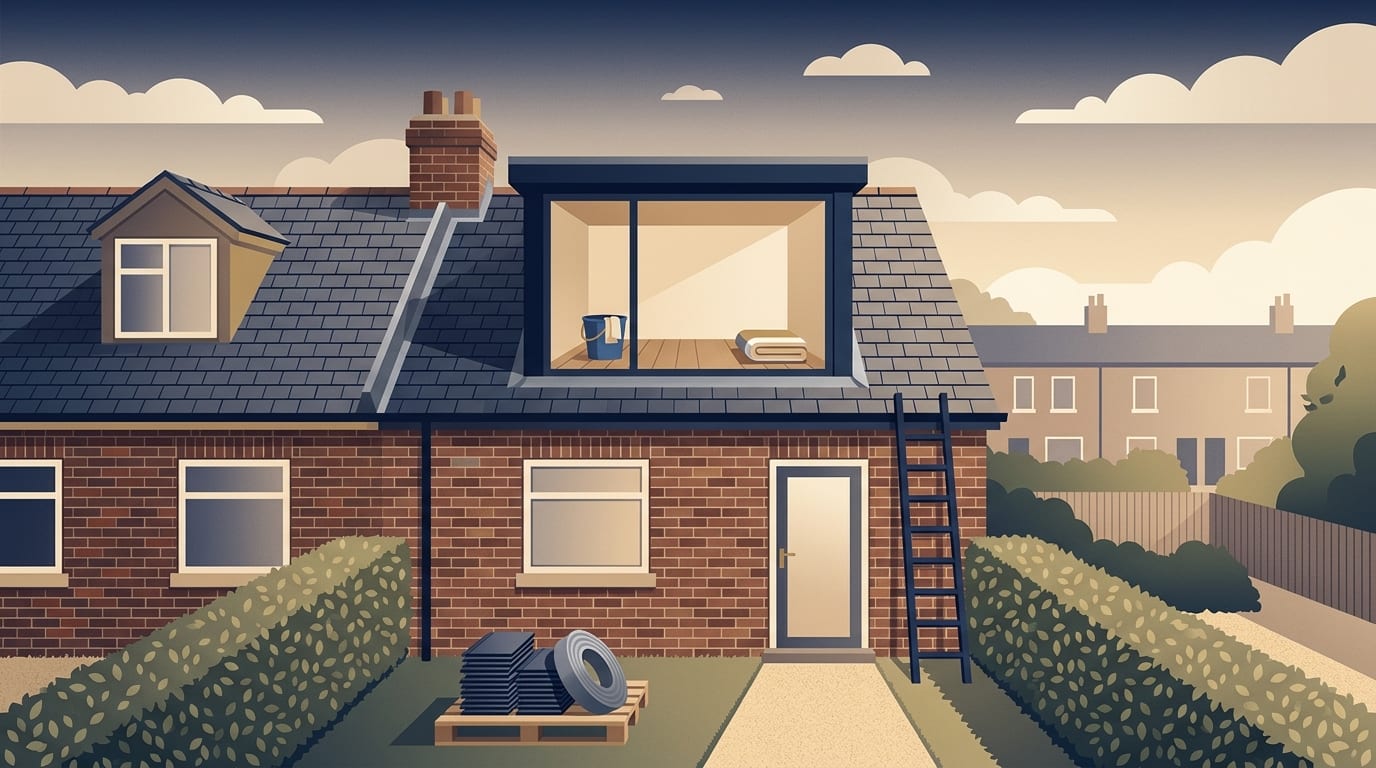
Most UK houses have pitched roofs built from a timber frame. This frame is covered with a waterproof underlay, often called felt or membrane, followed by horizontal timber battens. On a pitched roof, the natural or fibre cement slates are nailed directly to these wooden battens, and it is these fixing nails that fail.
Why the fixing nails fail before the slate
Nail sickness is a common reason older roofs eventually need re-slating. It is caused by poor quality nails or simply the age of the materials. Nails that rust when exposed to moisture over decades of bad weather will eventually give way.
As the nail rusts away, the fixing point weakens. Decay and softening of the top of the slate can also take place around the nail hole. Once the nail head rusts off completely, there is nothing holding the slate to the batten, so gravity pulls it down the roof.
Fixing with non-ferrous nails is likely to prove more durable in the long term, so ask your roofer which nails they plan to use.
Signs your slates are slipping
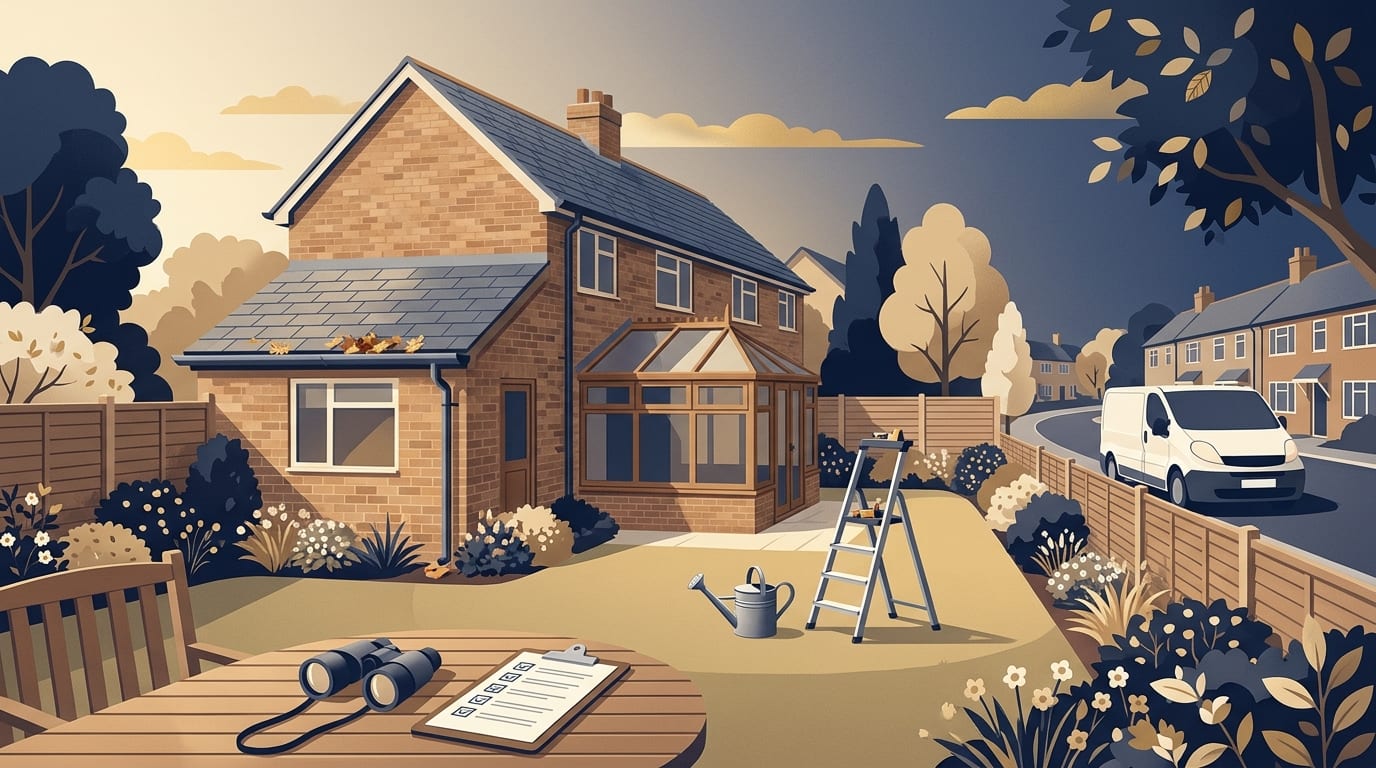
The most obvious sign of nail sickness is seeing slates out of their normal neat lines. You might spot gaps in the roof covering where the underlay is exposed directly to the weather. Check the whole roof from the ground, including the verge at the outer edge, the ridge along the top, the hips where two slopes meet outwards and the valleys where two slopes meet inwards.
Signs your slates are slipping include:
- Slates sitting slightly crooked rather than in strict horizontal lines
- Visible dark gaps exposing the waterproof underlay beneath
- Slates sliding down to the eaves, which is the bottom edge of the roof above your fascias, soffits and guttering
- Broken slate pieces sitting in your gutters and blocking the water flow
- Whole slates falling onto the ground or patio after high winds
Do not attempt to climb onto your roof to check for loose slates yourself. The Health and Safety Executive states that all work on roofs is highly dangerous, even if a job only takes a few minutes. Almost one in five deaths in construction work involve roof work, and many deaths each year involve smaller builders working on the roofs of domestic dwellings.
All roofs should be treated as fragile until a competent person has confirmed they are not. Sloping roofs require scaffolding to prevent people or materials falling from the edge. You should only ever inspect your roof from the ground, or by looking for daylight coming through the underlay from inside your loft.
Patch repair or full re-slate
Deciding whether to patch a few slates or strip the entire roof depends on how many fixings have failed. A few slipped tiles on a sound 15-year-old roof counts as a standard repair. Repairing small problems as they arise will help avoid the need for larger, more costly repairs in the future.
A full roof replacement is a major project, but it is sometimes the only sensible option. Natural slate is exceptionally durable, with good Spanish natural slate lasting 75 to 100 years and Welsh slate lasting over 100 years. Fibre-cement slate has a shorter expected lifespan of about 30 to 40 years.
Because the fixings often need attention before the slate itself, you may face a choice between paying for patch repairs as problems appear, or paying to strip and re-slate the roof. Reclaimed slate may be reused in some cases, but new slate is likely to be needed for many jobs. You can read more about deciding when to repair or replace your roof to help you weigh up the long term costs.
The rules of thumb for replacing a roof
Two rules of thumb help to decide if a roof needs completely re-covering. Guidance on Scottish slate roofs says a roof needs re-slating if more than 25 per cent of the slates on a roof are loose or defective. Re-slating is also highly likely where a roof has lost many slates and shows signs of further deterioration.
Another rule of thumb is that replacement is usually better value if repairs would cost more than 30 to 40 per cent of a full re-roof and the covering is past 70 per cent of its expected life. When stripping and re-slating a roof, the existing timber sarking boards under the slates may be re-used if they are in sufficiently good condition. The second rule of thumb applies to any type of roof covering, and building rules differ in Scotland and Northern Ireland, so check with your local council there.
In England, repairing or re-covering a roof does not normally need a building control application if less than 25 per cent of the building envelope and less than 50 per cent of the roof is affected. Above that threshold, formal approval is needed and your loft insulation may have to be upgraded to meet modern thermal standards.
CompetentRoofer is a government-authorised competent person scheme run by the National Federation of Roofing Contractors. Registered roofers can self-certify roof refurbishment in England and Wales, and the customer should receive a building regulations compliance certificate. Otherwise, the work must go through council building control or a registered building control approver.
How roofers repair and re-fix slates
Fixing a single missing slate requires specialist tools and knowledge. A roofer can remove the broken head of the old slate using a tool called a slate ripper, then dress and nail a new slate into the gap.
When stripping and re-slating an entire roof, single nailing is the recommended method. Traditional roofing often included a cheek nail, which is an extra side nail, every sixth course of slates. For exposed areas, a cheek nail every third course is suggested.
You should never attempt leadwork, structural work, torch-on felting or slate repairs yourself. Leave this work to a roofer who is equipped to work safely at height.
Reclaimed slate and matching existing roofs
Salvaged or reclaimed slate may be available in some instances, but it is limited by scarcity and cost.
New slate is likely to be needed for many jobs, especially larger refurbishments. Any contract scope you agree should allow for slightly more slates than first anticipated being replaced.
Listed buildings and conservation areas
If you live in a listed building or a strict conservation area, you must follow specific rules before altering your roof. Listed building consent is needed for alteration, extension or demolition and for any works likely to affect a listed building character.
The Planning Portal states that it is a criminal offence to carry out work which needs listed building consent without obtaining it beforehand. The official guidance does not specifically address minor repairs or exact like-for-like work. Because it is a criminal offence, check with your local authority before starting any repair on a listed roof.
Typical repair costs and getting a fair quote
Small slate repairs are usually charged at a fixed price or a daily rate. Larger work is priced per square metre, plus the cost of safe access. Scaffolding is often a separate and significant line on your quote, and nobody can see rotten timber until the old covering is off, so a good quote always states how any extras will be priced.
The table below shows typical costs for small slate repairs and access.
|
Type of work |
Estimated cost |
|---|---|
|
Fixing three slates |
£150 to £220 |
|
Roofer hourly rate |
£30 to £45 |
|
Minor work from a roof ladder or tower |
£80 to £200 |
|
Emergency call-out (before repair work begins) |
£150 to £300 |
These are typical 2026 figures and your local quotes will differ. Prices are generally higher in London and the South East.
If your roof has severe nail sickness, a full re-slate may be the answer. The table below shows typical costs for larger roofing projects.
|
Type of project |
Estimated cost |
|---|---|
|
Scaffolding for an average semi-detached house |
£700 to £1,500 |
|
Scaffolding for two-storey roofs |
£500 to £1,200 |
|
Average semi re-roof in Spanish slate (all in) |
£11,000 to £15,000 |
These are typical 2026 figures and your local quotes will differ. The two scaffolding ranges should not be added together, so ask each firm what its scaffolding will cost for your house. Always ask your roofer if waste removal and VAT are included in their final figure.
Always be wary of cold callers who have spotted a loose tile or moss from the street and knock on your door. Common mistakes and scams in this trade include:
- Contractors applying intense pressure to make you decide on a repair today
- Tradespeople asking for cash only or demanding large upfront deposits
- Vague one-line quotes provided without a physical business address
- Being sold a whole new roof when a local patch repair would easily fix the fault
- Worthless sales pitches for roof coating and painting claims
- Pressure washing sold as maintenance, which can damage the roof
If a roofer offers a long guarantee on a re-slate, check that it is an insurance-backed warranty. A guarantee is worthless if the firm folds and it is not insurance-backed. You can read more about roofing guarantees and insurance-backed warranties explained to ensure your paperwork is valid.
Under the Consumer Rights Act 2015, all work must be done with reasonable care and skill. If it is not, you can ask for it to be put right or for your money back. A quote is a fixed price, whereas an estimate is not. Contracts agreed at home, by phone or online normally carry a 14-day cooling-off period, but if you ask for work to start inside that period you must pay for what has been done.
Paying by credit card gives you Section 75 protection on purchases over £100 and up to £30,000. If you end up in a dispute with a tradesperson, Citizens Advice is the best place to get independent help.
You should always get three written quotes for any significant roof work. The National Federation of Roofing Contractors assesses its members on technical competence and commercial capability before joining and reassesses them every three years. Members must also evidence adequate annual employers and public liability insurance. TrustMark is the government-endorsed quality scheme for work in and around the home, and membership of either scheme is a good sign to look for on their official registers.
Common questions
Can you fix nail sickness from inside the loft?
No, slipped slates cannot be properly re-fixed from inside the loft space. A roofer needs to work from the outside, removing the broken head of the old slate with a slate ripper, then dressing and nailing a new slate.
How long will a slate roof last before the nails fail?
Nail sickness is caused by poor quality nails or simply age. Good Spanish natural slate lasts 75 to 100 years and Welsh slate lasts over 100 years, but the fixings often need attention before the slate does, which is why a mid-life inspection is recommended.
Does home insurance cover nail sickness?
Nail sickness is caused by rusting and age, and insurers generally exclude wear and tear, so a claim for it may not be paid. Check your policy wording and ask your insurer before you rely on cover.
Can I upgrade my loft insulation during a re-slate?
Possibly. In England, re-covering a roof does not normally need a building control application if less than 25 per cent of the building envelope and less than 50 per cent of the roof is affected. Above that, approval is needed and the insulation may have to be upgraded, so ask building control or a registered roofer.
Next steps to fix your roof
If you suspect your roof has nail sickness, taking a methodical approach will protect your home and your money. Follow these steps to get the problem sorted safely.
- Take clear photos of the slipped or missing slates from the ground to show to prospective roofers
- Check your loft for daylight or damp patches to see if the exposed underlay has started to leak
- Ask contractors directly about their experience with natural or fibre cement slate, as not all roofers specialise in heritage materials
- Request three itemised written quotes that clearly separate the cost of scaffolding, materials, labour and waste removal
- Ask for proof of adequate employers and public liability insurance before any work begins
- Agree a staged payment plan for larger re-slating jobs and only make the final payment when the work is completely finished
A single slipped slate is a straightforward fix, but repairing small problems as they arise helps avoid larger, more costly repairs in the future. Take your time to compare local quotes, check scheme memberships and find a roofer near you who can give you an honest assessment of your roof fixings.
Find a top rated roofer near you
3,861 roofers across the UK, each ranked on their Google rating and the number of reviews behind it. Start with your county: