Isolated damage to a slate roof can usually be repaired, but when many slates are slipping the cause is often the fixings failing rather than the slates themselves. Patching a roof in this condition only buys time before the next slate slips. A slate roof repair is the right choice for local faults, but a full re-slate is the honest answer when the nails have rusted away.
Why slate roofs slip
Slates are highly durable and are designed to keep the weather out for decades. Typical lifespans are around 30 to 40 years for fibre-cement slate, 75 to 100 years for Spanish natural slate and more than 100 years for Welsh natural slate. Because the covering lasts so long, the fixings holding it on often need attention first.
Most slate is fitted to pitched roofs, which are angled to let rain run off. The slates sit on timber battens, which are long strips of wood nailed horizontally across your roof. Beneath the battens is a layer of underlay, often called felt or a membrane, which provides a secondary barrier against wind and rain. Slates can slip when the timber rots, the wind gets underneath a loose edge, or the nails holding everything together degrade.
When a slate slips, it slides down the pitch and often crashes into the eaves. The eaves are the lower edges of the roof that overhang the walls. This impact can easily damage your fascias, soffits and guttering. Fascias are the long boards attached to the bottom edge of the roof, soffits are the boards tucked underneath the fascias, and guttering is the channel that carries rain away.
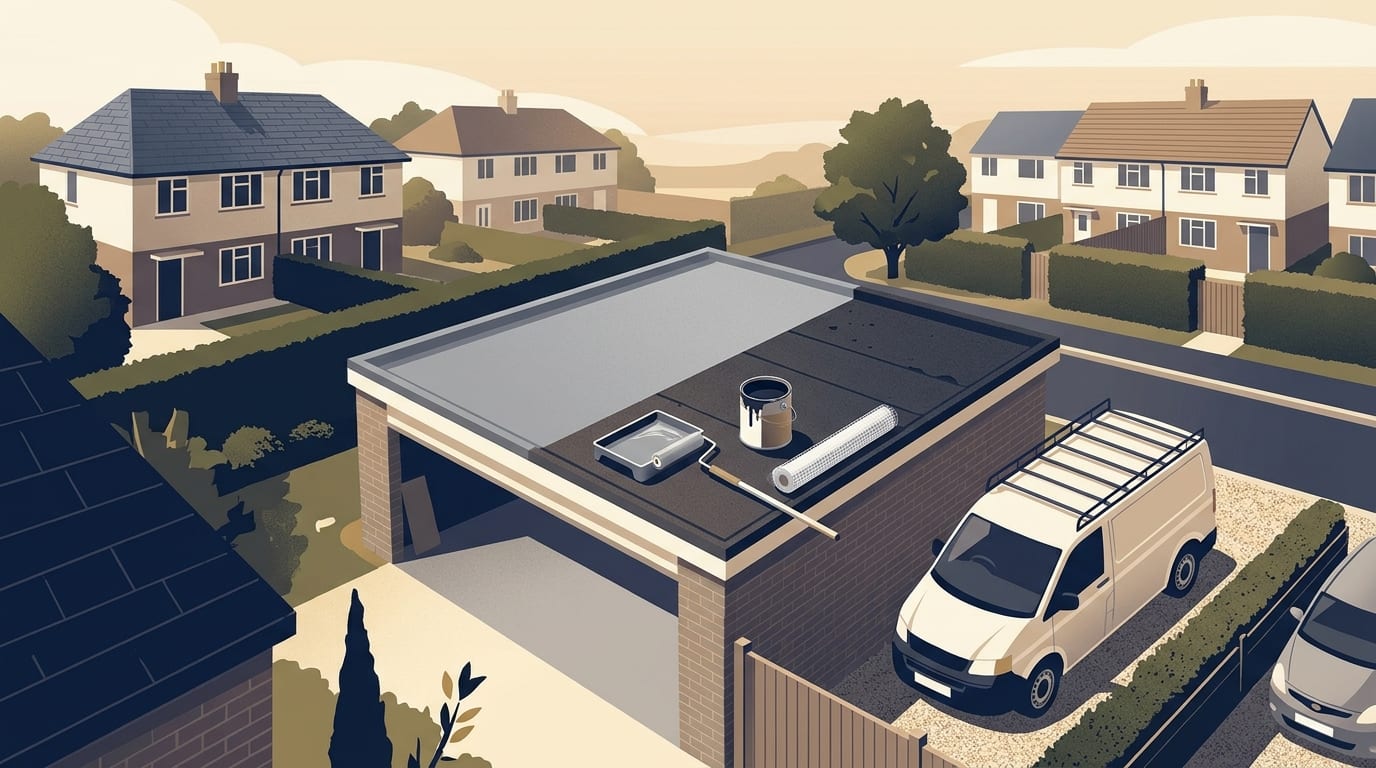
If your property also has a flat roof extension, the materials used there will be entirely different. Flat roof systems are built-up felt (usually torch-on), EPDM rubber, GRP fibreglass, single-ply and liquid coatings. These materials sit on a timber deck, and repairing them is a different job from repairing slate.
Nail sickness and failing fixings
A common reason for a slate to slip is a problem with the metal nail that holds it. Slates are fixed with nails to the timber battens below. Over decades of exposure to damp air, condensation and extreme weather, these metal fixings begin to corrode.
This process is known in the trade as nail sickness. It is the rusting away of the nails which hold the slates in place. When the nails rust completely through, there is nothing left to hold the slate on the roof, so it slides out of position. This is a common reason why roofs need re-slating.
The fixings, which means both the nails and the battens, often need attention before the slate itself, so a mid-life inspection of your roof is advised. If you spot one slipped slate, it might just be an isolated failure. If slates are slipping regularly across different parts of the roof, widespread nail sickness is often the cause.
When to repair and when to re-slate
Deciding between a slate roof repair and a full replacement requires a proper assessment of the whole roof. A detailed roof survey should be carried out prior to any repair work taking place. You cannot see the true condition of the timber battens and the underlay from the ground, so a professional needs to inspect the fixings closely from the outside and from inside your loft.
Patching suits isolated damage, such as a few slates broken by a fallen branch or dislodged in a single storm. If the surrounding slates and nails are sound, a roofer can fit a replacement slate and secure it safely. Individual missing slates can be patch-repaired fairly easily, which keeps the rest of the roof intact and can be cost-effective.
When damage is widespread, patching becomes a false economy. One conservation article about Scottish slate roofs states that if more than 25 per cent of the slates on a roof are loose or defective, then re-slating will be required. This is a specialist rule of thumb rather than a strict legal requirement, and it comes from an article about Scottish roofs. The final decision also weighs the amount of repair needed, the overall condition of the slates and your other plans for the building.
Typical costs for slate roof repairs
Small repairs are usually charged at a fixed price or a day rate, depending on the roofer and the access required. Roofers tend to charge between £30 and £45 per hour in the UK in 2026, though rates vary. Prices are generally higher in London and the South East. No reliable price for replacing one individual slate is available, so ask for the cost of the job as a whole.
Instead, general roofing repair figures give a rough idea of what to expect. Typical 2026 prices put slipped or broken tiles at £150 to £500 per small area. These are general roofing repair figures rather than being specific to slate, and your local quotes will differ.
Other parts of the roof often need attention at the same time. The ridge is the horizontal peak of the roof where the two sides meet. A hip is the external sloping angle where two roof sides meet, while a valley is the internal sloping angle. Ridge tile re-bedding or re-pointing typically costs £300 to £900 per ridge line.
The joints around your chimney and in the valleys are protected by lead flashing, which is a sheet metal used to seal gaps and prevent water getting in. Renewing the chimney or valley flashing costs £200 to £600. If you are comparing quotes for these repairs, you can read our guide on roof repair costs and what to expect.
How much a full re-slate costs
When nail sickness is severe or the timber battens have rotted, the only permanent solution is to strip the roof and start again. A full re-slate involves removing the old slates, laying new underlay and battens, and fixing new or salvaged slates in place. Larger work like this is priced per square metre of roof area, plus the cost of access.
The price depends heavily on the type of slate you choose. Fibre-cement slates are manufactured and are the cheapest option, while natural slates are quarried and cost more. If you are considering changing your roof covering entirely, it helps to look at how clay, concrete and slate roof tiles compare.
The table below shows typical prices for a full re-slate, supplied and fitted.
|
Slate type |
Cost per square metre |
Whole average roof |
|---|---|---|
|
Fibre-cement |
£45 to £70 |
£6,000 to £11,000 |
|
Spanish natural |
£70 to £110 |
£9,000 to £15,500 |
|
Brazilian and Canadian natural |
£95 to £135 |
£12,000 to £19,000 |
|
Welsh natural |
£130 to £165+ |
£16,000 to £24,000 |
This table shows the typical cost to re-slate a roof based on the material used. The figures are typical 2026 prices, and local quotes will differ. Typical totals for a whole average roof are generally £9,000 to £22,000. That is narrower than the full span of the per-type totals in the table (£6,000 to £24,000), so treat every figure as a rough guide. The final bill depends on the size of your house and any extra work required.
A good quote will detail how extra work is priced, because nobody can see rotten timber until the old covering is off. You should also expect additional costs for the finishing touches. Fitting new ridge tiles, dry verge systems and lead flashings typically adds £600 to £1,800 to a re-slate. The verge is the exposed outer edge of a roof above a gable end, and a dry verge system secures the slates there without using mortar. You must also ask if waste removal and VAT are included in the quote.
Reusing your existing slates
If your roof is suffering from nail sickness but the natural slate itself is still in good condition, you do not necessarily have to buy all new materials. Specialists may be able to strip the roof, replace the underlay and battens, and then re-fix your existing slates.
Do not assume that reusing your slates will always be possible or cheaper. Some slates may break when they are removed, so extra slate may be needed to make up the shortfall.
Sorting and preparing old slates can be labour intensive, which may offset some of the saving on materials. Reclaimed Welsh slate is said to suit conservation work but costs more. Ask your roofer to price the job both ways so you can see the difference.
Scaffolding and safe access
Working at height requires proper safety equipment. The Health and Safety Executive (HSE) states that all work on roofs is highly dangerous, even if a job only takes a few minutes. Their official figures show that almost one in five deaths in construction work involve roof work. For this reason, you must never climb onto a roof yourself to check for damage or attempt a repair.
A professional roofer will include the cost of access in their quote. Scaffolding is often a separate and significant line on your quote, and the price depends on the size of your property. For repair work, scaffolding typically adds £500 to £1,200 on a two-storey roof.
For a full re-slate, a two-storey scaffold adds £700 to £1,500 for a whole-roof job. A roofer who proposes re-slating a whole roof from ladders alone should be avoided. Ladders are for access, not for carrying out heavy replacement work safely.
Rules for conservation areas and listed buildings
If you live in a standard property in England, repairing or re-covering a roof does not normally need a building control application, provided less than 25 per cent of the building envelope and less than 50 per cent of the roof is affected. If more than that is affected, approval is needed and the insulation may have to be upgraded.
When upgrading insulation, your roofer will define the setup. A warm roof has insulation above the deck, while a cold roof has it between the joists. If you are replacing a glazed or polycarbonate conservatory roof with a solid one, this takes the conservatory out of its exemption, so building regulations apply to the new roof.
The rules are much stricter if your home is a listed building. Listed building controls apply to works to alter a listed building that are likely to affect its character. According to the Planning Portal, it is a criminal offence to carry out work which needs listed building consent without obtaining it beforehand. Ask your local council before changing your roof, because the Planning Portal page does not say whether repairs or like-for-like replacement need consent.
Homes in conservation areas also face tighter rules. Permitted development rights are more restricted in these areas, meaning work that needs no application elsewhere may need planning permission there. Rules differ in Scotland and Northern Ireland, so readers there should check with their local council rather than guessing.
If your work requires building regulations approval, you can use a roofer registered with CompetentRoofer. This is a government-authorised competent person scheme run by the National Federation of Roofing Contractors (NFRC). Registered roofers can self-certify roof refurbishment in England and Wales, and you should receive a building regulations compliance certificate upon completion. Otherwise, the work must go through council building control or a registered building control approver.
Questions to ask a roofer
Finding a reliable tradesperson means asking the right questions before any work begins. A good roofer will happily explain their process and provide a proper written quote. A quote is a fixed price, whereas an estimate is just a rough guess and can change.
Under the Consumer Rights Act 2015, all work must be done with reasonable care and skill. If it is not, you can ask for it to be put right or for your money back. To protect yourself, always ask for the following information in writing.
Ask your roofer these questions:
- Can you take photographs of the roof to show me exactly what is causing the slates to slip?
- Is the problem limited to a few slates, or is there evidence of widespread nail sickness?
- Will you provide an itemised quote that separates the cost of the slate, the labour and the scaffolding?
- Who is supplying the slate, and is it fibre-cement, imported natural slate or Welsh natural slate?
- How will you price any extra work if you find rotten timber battens once the old slates are removed?
- Are waste removal and VAT included in the final price?
- Can you show me proof of your employers' liability and public liability insurance?
Be wary of common scams in the roofing trade. Cold callers who knock on your door because they have spotted a loose slate or moss from the street should be avoided. Do not fall for roof coating and painting claims, or pressure washing sold as maintenance, and ask for a second opinion. Never accept a vague one-line quote, and do not give in to pressure to decide today.
Contracts agreed at home, by phone or online normally carry a 14-day cooling-off period, but if you ask for work to start inside that period you must pay for what has been done. Avoid roofers who ask for cash only, demand big deposits upfront, or operate with no fixed address. Finally, remember that a guarantee is worthless if the firm folds and it is not insurance-backed.
Common questions
Can you patch repair a slate roof?
Yes, you can patch repair a slate roof if the damage is isolated. If a few slates have been broken by a storm but the surrounding fixings are in good condition, a roofer can secure a replacement slate in place. This is a cost-effective way to fix minor damage without disturbing the rest of the roof.
How do you know if a slate roof needs replacing?
A slate roof usually needs replacing when the nails holding the slates have rusted away, a problem known as nail sickness. As a specialist rule of thumb, if more than 25 per cent of the slates on your roof are loose or defective, a full re-slate is likely required. A detailed roof survey will confirm the condition of the fixings beneath the slates.
Will a roofer reuse my existing slates?
Specialists may be able to reuse your existing slates if the natural stone is sound but the timber battens and nails have failed. The roofer would strip the roof, prepare the slates and re-fix them over new underlay. Some slates may break during removal, so extra slate may be needed.
Is slate roofing work covered by a guarantee?
Ask whether a full re-slate comes with a written guarantee and check the terms carefully. Ask whether an insurance-backed guarantee is available, which can protect you if the roofing firm ceases trading. You can also check if the roofer is registered with TrustMark, the government-endorsed quality scheme for work in and around the home, which is a good sign of professionalism.
Next steps for your roof
If your slate roof is leaking or slates are regularly slipping into your gutters, you need to act before water damages the timber beneath. Do not let cold callers pressure you into a whole new roof for a local fault, and never hand over a large cash deposit upfront. Paying by credit card gives Section 75 protection on purchases over £100 and up to £30,000, which offers peace of mind. If you ever have a dispute with a trader, Citizens Advice is the best place to get help.
Take these steps to get your roof sorted:
- Check your roof from the ground with binoculars or look for damp patches inside your loft.
- Invite three separate roofing firms to carry out a detailed roof survey.
- Ask them to confirm if the issue is isolated damage or widespread nail sickness.
- Request itemised written quotes that clearly state the type of slate being used.
- Ensure you receive a building regulations compliance certificate if the rules require one.
- Agree a staged payment plan, holding back the final payment only when the job is completely finished.
A well-maintained slate roof can protect your property for decades, provided the fixings are as durable as the slates themselves. When you are ready to get the problem diagnosed properly, you can find a roofer near you to inspect the damage and provide a firm written quote.
Find a top rated roofer near you
3,861 roofers across the UK, each ranked on their Google rating and the number of reviews behind it. Start with your county: