In 2026 a roofer's day rate is typically quoted at about £150 to £350, with higher figures in London and for specialist trades such as lead work. However, a day rate is not a final price for the job. Citizens Advice says a written quote should show a fixed total price rather than a daily rate. This guide explains what a roofer's day rate actually covers, why the figures differ so much, and how to choose the right pricing structure for your roof.
What a roofer's day rate means
A day rate is a roofer's charge for a single day of labour. The day rate is a gross figure. Out of it, a self-employed roofer pays for their van, tools, personal protective equipment, insurance, pension, holiday and weather losses.
When you hire a roofer, you are paying for their expertise and their business overheads, not just their time on the roof. Whether they are working on the ridge at the very top of your roof, the hip running down the side, the valleys where two roof slopes meet, or the verge at the gable end, they are working at height. The day rate also has to cover the days they cannot work because of the weather.
Scaffolding hire and materials are charged on top of the day rate. Waste removal and VAT may also be extra, so you must always ask what the daily figure includes before you agree to any work.
Typical day rates in 2026
Day rates for roofers vary. The table below gives gross day rates for qualified, self-employed roofers on standard domestic and light commercial work.
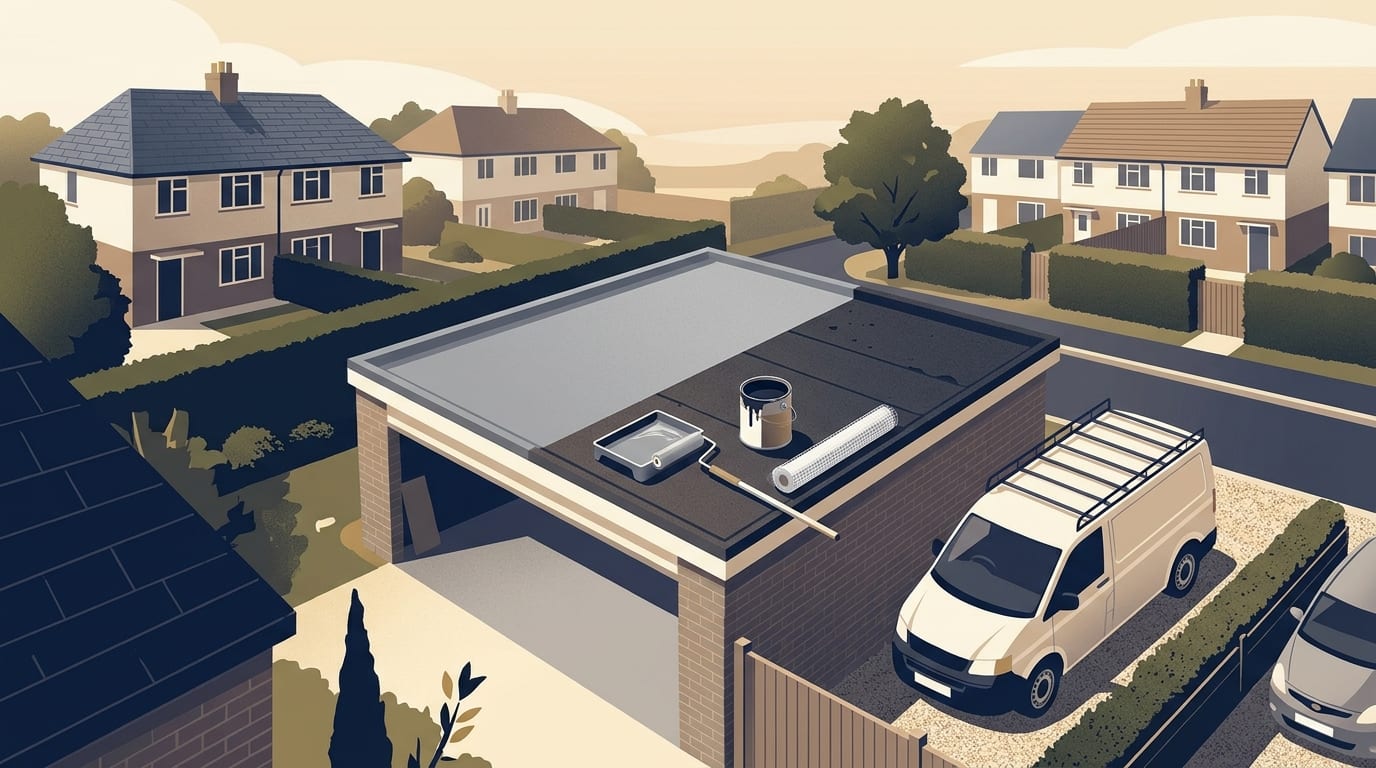
Flat roofers typically work with systems like built-up felt which is usually torch-on, EPDM rubber or GRP fibreglass. Pitched roofers work with concrete and clay tiles, or natural and fibre cement slate.
This table shows typical gross day rates for roofers by region and trade.
|
Trade |
London |
Midlands |
North West |
|---|---|---|---|
|
Flat roofer |
£300 to £550 |
£220 to £400 |
£200 to £370 |
|
Pitched roofer |
£320 to £580 |
£230 to £420 |
£200 to £380 |
|
Lead worker |
£350 to £600 |
£250 to £450 |
£220 to £400 |
|
Labourer (flat felt) |
£160 to £220 |
£150 to £200 |
£150 to £190 |
These are typical 2026 prices, and local quotes will differ.
Other 2026 figures are different. A roof quote's day rate is typically £200 to £300 per roofer per day, with a labourer at £120 to £170.
Another view is that roofers generally charge £150 to £250 per day across the UK, with London at £200 to £250 and many other parts of the UK at £150 to £175.
Elsewhere, flat roofing specialists are put at £200 to £350 per day, waterproofing contractors at £250 to £320 per day or priced per square metre, and general roofers at £200 to £360 per day, up to £500 in London and the South East.
A trades cost compilation gives a roofer day rate of £150 to £350 as a typical UK cost for 2026.
Why day rates differ so much
The figures differ because they appear to cover different kinds of roofers, different types of jobs and different parts of the country. A general roofer and a specialist may charge different rates.
You should treat any single figure with caution. The day rate alone does not tell you what the job will cost. As one roofer puts it, a daily rate could be £150, but materials could push a two-day job into the thousands.
Always use the quote's total fixed price rather than comparing roofers based purely on their daily rate. A day rate can be cheaper on a small job that finishes quickly.
Regional differences
Where you live in the UK has a significant impact on the price you will pay. Rates run higher in London and the South East.
Day rates are lowest in the North and highest in London, and London and the South East add 15 to 30 per cent on most jobs.
The table above puts the South East typically 10 to 20 per cent below London, which differs from the 15 to 30 per cent extra above, so do not combine the two. Yorkshire and Scotland broadly align with the North West column in that table.
Labourers and specialists
The type of worker required for your roof dictates the rate. A labourer assists the main roofer, and the labourer rates above are lower than the roofer rates.
Specialist work requires advanced skills and commands a higher price. Rates also run higher for specialist work such as lead, slate or heritage roofs. A lead worker installing lead flashing around a chimney requires specific training, and the table above shows lead workers as the highest priced trade.
Waterproofing contractors are listed at £250 to £320 per day, which overlaps with the £200 to £360 listed for general roofers, so ask each firm what its day rate covers.
What a day rate leaves out
A daily labour rate is only one part of a roofing bill. Scaffolding hire, materials and a skip for waste removal are not included in a day rate.
Scaffolding is often a separate and significant line on your quote. Scaffolding hire costs £500 to £2,500 or more, depending on the property size.
Materials are also charged on top. If you are having a pitched roof repaired, you will pay for the replacement concrete and clay tiles, or natural and fibre cement slate. You will also pay for the timber battens that hold the tiles, and the underlay, often called felt or a membrane, that sits beneath them.
If you are having a flat roof replaced, you will pay for the timber deck and the covering. Common flat roof systems include built-up felt, EPDM rubber, GRP fibreglass, single-ply and liquid coatings. Labour-only rates per square metre are priced separately from these materials.
You must also check if the quoted day rate includes VAT. Check that any quote spells out materials, VAT and scaffolding clearly.
Day rate or fixed price
Knowing how a job is priced protects you from unexpected bills. A fixed price is a set total for the entire job. A day rate means you pay for the time the roofer spends on site.
A fixed price suits defined work, such as a full re-roof or a new flat roof. When the roofer knows exactly what needs doing, they can calculate the materials and time accurately. Understanding what a written quote contains protects you from unexpected bills.
A day rate can suit specific situations, but only with strict controls. It is an option for:
- Small repairs that finish quickly.
- Leaks of unknown cause where the roofer needs time to investigate.
- Jobs with an unclear scope where materials cannot be calculated upfront.
You should only agree to a day rate if you get a written cap, known as a not-to-exceed figure, and daily updates on progress. If the job grows, the meter keeps running, and a small leak repair can quickly escalate.
Replacing an old roof often reveals hidden damage. Nobody can see rotten timber until the old covering is off. Once the roof is stripped, the roofer might find that the timber deck on a flat roof is soft. On a pitched roof, the timber fascias, soffits and guttering at the eaves might be decayed.
For re-roofs where hidden timber decay is likely, one option is a fixed price for the visible work plus a provisional sum. This provisional sum is clearly written in the quote but is charged only if rot is actually found. Always check the details, because a low day rate that excludes scaffolding can end up costing you more than a fixed price that includes it.
Hourly rates and call-out charges
For very small repairs, a roofer might quote an hourly rate rather than a full day rate. Roofers charge £30 to £45 per hour in 2026, while for metal roofing work the labour rate is given of £25 to £50 per hour.
If you have a sudden leak or storm damage, you may need an emergency roofer. Emergency call-outs often cost £150 to £300 before any repair work begins.
If water is actively getting into your home, an emergency call-out may be needed. If it is not, it may be a routine repair that can wait for a standard quote.
How to judge a day rate quote
When you need a roofer, you must protect yourself by getting the right paperwork. Citizens Advice says you should get at least three written quotes. A written quote should show a fixed total price, not a daily rate.
A quote should include a breakdown of the work and materials, how long the price is valid, whether it includes VAT and when the price can go up. Compare the three quotes to ensure they cover the same scope of work.
If a deposit is unavoidable, do not agree to pay more than 25 per cent upfront. Pay by debit or credit card where possible, or by bank transfer. Paying by credit card gives you Section 75 protection on purchases over £100 and up to £30,000.
There are clear red flags to watch for when judging a quote. Watch out for these red flags:
- Cash-only demands with no paper trail.
- Large upfront payments before any materials arrive.
- Unwritten prices that change as the job progresses.
- Pressure from storm chasers who knock on your door uninvited.
Watch out for cold callers who claim they have spotted a loose tile or moss from the street, and for pressure to decide today. Be wary of being sold a whole new roof for a local fault when a patch repair is enough. You should also avoid roof coating and painting claims, or pressure washing sold as maintenance, as these are common scams that can damage your roof.
Common questions
Do I need building regulations approval for roof repairs?
In England, repairing or re-covering a roof does not normally need a building control application if less than 25 per cent of the building envelope and less than 50 per cent of the roof is affected. Above that, approval is needed and the insulation may have to be upgraded. If you have a warm roof with insulation above the deck, or a cold roof with insulation between the joists, upgrading it will add to your costs.
Approval is also needed for structural alterations, where a new covering performs significantly differently in fire, or where it adds 15 per cent or more to the weight of the roof. Replacing a glazed or polycarbonate conservatory roof with a solid one takes the conservatory out of its exemption, so building regulations apply to the new roof. Rules differ in Scotland and Northern Ireland, so check with your local council rather than guessing.
What is a competent person scheme?
CompetentRoofer is a government-authorised competent person scheme run by the National Federation of Roofing Contractors (NFRC). Registered roofers can self-certify roof refurbishment in England and Wales, and you should receive a building regulations compliance certificate. Otherwise the work goes through council building control or a registered building control approver. TrustMark is another government-endorsed quality scheme for work in and around the home. Membership is a good sign, but not a guarantee, so always check the scheme's own register.
Can I claim a refund if the work is poor?
Under the Consumer Rights Act 2015, work must be done with reasonable care and skill. If it is not, you can ask for the work to be put right or for your money back. If you agree to a contract at home, by phone or online, you normally have a 14-day cooling-off period. However, if you ask for work to start inside that period, you must pay for what has been done.
What happens if my roofer goes out of business?
Guarantees are worthless if the roofing firm folds because they are not insurance-backed. You must ask for an insurance-backed guarantee before work begins. Ask what the guarantee covers and who pays if the company stops trading. Going without the building regulations certificate or the correct insurance leaves you vulnerable when you come to sell your home.
Next steps
Before you hire a roofer and agree to a day rate or fixed price, follow these steps:
- Take photos of the leak or damage from the ground or inside the loft to show the roofer.
- Ask three different roofing firms to inspect the problem and provide a written price.
- Insist on a quote showing a fixed total price, a breakdown of materials and whether VAT is included.
- If a day rate is the only option, get a written cap or not-to-exceed figure before work begins.
- Check the roofer is registered with schemes like CompetentRoofer or TrustMark on the scheme's own register.
- Agree a staged payment plan and only make the final payment when the job is completely finished.
Finding a reliable tradesperson takes time, but getting written quotes with fixed prices is the best way to protect your home and your money. If you are ready to compare prices for your repair or replacement, you can find a roofer near you to get started.
Find a top rated roofer near you
3,861 roofers across the UK, each ranked on their Google rating and the number of reviews behind it. Start with your county: