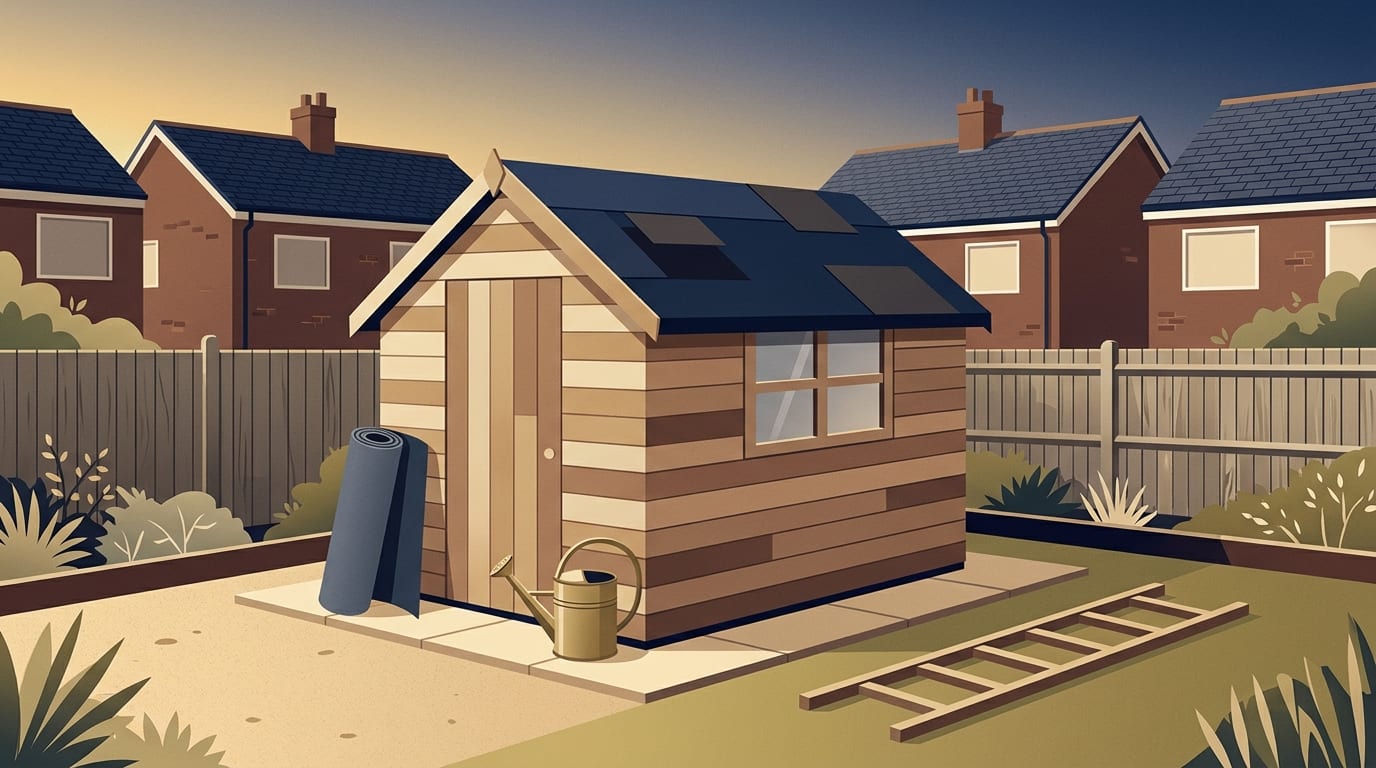
A standard shed roof felt replacement costs between £200 and £350 in total. Most replacements take three to seven hours, making it a half-day to full-day job for a local roofer. Repairing a small patch of torn or leaking felt is cheaper, usually costing between £65 and £135.
What a shed roof felt replacement costs
Small repairs are usually charged at a fixed price or a day rate. Larger roofing work on main houses is often priced per square metre plus the cost of access, but shed roofs are normally quoted as a single fixed price for the whole job. Prices are generally higher in London and the South East, and waste removal and VAT may or may not be included, so you must ask the roofer to clarify this.
The table below shows typical costs for working on a shed or small outbuilding. Every figure is an estimated total for the finished job.
|
Type of roof work |
Typical total cost |
Estimated time to complete |
|---|---|---|
|
Shed roof felt replacement |
£200 to £350 |
3 to 7 hours |
|
Shed roof felt repair |
£65 to £135 |
2 to 4 hours |
|
Larger shed or small garage (10 to 20 square metres) |
£450 to £1,100 |
Varies by size |
These are typical published figures for 2026 and local quotes will vary. Labour makes up a significant part of the bill. For a standard replacement, the labour is typically £100 to £200, which is about half the total cost. For a simple flashing or felt repair, the labour portion is usually £40 to £100.
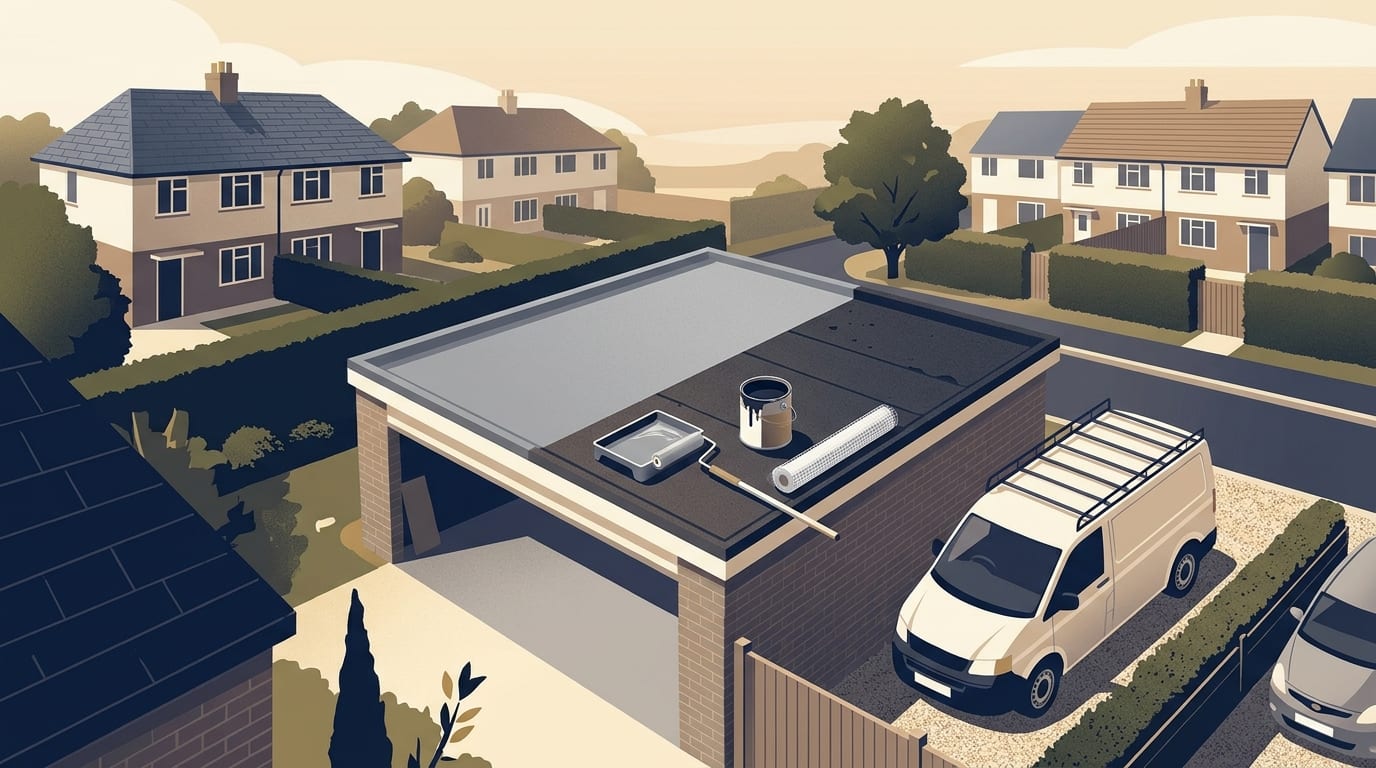
If you have a larger outbuilding, you will pay more. Typical 2026 prices put a full re-felt on a shed or small garage of 10 to 20 square metres at £450 to £1,100, including stripping the old felt, new underlay or felt, and trims. Treat all of these figures as approximate. For a bigger outbuilding or an extension roof, the flat roof replacement cost guide covers the wider factors.
Trade terms and what your shed roof is made of
Most homeowners have never hired a roofer before and cannot see their own roof properly. You have to take a stranger's word for what is wrong and what it should cost. Understanding the correct UK trade terminology helps you spot a fair quote and avoid being overcharged.
Main houses usually have pitched roofs, which are angled structures covered in concrete and clay tiles, or natural and fibre cement slate. Many sheds and small outbuildings have flat or low-pitched roofs. A flat roof does not have a ridge (the top peak), a hip (the external angle where two slopes meet), a valley (the internal angle where two slopes meet), or a verge (the outer edge of a pitched roof). You will also rarely find lead flashing, which is the metal strip used to waterproof joints on brickwork.
Instead, a shed roof is built on a timber deck. This is the flat wooden surface made of boards that forms the structure of the roof. Over this deck goes the underlay, which is often called felt or membrane. The felt provides the waterproof layer. At the edges, you might have eaves, which are the lowest overhanging edges of the roof where water runs off. Some outbuildings also have fascias and soffits, which are the protective boards fitted around the roof edge, along with simple plastic guttering to catch the rain. Inside the shed, the roof might be supported by battens, which are lengths of timber used to fix materials in place.
Flat roof systems on larger structures use various materials, including built-up felt (usually torch-on), EPDM rubber, GRP fibreglass, single-ply, and liquid coatings. Most simple sheds use basic felt. If you have a garden office rather than a basic shed, it might be insulated. A warm roof has insulation above the timber deck, while a cold roof has the insulation between the wooden joists.
What the price includes
A good quote is a fixed price, while an estimate is not. An itemised quote for a shed or small garage re-felt should clearly list everything the roofer plans to do. This typically includes stripping the old felt, laying the new underlay and felt, and fitting any necessary edge trims.
Waste removal is a common hidden extra. Stripping an old roof leaves waste that has to be disposed of. A professional roofer should state whether waste disposal is included in their price or if you need to arrange it yourself. Scaffolding is often a separate and significant line on roofing quotes, but it is rarely needed for a standard garden shed. If you have a tall garage or a complex outbuilding, access equipment might push the price up.
How long shed felt lasts
Shed roof felt typically lasts 5 to 10 years before needing replacing. Estimates vary, and some put basic felt on small outbuildings at around 10 to 15 years.
The lifespan depends heavily on the surrounding environment. Exposure to weather and overhanging trees can also affect how long felt lasts, so a sheltered shed may outlast an exposed one.
Signs the felt has failed
You should never climb onto a roof to inspect it yourself. Checks from the ground or from inside the shed are fine and will usually tell you everything you need to know. Replace the shed roof if you spot any of the following problems.
- Multiple leaks appearing inside the shed during heavy rain.
- Damp or mould growing on the walls, ceiling or stored items inside.
- Rotten framework or soft, sagging timber boards beneath the felt.
- Surface damage to the felt such as deep cracks, tears or missing sections.
- Signs of pest infestation in the roof or boards.
If you only see one small drip or a single lifted edge, you might not need a full replacement immediately. It is always wise to take photos of the defect from the ground or inside the shed to show to a professional.
Repair or replace the felt
Many homeowners worry about being talked into a full re-roof when a repair would do. A repair may be enough if the damage is limited, the surrounding roof is sound, and the timber boards are solid. Knowing when a repair is enough can save you money in the short term.
However, felt becomes brittle as it ages. If the material is nearing the end of its typical lifespan, patching one corner might simply push the stress onto another area. If repair quotes approach the cost of a new roof, replacement is usually the better long-term option. A fresh layer of felt provides peace of mind and protects the expensive tools or garden equipment stored inside.
Should you pay a roofer or do it yourself
Felting a small, low shed from the ground is a common homeowner job. If you have a low shed, solid timber boards, and you can reach the entire roof comfortably without leaving the ground, you might choose to do the work yourself.
Despite this, a professional roofer is the safer choice for anything taller than you can safely reach from the ground. You should never climb onto a roof or use ladders at height. Working at height without the correct training or safety equipment is dangerous. Working at height also risks a fall, and poor work can lead to leaks and water damage.
You must also leave the job to a roofer if you have a garage, a large outbuilding, or if the timber boards are rotten. Do not attempt to use torch-on felt yourself. Torch-on felt involves a naked flame and should be left entirely to a qualified roofer with the right safety gear and insurance.
Weather plays a major role in roofing work. Torch-on and self-adhesive systems bond poorly to damp decking. If it has been raining, a good roofer may reschedule in wet weather to ensure the new felt sticks properly and lasts its full lifespan.
Checking the boards underneath
The timber deck beneath the felt is the structural heart of your shed roof. If the felt has been leaking for a long time, the water will have soaked into these wooden boards. Nobody can see rotten timber until the old covering is off.
When a roofer strips the old felt, they will inspect the deck. If the wood is soft, crumbling, or sagging, it must be replaced before new felt can be laid. Laying new felt over rotten wood is a waste of money because the new covering has nothing sound to sit on. A good quote always says how extras will be priced if the timber deck needs replacing once the roof is opened up.
Rules, schemes and consumer protection
Homeowners often worry about ending up with no paperwork when they come to sell their property. Understanding the rules helps you stay compliant and protected.
In England, repairing or re-covering a roof does not normally need a building control application if less than 25 per cent of the building envelope and less than 50 per cent of the roof is affected. Above that, approval is needed and the insulation may have to be upgraded. Approval is also needed for structural alterations, where a new covering performs significantly differently in fire, or where it adds 15 per cent or more to the weight. Rules differ in Scotland and Northern Ireland, so check with your council rather than guessing.
CompetentRoofer is a government-authorised competent person scheme run by the National Federation of Roofing Contractors. Registered roofers can self-certify roof refurbishment in England and Wales, and the customer should receive a building regulations compliance certificate. Otherwise, the work goes through council building control or a registered building control approver. Going without the building regulations certificate when one is required is a common mistake that causes delays during a house sale.
TrustMark is the government-endorsed quality scheme for work in and around the home. Check the scheme's own register to confirm a firm is listed. Membership is a good sign, not a guarantee.
Under the Consumer Rights Act 2015, work must be done with reasonable care and skill. If it is not, the customer can ask for it to be put right or for money back. Contracts agreed at home, by phone or online normally carry a 14-day cooling-off period. However, if the customer asks for work to start inside that period, they must pay for what has been done. Paying by credit card gives Section 75 protection on purchases over £100 and up to £30,000. Citizens Advice is the place to go if you have a dispute with a tradesperson.
Common mistakes and scams in this trade
Roofing attracts rogue traders because customers cannot inspect the work closely. You should be extremely wary of cold callers who knock on your door claiming they have spotted a loose tile or moss from the street. A legitimate roofer will rarely solicit work this way.
Avoid any firm that puts pressure on you to decide today. Rogue traders often demand cash only, ask for big deposits upfront, and provide no physical business address. They usually hand over vague one-line quotes that lack detail, making it impossible to know what you are actually paying for.
Another common scam is being sold a whole new roof for a minor local fault. If you only have a single tear in your shed felt, a small patch repair might be entirely sufficient. You should also ignore roof coating and painting claims, as well as pressure washing sold as maintenance.
Finally, be cautious of long guarantees. Guarantees that are not insurance-backed are worthless if the firm folds. Always ask for proof that the guarantee is underwritten by an independent insurance policy.
How to get a fair quote
To avoid being overcharged, you should always get three written quotes from different local roofers. This gives you a clear idea of the going rate in your area. Ask for an itemised price so you can see exactly how much you are paying for materials, labour, and waste removal.
You should check for TrustMark registration where relevant, and ask about their experience with your specific roof type. Always ask to see proof of their public liability insurance. This protects you if they accidentally damage your property or a neighbour's property while working.
A reputable roofer will agree a written start date and a schedule of work. They will also agree to staged payments for larger jobs, and will only ask for the final payment when the job is completely finished and you are satisfied. Never pay the full amount upfront.
Common questions
Can I felt over old shed roof felt?
Fitted replacement prices include stripping the old felt, and an old layer can hide damp or rotten boards. A professional roofer will strip the old felt to inspect the deck and ensure the new covering bonds correctly.
Do I need scaffolding for a shed roof?
Scaffolding is rarely needed for a standard, low-level garden shed. Roofers can usually complete the work safely using standard access equipment. However, if you are re-felting a tall garage or a large outbuilding, scaffolding may be required to work safely at height, which will increase the final price.
Will a roofer work on my shed in the rain?
Roofers cannot lay felt properly in the rain. Torch-on and self-adhesive systems bond poorly to damp decking. If the boards are wet, the felt may not bond properly. A reliable roofer will reschedule the work for a dry day to ensure a lasting finish.
What happens if the roofer does a bad job?
Under the Consumer Rights Act 2015, all roofing work must be carried out with reasonable care and skill. If the new felt leaks or peels away shortly after installation, you have the right to ask the roofer to put it right. If they refuse, you can request a partial or full refund, and Citizens Advice can guide you through the dispute process.
Questions to ask before work starts
Before you agree to any work, ask the roofer these specific questions to ensure they are professional and transparent.
- Is this a fixed price quote or just an estimate?
- Does the price include stripping the old felt and taking the waste away?
- How much will it cost to replace the timber boards if you find they are rotten?
- Can you show me proof of your public liability insurance?
- Are you registered with TrustMark, and can I check the register?
- Will you provide a written contract with a 14-day cooling-off period?
- Is your guarantee backed by an independent insurance policy?
Your next steps
Replacing or repairing the felt on your shed roof stops leaks from getting worse and protects the structure from damp and rot. Follow this simple checklist to get the job done properly.
- Check the roof from the ground or inside the shed for leaks, damp, and sagging boards.
- Take photos of the damage to show to local tradespeople.
- Decide if the job is small enough to repair or if the felt is old enough to replace entirely.
- Gather three written, itemised quotes from local roofers.
- Check their public liability insurance and read their reviews.
- Agree on a fixed price, a written start date, and pay the final balance only when the work is finished.
If you are ready to protect your outbuilding from the weather and want to compare prices in your area, you can find a roofer near you to get started.
Find a top rated roofer near you
3,861 roofers across the UK, each ranked on their Google rating and the number of reviews behind it. Start with your county: